What is Woven Fabric?
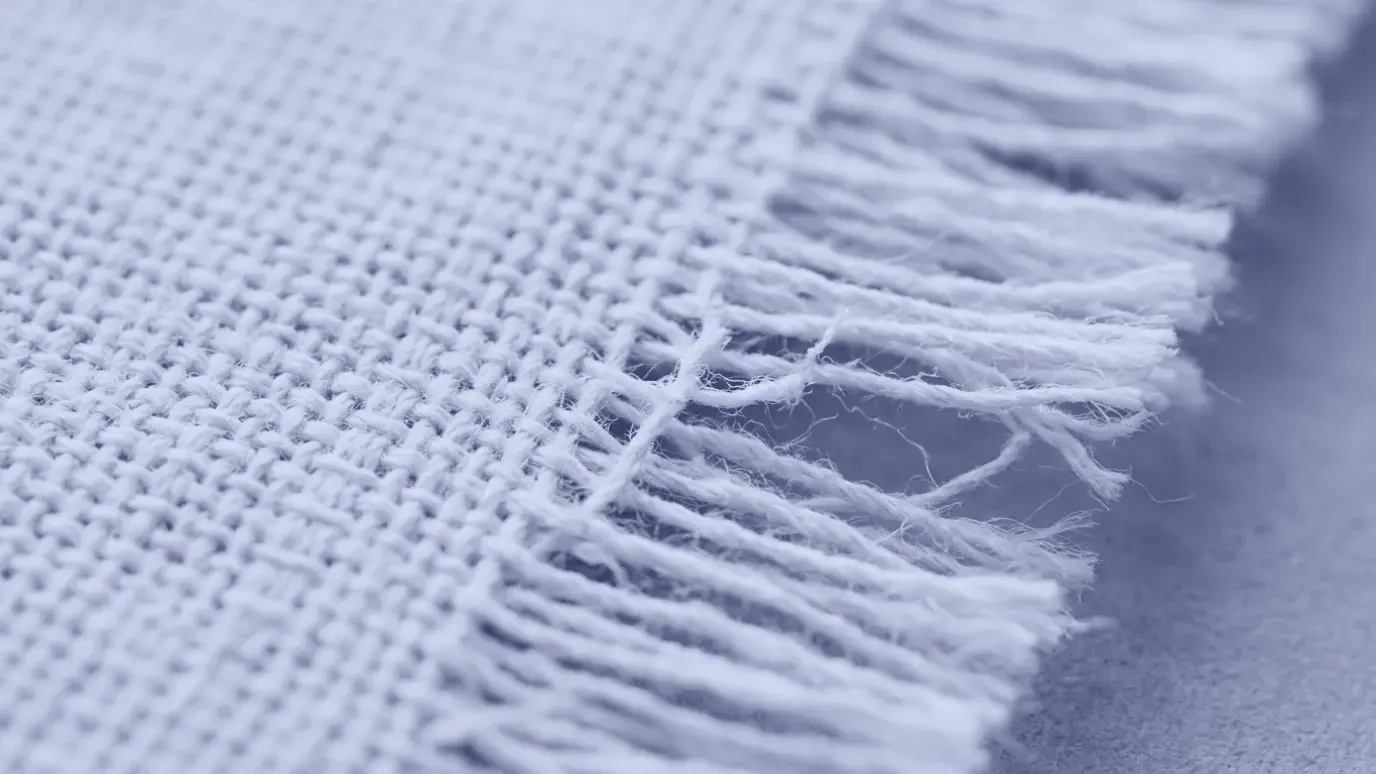
Woven fabric is made on a loom by interlacing lengthwise warp yarns with crosswise weft yarns at right angles. It is more stable than knitted fabric: its stretch is limited by yarn properties and weave structure.
- Published:
- Updated:
- Fact-checked by:
- Gizem Polat
Key facts
- Woven fabric is made by interlacing lengthwise warp yarns and crosswise weft yarns at right angles on a loom.
- Most woven designs are built on three basic weaves: plain, twill and satin.
- Woven fabric is more stable than knit; its stretch is limited by yarn properties and weave structure.
- Woven fabric stretches most on the 45° true bias; warp yarns are generally stronger and more stable than weft yarns.
- Mass per unit area is measured by ISO 3801 (woven) or EN 12127, and yarn density by ISO 7211-2.
Properties
- Fiber content
- Woven from cotton, wool, silk, viscose, polyester and blends; stretch versions with elastane exist
- Structure
- Two sets of yarn interlace at right angles: lengthwise warp and crosswise weft. Basic weaves: plain, twill and satin
- Weight range
- No single range; weight varies by fabric (see the poplin and gabardine entries)
- Stretch
- Stretch is limited by yarn properties and weave structure and stays limited unless elastic yarn is added. Woven fabric stretches most on the bias
- Uses
- Shirting and bottom-weight fabrics (oxford, denim, chino, gabardine) and sheeting
- Care
- Care instructions depend on fiber content and finishing. Dimensional change after washing is measured by ISO 5077, using ISO 6330 washing and drying procedures.
Woven fabric is made on a loom by interlacing lengthwise warp yarns with crosswise weft yarns at right angles. CottonWorks defines weaving as interlacing two sets of yarn to form a fabric structure. The yarns do not form loops; they pass over and under one another and are held by the interlacing. This makes woven fabric more stable than knit: its stretch is limited by yarn properties and weave structure (Dönmez, 2008). Oxford-type shirting fabrics, bottom-weight fabrics such as denim and gabardine, and sheeting are woven (CottonWorks, Basic Woven Fabric Designs).
Warp, weft and selvage
The warp (ends) is the set of yarn running along the length of the fabric, in the machine direction; the weft (picks, filling) runs across the width (CottonWorks). Warp yarn is generally twisted more tightly, stronger and more stable; weft yarn is generally a little less twisted and weaker (University of Kentucky Extension, 2006).
The selvage is the firm edge running lengthwise (Kentucky). All diagonal directions are bias directions; woven fabric stretches most on the true 45° bias. The loom sets warp and weft at right angles, and fabric can shift out of this alignment during finishing (Kentucky). These directions need to be told apart in cutting and sample evaluation.
How woven fabric is made
The warp yarns are held under tension; the loom raises and lowers some of them to form an opening (shed), and the weft is inserted through it (CottonWorks). Three kinds of shedding mechanism raise the warp: cam, dobby and jacquard. Cam and dobby control the warp with frames (typically 6–8 frames for cam and 12–32 for dobby); jacquard uses harness cords instead of frames and allows large pattern repeats and very detailed designs (CottonWorks).
The traditional weft insertion method is the shuttle; today it has largely been replaced by shuttleless methods (rapier, projectile, air-jet and water-jet). The shuttle is the only method that passes the weft from both sides of the fabric, so it gives a clean woven selvage on both sides. The water-jet method can only be used with hydrophobic fibers such as polyester, nylon and olefin (CottonWorks).
The three basic weaves
The three basic woven designs are plain weave, twill and satin (CottonWorks).
| Weave | Structure | Behavior | Example fabrics |
|---|---|---|---|
| Plain weave | Each warp passes over one weft and under the next (1/1) | Has the most interlacing points; stiffer, with less drape (CottonWorks); strong, and does not stretch without elastic yarn (Pratt Institute) | Poplin (Collins); chambray, broadcloth, canvas, sheeting (CottonWorks) |
| Twill | Diagonal line on the face; repeats such as 2×1, 2×2, 3×1 | Generally woven more densely, so stronger and more durable (Pratt Institute); 3×1 twill is used for heavy bottom-weight fabrics (CottonWorks) | Denim, gabardine |
| Satin | Yarns float over several others, and no two interlacing points are adjacent | Smooth, lustrous, with very good drape; snagging, skew and seam slippage can occur (CottonWorks) | Satin (silk), sateen (non-silk fibers) |
How it differs from knit and nonwoven
| Woven | Knit | Nonwoven | |
|---|---|---|---|
| How it forms | Warp and weft cross at right angles | Yarn is formed into loops and the loops intermesh (NPTEL) | Usually a planar web of fibers given structural integrity by physical and/or chemical means; it lies outside weaving, knitting and papermaking (EDANA, ISO 9092) |
| Stretch and stability | More stable; stretch is limited by yarn properties and weave structure (Dönmez, 2008) | Stretches by itself because of the loop structure (Dönmez, 2008) | Structural integrity comes from the bonding method and is designed for the purpose (EDANA, ISO 9092) |
In specifications and testing
| Property | Method | Note |
|---|---|---|
| Mass per unit area (weight, GSM) | ISO 3801 (woven fabric) or EN 12127 (small specimen; woven and knitted) | ISO 3801 applies to woven fabrics including stretch types and also covers mass per unit length |
| Warp and weft density | ISO 7211-2 | Determines the number of threads per unit length |
| Dimensional change after washing | ISO 5077; washing and drying to ISO 6330 procedures | State the program and the limit value |
What to specify when sourcing woven fabric
- State the weave, not just the name: weave, fiber, yarn, warp and weft density, weight and width should be written together. Names such as “poplin” and “gabardine” describe only a weave family and an appearance.
- If you want stretch, state the elastic yarn share: plain-weave fabric does not stretch without elastic yarn (Pratt Institute).
- Check the alignment (grain): fabric can shift out of alignment during finishing; a garment that is not cut and sewn on grain can stretch where it should not, and a skirt hem can sag (University of Kentucky Extension, 2006).
- Set expectations by weave family: satin can show snagging and seam slippage, and plain weave can be stiff (CottonWorks).
The general framework of structure, fiber, yarn and finishing is explained in the fabric types guide. If you are looking for a fabric supplier, see the woven fabric category.
Frequently asked questions
Which is warp and which is weft?
The warp is the set of yarn running lengthwise and the weft the set running crosswise (CottonWorks). The selvage runs parallel to the warp (University of Kentucky Extension, 2006).
Does woven fabric stretch?
Very little by itself: stretch is limited by yarn properties and weave structure (Dönmez, 2008). It “gives” most on the bias (University of Kentucky Extension, 2006). For noticeable stretch, an elastic yarn is added to the structure.
Are poplin, gabardine and denim woven?
Yes, all three. The Collins dictionary defines poplin as a plain-weave fabric, and CottonWorks lists denim and gabardine among bottom-weight fabrics woven in 3×1 twill. See the poplin and gabardine entries for details.
Sources (14)
- CottonWorks (Cotton Incorporated): Learning Hub, Weaving (accessed October 9, 2026)
- CottonWorks (Cotton Incorporated): Weaving Basics (accessed October 9, 2026)
- CottonWorks (Cotton Incorporated): Basic Woven Fabric Designs (accessed October 9, 2026)
- Baker, M. M. (2006). Understanding Fabric Grain (CT-MMB.210). University of Kentucky Cooperative Extension Service
- Dönmez, E. T. (2008). Yuvarlak örme kumaşlarda kumaş gramajına etki eden faktörler üzerine bir araştırma (A study on the factors affecting fabric weight in circular knitted fabrics; in Turkish). Dokuz Eylül University Graduate School of Natural and Applied Sciences, master’s thesis (p. 1)
- Pratt Institute Textile Research Lab: Wovens (accessed October 9, 2026)
- NPTEL, Knitting Technology, Module 1 FAQ
- Collins English Dictionary and Random House Unabridged Dictionary, entry “poplin” (via Dictionary.com, accessed October 9, 2026)
- EDANA, What are nonwovens? (accessed October 9, 2026)
- ISO 3801:1977 Textiles: Woven fabrics: Determination of mass per unit length and mass per unit area (EVS record)
- ISO 7211-2:2024 Textiles: Methods for analysis of woven fabrics construction: Determination of number of threads per unit length (BSI record, published August 22, 2024)
- EN 12127:1997 Textiles. Fabrics. Determination of mass per unit area using small samples (BS EN 12127:1998 record; applies to woven and knitted fabrics)
- ISO 6330:2021 Textiles: Domestic washing and drying procedures for textile testing
- ISO 5077:2007 Textiles: Determination of dimensional change in washing and drying (confirmed in 2022)
Author and fact-checking
Written by
Fabrics and Fibers Editor
Elif Karaca is Tekstil Rehberi's fabrics and fibers editor. She writes guides and glossary entries on knitted, woven and nonwoven fabrics, fiber properties and choosing the right fabric for each product, and bases values such as GSM, width, shrinkage and color fastness on standards and mill technical data sheets.
Content by Elif KaracaFact-checked by: Gizem Polat
This content was prepared by the Tekstil Rehberi editorial team. Before publication, our verification editor checked its figures, dates and sources against primary sources.
Spotted an error? Email us at [email protected] How we work →
Related calculators
- GSM calculator GSM from a sample, oz/yd² conversion and weight per linear meter.
- Meter-to-kg converter Meters, yards, m², kilograms and pounds from width and GSM; tubular fabric and tolerance.
- Fabric consumption calculator Quantity, consumption and waste to order meters, kilograms and rolls.
- Shrinkage calculator Shrinkage percent from a wash test; cut and marker size for a shrinkage rate.
Articles on this topic
Bed Linen Fabric Types: Percale, Sateen and Thread Count
Percale, sateen, ranforce and flannel compared: what thread count means per inch and as the Turkish per-centimeter “tel”, why “600 thread count” can mislead, and a checklist for writing a spec.
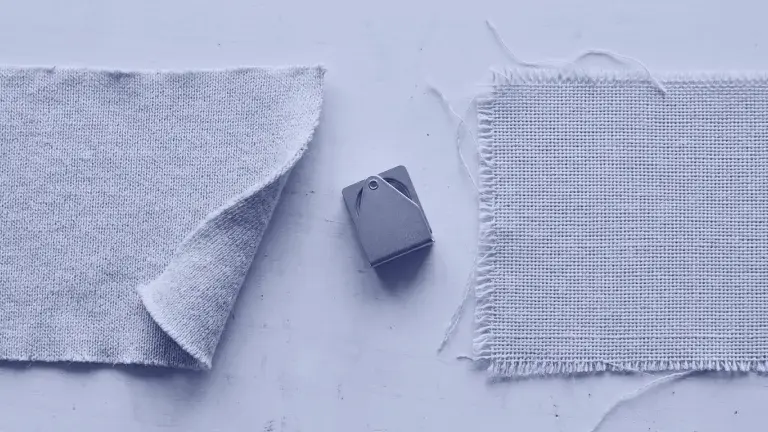
Knit vs Woven Fabric: How to Tell Them Apart
How knit and woven fabrics differ, five checks to tell them apart, the cases that mislead, how to choose by product, and what changes in production, testing and customs classification.
How to Source Fabric from Turkey: Find, Verify, Compare and Order
What Turkish fabric mills make and who they sell to, where to find them, what to plan for on MOQ and lead time, which tests to request, how EU, UK and US duty rules differ and how to verify a supplier.