What is Plain Weave?
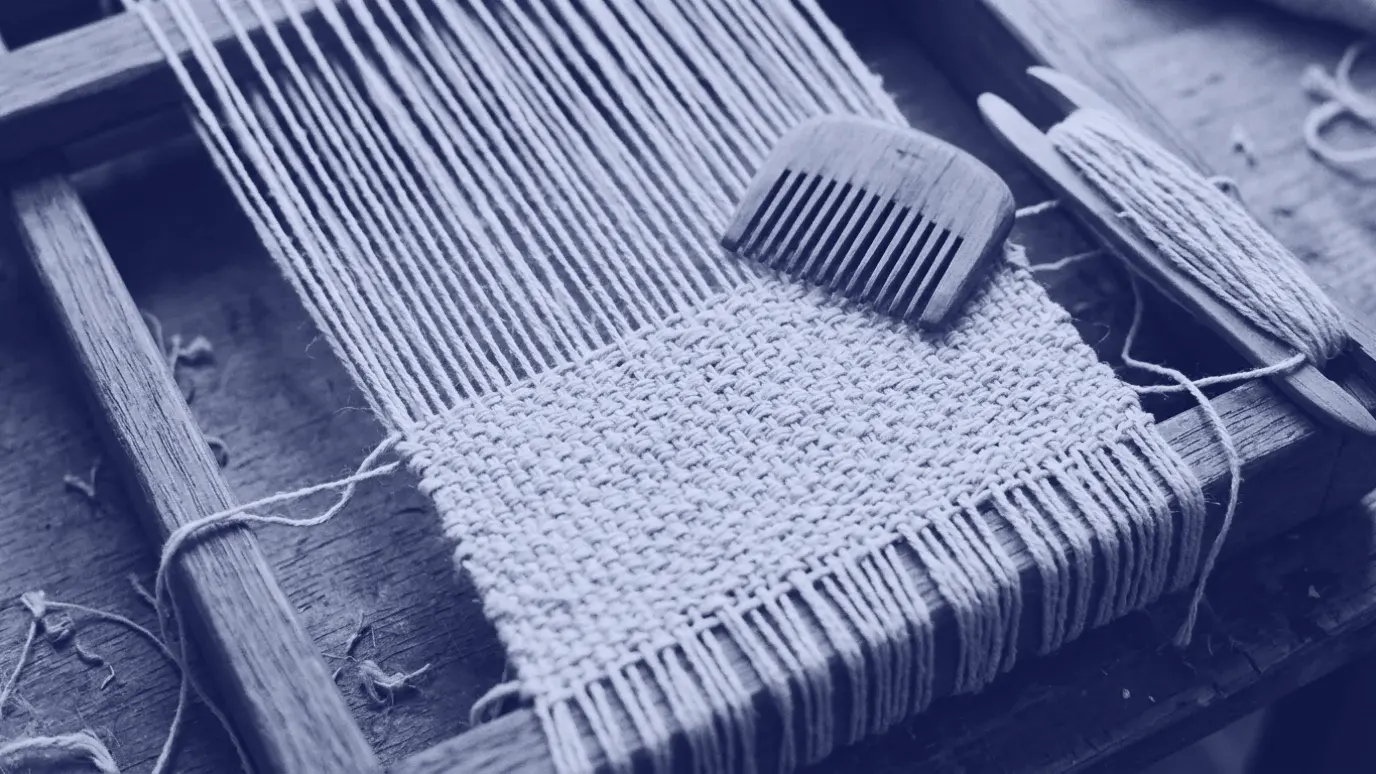
Plain weave is the simplest basic weave: each warp yarn passes over one weft yarn and under the next. The repeat is two warp and two weft yarns, written 1/1; poplin, canvas and chiffon are woven in it. In Turkish it is called bezayağı.
- Published:
- Fact-checked by:
- Gizem Polat
Key facts
- Plain weave is the simplest basic weave: each warp yarn passes over one weft yarn and under the next (1/1).
- Its repeat is two warp and two weft yarns, and of the three basic weaves it has the most binding points.
- The fabric is stiff and has low drape, but it is very stable: skew, seam slippage, picking and snagging are few.
- Poplin, canvas and chiffon belong to the plain-weave family; panama and rib are cited among its derivatives.
Plain weave is the simplest basic weave: each warp yarn passes over one weft yarn and under the next. Its repeat is two warp and two weft yarns, written 1/1. Together with twill and satin it is one of the three basic weaves; poplin, canvas and chiffon are woven in it. The Turkish word is bezayağı.
Plain weave structure
The plain-weave repeat consists of two warp and two weft yarns, the smallest repeat of the interlaced weaves (Özdemir and Kahyeoğlu, 2020, p. 1260). Each warp yarn passes over one weft yarn and under the next, and the neighboring warp yarn does the opposite (CottonWorks). The repeat reads like this:
| Weft 1 | Weft 2 | |
|---|---|---|
| Warp 1 | warp over | warp under |
| Warp 2 | warp under | warp over |
The yarns touch each other to the highest degree, and because the face and back of the fabric look the same, it is hard to tell them apart (Özdemir and Kahyeoğlu, 2020, p. 1260). The Getty Art & Architecture Thesaurus likewise states that the two faces of fabric woven in this weave (tabby) are structurally the same. Plain weave has more binding (interlacing) points than the other basic weaves and needs two harnesses (CottonWorks).
Properties
The many binding points make the fabric stiffer and reduce its drape; in return it is very stable. According to CottonWorks, plain weave has few problems with skew, seam slippage, picking and snagging. A lecture note describes plain-weave fabrics as stiff, tightly built, low in elasticity and sturdy, and says light, thin fabrics such as chiffon, georgette and poplin are woven in this weave.
The three basic weaves differ in how often the yarns bind:
| Weave | Binding pattern | Example fabrics |
|---|---|---|
| Plain weave | Most binding points; repeats on two warp and two weft yarns | Chambray, broadcloth, canvas, sheeting; poplin, chiffon |
| Twill | Fewer binding points; diagonal line on the surface | Denim, chino, gabardine |
| Satin | Long floats; binding points do not touch each other | Satin, sateen |
The table is based on CottonWorks; poplin and chiffon come from dictionary definitions.
Derivatives
- Panama: Özdemir and Kahyeoğlu (2020) cite the 2/2 and 4/4 panama weaves as derivatives of plain weave (p. 1263).
- Rib (ribbed plain weave): According to the lecture note, it is made by inserting two or more weft yarns together and creates distinct lines on the surface. Do not confuse it with the rib knit structure (ribana), which is a loop structure.
- Basket weave and oxford: CottonWorks defines basket weave as a plain-weave derivative in which two or more warp yarns are interlaced together as in plain weave; 2×2 and 3×3 are regular basket weaves, 2×1 (oxford) and 3×1 irregular ones. In oxford two warp ends are woven as one yarn, and the weft yarn is usually at least twice the thickness of the warp. In pinpoint oxford the yarns are the same thickness (CottonWorks).
- Crepe: CottonWorks cites crepe weave as a derivative of plain weave; the most common crepes are woven with high-twist warp and weft yarns.
Fabrics woven in plain weave
CottonWorks gives chambray, broadcloth, canvas and sheeting as examples of fabrics woven in plain weave. In the Collins dictionary poplin is a strong plain-weave fabric with fine ribbing, usually cotton; the Random House dictionary defines poplin as a finely ribbed fabric that can be made of cotton, rayon, silk or wool. In dictionaries chiffon is a thin, sheer fabric woven in plain weave. So plain weave is a structure name and does not tell you the fiber; poplin, canvas and chiffon are fabric names.
How to write it in a specification
According to a lecture note, the features that define a woven fabric include fiber type, yarn count and twist, warp and weft density (ends/cm and picks/cm), weight, width and weave (plain, twill, satin). In a quotation, write the weave together with these details. For a general comparison of woven fabric families, see the fabric types guide.
Frequently asked questions
Which is more durable, plain weave or twill?
There is no single answer; each improves something different. In twill, yarns that float side by side can be set more densely, so heavier and denser fabrics can be woven (lecture note); CottonWorks cites 3×1 twill in heavy bottom-weight fabrics because it gives higher tear strength. Plain weave is more stable: it has few problems with skew, seam slippage, picking and snagging.
Is poplin a plain weave?
Yes. The Collins dictionary defines poplin as a plain-weave fabric with fine ribbing. Plain weave is the name of the weave; poplin is the name of the fabric.
Are the face and back of plain-weave fabric the same?
According to Özdemir and Kahyeoğlu (2020), the face and back of fabric woven in plain weave look the same, which makes them hard to tell apart.
Sources (11)
- CottonWorks (Cotton Incorporated), Learning Hub: Basic Woven Fabric Designs (accessed October 9, 2026)
- CottonWorks (Cotton Incorporated), Textile Encyclopedia: Plain weave (accessed October 9, 2026)
- CottonWorks (Cotton Incorporated), Textile Encyclopedia: Oxford (accessed October 9, 2026)
- CottonWorks (Cotton Incorporated), Textile Encyclopedia: Basket Weave (accessed October 9, 2026)
- Getty Research Institute, Art & Architecture Thesaurus: tabby (textile) / plain weave (textile) (AAT 300227906; accessed October 9, 2026)
- Getty Research Institute, Art & Architecture Thesaurus: tabby (process) / plain weave (process) (AAT 300312167; accessed October 9, 2026)
- CottonWorks (Cotton Incorporated), Learning Hub: Complex Woven Fabric Designs (crepe weave; accessed October 9, 2026)
- Özdemir, G. and Kahyeoğlu, T. (2020). Özgün dokuma yüzey tasarımlarının giysi üzerine uygulamaları (Applications of original woven surface designs on garments; in Turkish). idil, 72, 1259–1269. DOI: 10.7816/idil-09-72-06
- Ankara University Open Courseware, Dokuma Kumaşların Yapısı ve Özellikleri (Structure and Properties of Woven Fabrics; lecture note; in Turkish; author not stated; accessed October 9, 2026)
- Dictionary.com, “poplin” entry (Random House Unabridged Dictionary; Collins English Dictionary; accessed October 9, 2026)
- Dictionary.com, “chiffon” entry (Random House Unabridged Dictionary; Collins English Dictionary; accessed October 9, 2026)
Author and fact-checking
Written by
Fabrics and Fibers Editor
Elif Karaca is Tekstil Rehberi's fabrics and fibers editor. She writes guides and glossary entries on knitted, woven and nonwoven fabrics, fiber properties and choosing the right fabric for each product, and bases values such as GSM, width, shrinkage and color fastness on standards and mill technical data sheets.
Content by Elif KaracaFact-checked by: Gizem Polat
This content was prepared by the Tekstil Rehberi editorial team. Before publication, our verification editor checked its figures, dates and sources against primary sources.
Spotted an error? Email us at [email protected] How we work →
Articles on this topic
Bed Linen Fabric Types: Percale, Sateen and Thread Count
Percale, sateen, ranforce and flannel compared: what thread count means per inch and as the Turkish per-centimeter “tel”, why “600 thread count” can mislead, and a checklist for writing a spec.
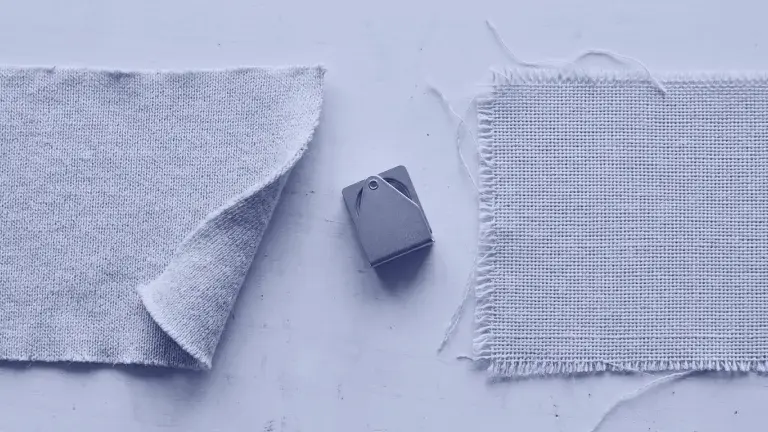
Knit vs Woven Fabric: How to Tell Them Apart
How knit and woven fabrics differ, five checks to tell them apart, the cases that mislead, how to choose by product, and what changes in production, testing and customs classification.
How to Source Fabric from Turkey: Find, Verify, Compare and Order
What Turkish fabric mills make and who they sell to, where to find them, what to plan for on MOQ and lead time, which tests to request, how EU, UK and US duty rules differ and how to verify a supplier.