What is Oxford Cloth?
Oxford cloth is a woven fabric in a 2×1 basket weave, a plain-weave variation in which two warp yarns are woven together as one. With its lightly textured surface, it is mostly woven from cotton and used in shirts and skirts. The name oxford is also used for a coated synthetic bag fabric.
- Published:
- Fact-checked by:
- Gizem Polat
Key facts
- Oxford cloth is a woven fabric in 2×1 basket weave, a plain-weave variation in which two warp yarns are woven together as one yarn.
- In oxford the weft yarn is generally at least twice as thick as the warp; in pinpoint oxford, warp and weft are equally thick.
- Oxford is a structure name, not a fiber: Random House describes it as a cotton or synthetic fabric.
- One shirt brand describes oxford as bulkier and thicker than poplin, with a more visible texture.
- In sourcing, oxford can also mean coated polyester or nylon bag fabric (for example 600D); state the use, fiber and denier in the quote.
Properties
- Fiber content
- Mostly cotton or cotton blends; Random House calls it a cotton or synthetic fabric, and polyester and nylon oxford also exist
- Structure
- Woven; 2×1 basket weave, a plain-weave variation: two warp ends are woven as one yarn. The weft is generally at least twice as thick as the warp; in pinpoint oxford the yarns are equally thick
- Weight range
- No standard range; it varies by fabric. Ask for weight in g/m² with the test method (ISO 3801 or EN 12127)
- Stretch
- No noticeable stretch is expected unless elastic yarn is included; state the elastane percentage if stretch is wanted
- Uses
- Shirts, skirts and summer sportswear (Random House); one shirt brand lists oxford among the leading casual fabrics. Synthetic oxford is used for bags, tents and covers
- Care
- One shirt brand writes that oxford fabrics tend to shrink. Dimensional change after washing is measured by ISO 5077, using ISO 6330 procedures.
Oxford cloth is a woven fabric in basket weave, a variation of plain weave in which two warp yarns are woven together as one; it is used most in shirts. CottonWorks defines oxford as a plain-weave variation in which two warp ends are woven as one yarn. Oxford is a structure name, not a fiber: Random House describes it as a cotton or synthetic fabric. In Turkish the word appears as oxford or oksford; a search of the TDK (Turkish Language Association) dictionary finds neither (accessed October 11, 2026).
Oxford cloth structure
According to CottonWorks, in oxford two warp ends are woven as one yarn and the weft yarn is generally at least twice as thick as the warp; one of the exceptions is pinpoint oxford, in which warp and weft are equally thick. CottonWorks defines basket weave as a plain-weave variation in which two or more warp ends are tied together like plain weave, and lists the 2×1 weave (oxford) among irregular basket weaves. Pratt Institute also names oxford among basket-weave fabrics.
Dictionaries name the weave differently: Collins says plain weave or twill, Random House plain weave, twill or basket weave. So in a technical specification, do not stop at “oxford”; also write the weave, the yarn count and the thread density (ISO 7211-2).
Fiber and look
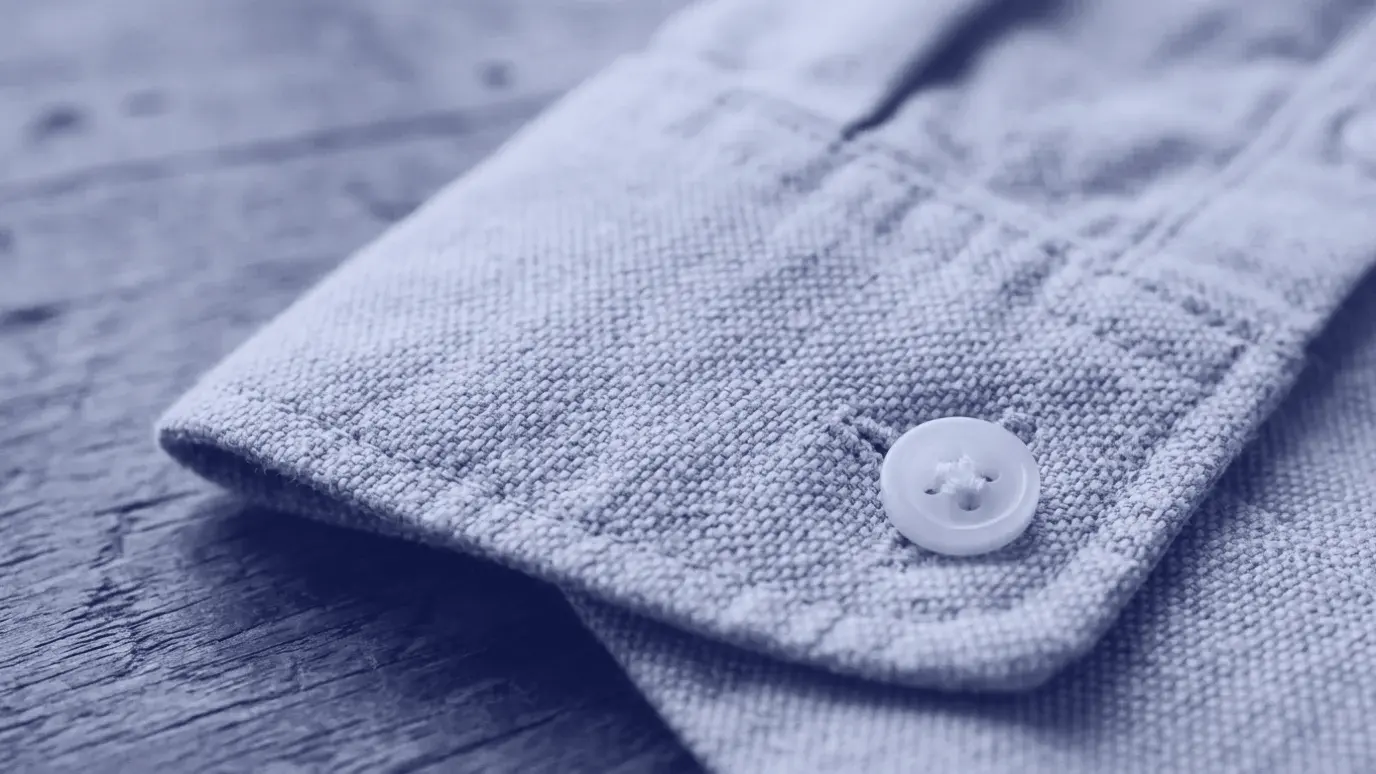
Random House defines oxford as a cotton or synthetic fabric. A fabric publication writes that it is woven from cotton or a cotton blend and also lists polyester in its FAQ (Knowing Fabric, 2024). The most detailed description of the look comes from a shirt brand: Première Manche describes oxford as a fabric with a slightly grainy texture resembling small woven mats, bulkier and thicker than poplin. It writes that as the yarn gets finer the weft shows less and the look becomes more formal. These are manufacturer statements.
Oxford, poplin and twill
| Fabric | Weave | Distinguishing feature |
|---|---|---|
| Oxford | Plain-weave variation, 2×1 basket | Two warp yarns are woven as one; a visible, grainy texture on the surface (CottonWorks, Première Manche) |
| Pinpoint oxford | A type of oxford | Warp and weft are equally thick (CottonWorks) |
| Poplin | 1/1 plain weave | A smooth surface, with no micro relief when seen up close (Première Manche). Collins says a finely ribbed surface |
| Twill (denim, gabardine) | Twill | Diagonal lines on the surface (CottonWorks) |
The second meaning of “oxford”: synthetic bag fabric
The name oxford is also used for a synthetic fabric woven from polyester or nylon in basket weave, which can be coated with PU or PVC; a denier value such as “600D” is written next to the name. A sourcing-consultancy guide (Sourcify China, 2025) describes this fabric as 100% polyester or nylon, used in backpacks, tents, luggage and outdoor furniture covers. This is a different product from shirting oxford. State in the order which one you mean.
What to specify when sourcing oxford
- State the use: cotton shirting oxford, or coated synthetic oxford?
- Write the fiber percentages: cotton, polyester and blends do not behave alike.
- Specify the weave and the yarn: oxford or pinpoint? To put yarn counts on a common scale, use the yarn count converter.
- Get the weight together with its method: a g/m² figure plus the standard it was measured to, ISO 3801 or EN 12127. For a figure quoted in oz/yd², the fabric GSM calculator converts it.
- Ask for oxford's post-wash size change: the value is taken by ISO 5077, with washing and drying to ISO 6330 procedures. Before cutting, set the allowance with the fabric shrinkage calculator and work out the yardage with the fabric consumption calculator.
A general comparison of fabric families is in the fabric types guide; for sourcing, see the Poplin and Shirting Fabrics, Woven Fabrics and Shirts categories.
Frequently asked questions
What is the difference between oxford and poplin?
Poplin is a 1/1 plain weave with a smooth surface. Oxford is a plain-weave variation: two warp yarns are woven as one, and the weft is mostly at least twice as thick as the warp (CottonWorks). Seen up close, the texture of oxford is visible (Première Manche).
Is oxford cloth breathable?
Oxford cannot stop sweating either; the body cools itself by perspiring, and the fabric only influences how quickly sweat is absorbed and evaporates. Fiber matters: in Annex IX of the EU fibre-labeling regulation (1007/2011) the agreed moisture regain is 1.5% for polyester and 8.5% for cotton. Suganthi et al. (2024) examined knitted samples and report that water-vapor permeability is governed mostly by structure, weight and thickness; lighter, thinner, looser constructions let more through. A shirt brand describes oxford as bulkier and thicker than poplin (Première Manche); do not treat these two pieces of information as a substitute for measurement, because the result varies with weight, yarn and finish. Two measurements give the firm answer: air permeability (EN ISO 9237) and resistance to water vapor (EN ISO 11092). Method details are in breathable fabrics for summer.
Does oxford cloth wrinkle or shrink?
One shirt brand writes that oxford wrinkles little, but that oxford fabrics tend to shrink (Première Manche). Both are manufacturer statements; have a sample washed and check the wrinkling and the dimensional change.
Sources (22)
- CottonWorks (Cotton Incorporated), Textile Encyclopedia: Oxford (accessed October 11, 2026)
- CottonWorks (Cotton Incorporated), Textile Encyclopedia: Basket Weave (accessed October 11, 2026)
- CottonWorks (Cotton Incorporated), Textile Encyclopedia: Twill (accessed October 11, 2026)
- CottonWorks (Cotton Incorporated), Learning Hub: Basic Woven Fabric Designs (Oxford Weave section; accessed October 11, 2026)
- Dictionary.com, “oxford” entry (Random House Unabridged Dictionary; Collins English Dictionary; accessed October 11, 2026)
- Dictionary.com, “poplin” entry (Collins English Dictionary; accessed October 11, 2026)
- Pratt Institute Textile Research Lab: Wovens (plain weave and basket weave examples; accessed October 11, 2026)
- Turkish Language Association (TDK), Güncel Türkçe Sözlük (current Turkish dictionary; in Turkish): searches for “oxford” and “oksford” returned no result (accessed October 11, 2026)
- Première Manche (shirt brand), Oxford shirts: product guide (accessed October 11, 2026)
- Première Manche (shirt brand), Poplin shirts: product guide (accessed October 11, 2026)
- Knowing Fabric, The History of Oxford Fabric (fabric publication; August 4, 2024; accessed October 11, 2026)
- Sourcify China, Discover the Versatility of 600D Oxford Fabric: A Comprehensive Guide (sourcing consultancy publication; May 16, 2025; accessed October 11, 2026)
- Suganthi S., Pachiayappan K. M., Krithika S. M. U., Prakash C. (2024). Thermal comfort properties of natural and manmade cellulosic fabrics. Indian Journal of Fibre & Textile Research, 49(4), 403-407
- Baker L. B. (2019). Physiology of sweat gland function: The roles of sweating and sweat composition in human health. Temperature, 6(3), 211-259
- Regulation (EU) No 1007/2011 on textile fibre names and related labelling, Annex IX (agreed allowances), consolidated text of 15.02.2018 (accessed October 8, 2026)
- EN ISO 9237:1995 Textiles: Determination of permeability of fabrics to air (EVS-EN ISO 9237:2000 record)
- EN ISO 11092:2026 Textiles: Physiological effects, Measurement of thermal and water-vapour resistance under steady-state conditions (EVS record; valid since June 15, 2026)
- ISO 3801:1977 Textiles: Woven fabrics: Determination of mass per unit length and mass per unit area (EVS record)
- EN 12127:1997 Textiles. Fabrics. Determination of mass per unit area using small samples (EVS-EN 12127:2000 record; applies to woven and knitted fabrics)
- ISO 7211-2:2024 Textiles: Methods for analysis of woven fabrics construction: Determination of number of threads per unit length (BSI record, published August 22, 2024)
- ISO 5077:2007 Textiles: Determination of dimensional change in washing and drying (confirmed in 2022)
- ISO 6330:2021 Textiles: Domestic washing and drying procedures for textile testing
Author and fact-checking
Written by
Fabrics and Fibers Editor
Elif Karaca is Tekstil Rehberi's fabrics and fibers editor. She writes guides and glossary entries on knitted, woven and nonwoven fabrics, fiber properties and choosing the right fabric for each product, and bases values such as GSM, width, shrinkage and color fastness on standards and mill technical data sheets.
Content by Elif KaracaFact-checked by: Gizem Polat
This content was prepared by the Tekstil Rehberi editorial team. Before publication, our verification editor checked its figures, dates and sources against primary sources.
Spotted an error? Email us at [email protected] How we work →
Articles on this topic
Breathable Fabrics for Summer: Linen, Cotton, Viscose and Modal
No fabric stops sweating, but some manage sweat better. What test data show for linen, cotton, viscose and modal, how construction and weight change the result, and which tests to ask a fabric supplier for.