What is Fason (Contract Manufacturing)?
Fason is the Turkish trade term for work that a company places with another firm while supplying the materials itself, either for a whole product or for one stage such as cutting, sewing, printing, embroidery or washing. In garments, cutting and sewing from buyer-supplied fabric is CMT (cut, make, trim).
- Published:
- Fact-checked by:
- Gizem Polat
Key facts
- Fason is Turkish for production, or one production stage, placed with another firm while the party commissioning it supplies the materials; TDK treats “fason üretim” and “fason imalat” as synonyms.
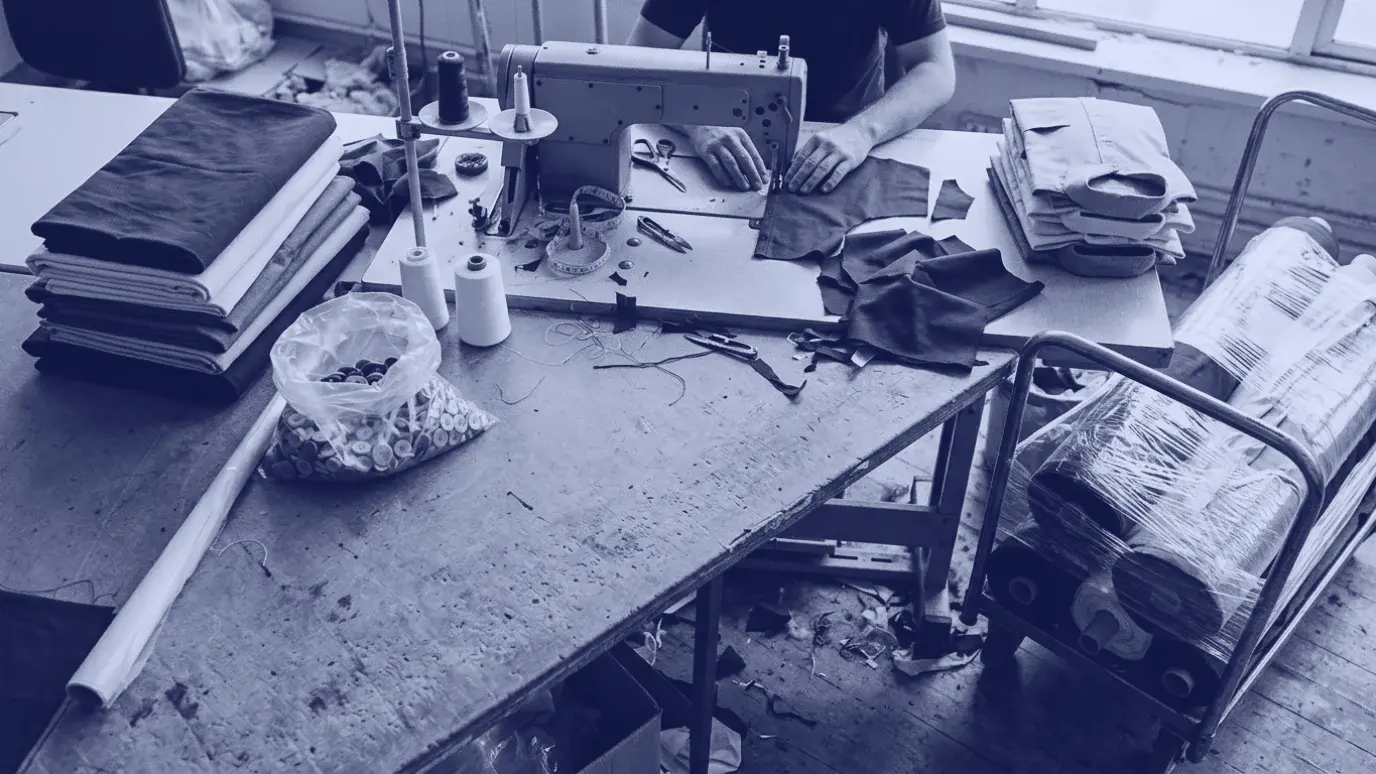
- In garments, fason means an outside workshop, the fasoncu, does cutting, sewing, printing, embroidery or washing on fabric supplied by the party commissioning the work.
- Fason has no single English equivalent: “subcontracting” is the closest, while “contract manufacturing” is broader because it also covers full-package (FOB) suppliers.
- The fasoncu does the job, the fason takipçisi (subcontract production coordinator) works for the firm placing it, and fason işçilik is the fee for the process, not the product.
- Fason is not the same as CMT: CMT is the garment type of fason in which the buyer supplies the fabric, and sewing already-cut pieces is fason but not CMT.
- The dictionary’s dialect sense of fason, “an imitation product made illegally,” is unrelated to commercial contract work.
Fason is the Turkish term for production, or one stage of production, that is placed with another firm while the party commissioning the work supplies the materials. The Turkish Language Association (TDK) dictionary defines “fason üretim” as production placed with another firm with the materials supplied by the brand owner; “fason imalat” means the same. English has no single equivalent: the Turkish Competition Authority’s English guidelines say “subcontracting agreements,” while contract manufacturing is a broader term that also covers full-package suppliers, as our contract garment manufacturing guide explains. When the buyer supplies the fabric for cutting and sewing, the garment trade says CMT (cut, make, trim).
What does fason mean? The dictionary definition
TDK records “fason” with three senses and traces it to French façon (translations ours). The first sense reads only “► kesim” (cutting), and the kesim entry, in its sixth sense, lists “fason” as a synonym for a tailor’s work of shaping fabric. The second is a trade term: goods made by another firm with the materials supplied by the brand owner (“fason mal”). The third, “an imitation product made illegally,” is marked dialectal (ağızlardan), not slang; Tekstil Rehberi, not TDK, treats it as unrelated to commercial fason.
What does fason mean in garment production?
In garment production, the first question is who supplies what. If the brand or manufacturer commissioning the work supplies the fabric (the main raw material) and an outside workshop cuts, sews, prints, embroiders or washes it, the job is fason. In everyday speech the word sometimes also covers jobs where the workshop brings the fabric, but TDK looks for materials from the commissioning party. As of October 16, 2026, the Turkish VAT General Implementation Communiqué (the Communiqué) asks for the raw materials, above all the main raw material, to come from that party.
Hypothetical example: a brand buys fabric and accessories, has one workshop cut, a second sew and a third wash, and pays each only for its process. The Communiqué says a product can be contracted out whole or split by production stage. This entry covers fason in textiles; to find Turkish workshops, start with clothing manufacturers in Turkey.
Fason job types: cutting, sewing, printing, embroidery and washing
| Job | What is done | Companies |
|---|---|---|
| Cutting | Fabric is cut into panels from the pattern | Fabric cutting |
| Sewing | Cut panels are sewn into garments | Contract sewing |
| Printing | A design is printed on fabric or on cut panels | Textile printing |
| Embroidery | A design is stitched by an embroidery machine | Embroidery |
| Washing | A wash process gives the garment its look | Washing |
Sewing cut panels that arrive at the workshop is fason, but it is not CMT, because the workshop does not cut. See also all contract services.
What do fasoncu, fason takipçisi and fason işçilik mean?
The fasoncu is the workshop or business that does fason work with the commissioning party’s materials. TDK has no entry for the word (checked October 16, 2026); it is trade language, used in a Ministry of National Education training module as “fasoncu işletmeler,” contract-work enterprises (MEGEP, 2008). The fason takipçisi, or subcontract production coordinator, works for the firm placing the work, sending materials to the workshop and following production, lead time and quality. Fason işçilik is the fee for the process, not the product: in CMT the factory earns a processing fee, not a garment price (Gereffi and Frederick, 2010). To screen workshops, see how to choose a CMT workshop.
Fason, CMT and full package: what is the difference?
CMT is the garment version of fason in which the buyer supplies the fabric: the factory cuts and sews it, and the fabric belongs to the buyer. A full-package manufacturer sources and finances the fabric and trims itself; the trade also calls this model OEM, FOB or package contractor (Gereffi and Frederick, 2010, p. 12).
| CMT (fason) | Full package | |
|---|---|---|
| Who supplies the fabric? | The party commissioning the work | The manufacturer |
| What is paid for? | The process (labor) | The unit price of the product |
If a quote says “fason,” have it state who supplies the fabric and trims, which processes the price covers, who keeps wastage and leftover fabric, and which MOQ and lead time it assumes.
Are private label and alt fason the same as fason?
| Term | How it differs from fason |
|---|---|
| Private label | Whose brand the product is sold under, not a production method. PLMA says store brands carry the retailer’s name or private brands (private label clothing manufacturers in Turkey) |
| Alt fason (sub-subcontracting) | The workshop passes the work it received to another workshop. As of October 16, 2026, Article 471/3 of the Turkish Code of Obligations says that, in a contract for work, the contractor may have the work done by someone else if its personal qualities are not significant. Write permission or a ban into the contract and ask a lawyer |
Frequently asked questions
What does fason mean on a Turkish quote?
It usually signals contract work: the party commissioning the work supplies the materials, and the workshop is paid for its process. Ask in writing who supplies the fabric and trims, because the word is also used loosely for jobs where the workshop brings the fabric.
Does fason mean counterfeit?
No. The dictionary’s “imitation product made illegally” is a dialect sense. In commercial fason the party commissioning the work is the brand owner and supplies the materials; making unauthorized copies falls outside that definition. Ask a lawyer about the legal consequences.
Does fason work have special VAT rules in Turkey?
Yes, if conditions are met. As of October 16, 2026, the Turkish VAT General Implementation Communiqué covers contract textile and clothing work under partial withholding in section I/C-2.1.3.2.7, applied by commissioning parties that are VAT taxpayers or designated buyers listed there. Thread, buttons and interlining supplied by the workshop count as part of the fason fee. If you buy from outside Turkey, ask your supplier in writing how the order will be invoiced, and confirm the VAT treatment with an accountant.
Sources (10)
- TDK Güncel Türkçe Sözlük (Turkish Language Association dictionary; in Turkish), entry “fason” (senses, origin and compounds; accessed October 16, 2026)
- TDK Güncel Türkçe Sözlük (in Turkish), entry “fason üretim” (accessed October 16, 2026)
- TDK Güncel Türkçe Sözlük (in Turkish), entry “kesim,” sixth sense (accessed October 16, 2026; a search for “fasoncu” returned no result on the same date)
- Turkish VAT General Implementation Communiqué (Katma Değer Vergisi Genel Uygulama Tebliği; Official Gazette, April 26, 2014, No. 28983), Revenue Administration (GİB) consolidated text, section I/C-2.1.3.2.7 (contract textile and clothing work; Turkish text; accessed October 16, 2026)
- Turkish Code of Obligations, Law No. 6098, Articles 470–472 (contract for work; Turkish text from mevzuat.gov.tr; accessed October 16, 2026)
- Turkish Competition Authority, Guidelines on Certain Subcontracting Agreements between Non-competitors (the Authority’s English text, paragraph 3; accessed October 16, 2026)
- Rekabet Kurumu, Rakipler Arasında Olmayan Belirli Nitelikteki Fason Üretim Anlaşmalarına İlişkin Kılavuz (the same guidelines in Turkish, paragraph 3; accessed October 16, 2026)
- T.C. Millî Eğitim Bakanlığı (Turkish Ministry of National Education), MEGEP, Giyim Üretim Teknolojisi: Kesimhanede Son İşlemler (Garment Production Technology: Final Operations in the Cutting Room; 542TGD180; in Turkish), Ankara 2008, section 4.1.3, p. 37 (accessed October 16, 2026)
- Gereffi, G. and Frederick, S. (2010). The Global Apparel Value Chain, Trade and the Crisis: Challenges and Opportunities for Developing Countries. World Bank Policy Research Working Paper 5281 (section 3A, p. 12: Assembly/CMT and OEM/FOB/package contractor definitions; accessed October 16, 2026)
- PLMA, Store Brand Facts: What Are Store Brands? (accessed October 16, 2026)
Author and fact-checking
Written by
Contract Manufacturing and Workshop Editor
Zeynep Arslan is Tekstil Rehberi's contract manufacturing and workshop editor. She writes practical guides on CMT pricing, contracts, tax obligations such as VAT withholding, setting up a workshop and incentives, and takes tax and regulatory details from official sources in force on the date of writing.
Content by Zeynep ArslanFact-checked by: Gizem Polat
This content was prepared by the Tekstil Rehberi editorial team. Before publication, our verification editor checked its figures, dates and sources against primary sources.
Spotted an error? Email us at [email protected] How we work →
Articles on this topic

BSCI Audit in Turkey: Checklist, Ratings and How It Differs From SMETA
How a BSCI audit runs, the 13 performance areas, the A–E rating and a 30-day preparation checklist for Turkish factories, plus how Sedex SMETA differs.

Types of Garment Samples: Proto, Fit, Size Set and PP Sample
The types of garment samples in the order they are made: proto, fit, size set and PP. What each sample is for, who sews and approves it, how many rounds to plan and how to put approval in writing.

Private Label Clothing Manufacturers in Turkey: MOQ & Models
How private label clothing works with Turkish factories: four production routes, why MOQ is never one number, who counts as the manufacturer when your label is on the product, and an eight-step process.