What is Percale?
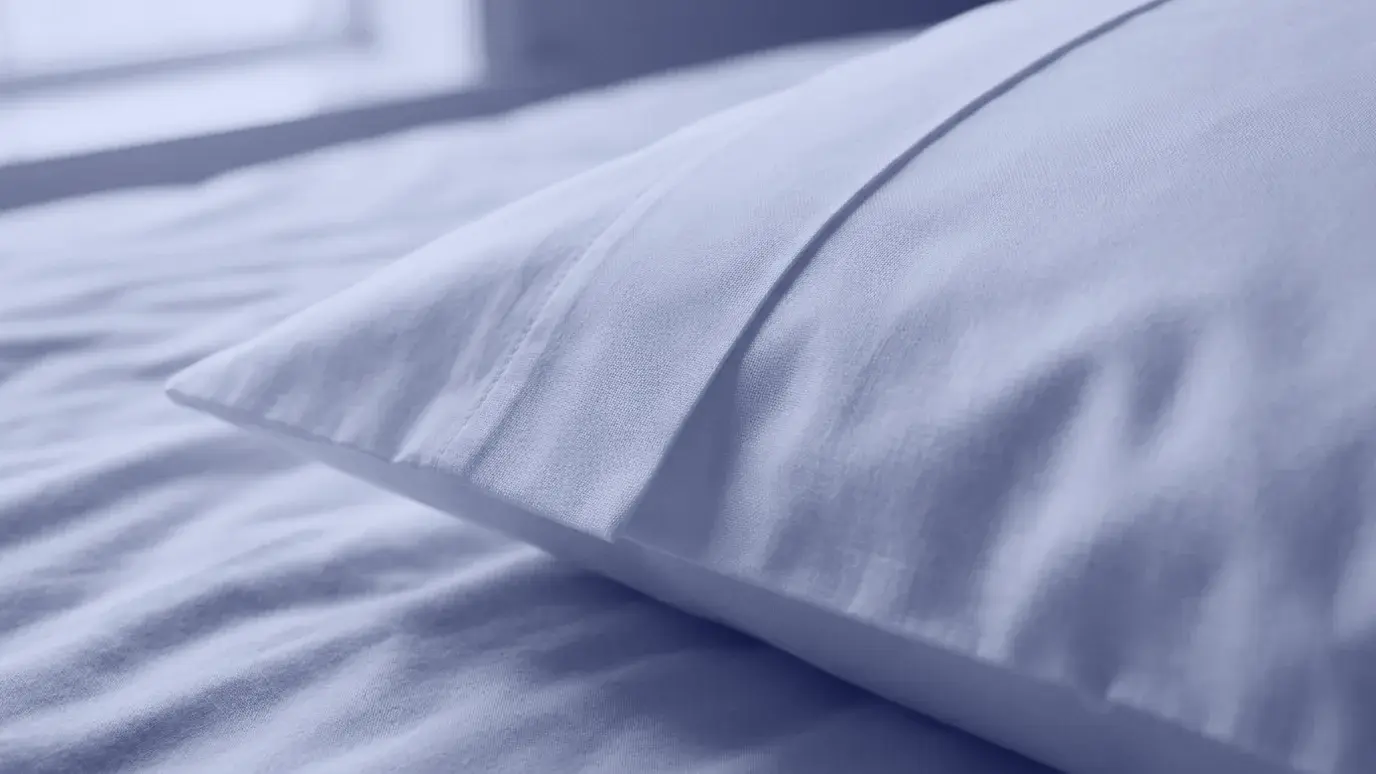
Percale (Turkish: perkal) is a closely woven plain-weave fabric with a matte, smooth face, used mostly in cotton sheets and duvet covers. It is a structure name, not a fiber, and sources give no common thread count threshold.
- Published:
- Fact-checked by:
- Gizem Polat
Key facts
- Percale is a closely woven plain-weave fabric with a matte, smooth face; dictionaries describe it as a cotton fabric used especially for sheets.
- CottonWorks describes percale as a smooth, slightly crisp fabric woven from combed yarn and says percale sheets are available at 160 to 300 thread count.
- There is no single minimum thread count for percale: sources give at least 180, about 200 and above, and other thresholds.
- Thread count (TC) is the total of warp and weft yarns with plied yarn counted once; Turkish cards such as “118 tel - 300 TC” show tel as a per-centimeter total.
- Percale and ranforce are in the same plain-weave family, while sateen is a different weave; a “perkal” label does not guarantee fiber content.
Properties
- Fiber content
- Cotton in dictionary definitions; in retail, cotton-viscose blends are also sold as percale or perkal
- Structure
- Woven, plain weave (1/1); CottonWorks says it is woven from combed yarn. There is no accepted single density threshold (percale sheets are available at 160–300 TC)
- Weight range
- No sourced weight range was found; ask for weight in g/m² (1 oz/yd² ≈ 33.9 g/m²) and state whether it is measured greige or finished
- Uses
- Sheets, duvet covers, pillowcases
- Care
- Care instructions depend on fiber content and finishing. One retail chain lists its 80% cotton, 20% viscose perkal set as washable up to 60 °C. Dimensional change after washing is measured by ISO 5077, using ISO 6330 procedures.
Percale (written perkal in Turkish) is a closely woven plain-weave fabric with a matte, smooth face, used mostly in cotton sheets and duvet covers. The Collins dictionary defines percale as a closely woven cotton fabric used especially for sheets (Dictionary.com). Percale is a structure name, not a fiber, and the sources set no common threshold for its density. The TDK (Turkish Language Association) dictionary has no entry for “percale” or “perkal” (accessed October 11, 2026).
Percale structure
The Random House dictionary defines percale as a closely woven, smooth-faced cotton cloth, plain or printed, used for sheets and garments, and traces the word through French to the Persian pargāla (“rag”) (Dictionary.com). CottonWorks describes percale as a smooth, slightly crisp plain-woven fabric, dyed or printed, made of combed yarns. In plain weave the warp yarn crosses the weft in strict alternation, over one and under the next (CottonWorks). Combed yarn is spun from cotton whose short fibers were removed before spinning; Turkish suppliers call it penye.
Fiber content does not follow from the name. A retail chain describes a bed set of 80% cotton, 20% viscose/rayon as a “narrow perkal weave” (dar perkal dokuma) and the fabric as crisp, matte-surfaced and cool-feeling (IKEA Türkiye). Check the fiber percentage on the label separately.
Percale and thread count
Thread count (TC) is the sum of warp and weft yarns. CottonWorks defines it as the total in one square inch and counts plied yarn as one yarn (CottonWorks, Thread Count). A test laboratory’s page presenting the new ASTM definitions from October 2005 likewise counts warp and weft yarns per unit distance in sheets and pillowcases as single units, even when plied. Its suggested disclosure note, “300 thread count, 2-ply yarns”, is given as a way of writing it that does not mislead; the page states that calling the same product “600 thread count” could mislead the consumer (IDFL).
Sources give different thresholds for percale:
| Source | What it says about percale |
|---|---|
| CottonWorks | Percale sheets are available at 160–300 thread count |
| Mattress Clarity (US) | Generally at least 180 TC |
| Apparel Search | About 200 and above |
| IKEA Türkiye product page | “Narrow perkal weave”, 200 thread count |
| Oteltekstilci (Denizli) | Percale set: 210 TC |
A “percale” label therefore does not state density by itself. In Turkey, product cards show “tel” and TC side by side; a sateen set is listed as “118 tel - 300 TC” (Fabricbox). Because 118 × 2.54 ≈ 300, tel is read as a per-centimeter total and TC as a per-inch total; 200 TC is about 79 tel. Sources also write the unit as “in²” or “cm²”; have the unit written out in the quotation.
The number is not a quality indicator on its own either. A retailer notes that thread count is not everything and that yarn quality matters too (Altınbaşak). Read thread count together with yarn count, fiber and weight; weight alone is not a quality indicator either.
Percale, ranforce and sateen
| Fabric | Weave | Description in sources |
|---|---|---|
| Percale | Plain weave | Matte, smooth, slightly crisp (CottonWorks; IKEA Türkiye) |
| Ranforce | Plain weave | Matte surface; heavier yarn than in sateen; “tok” (full-bodied) (Karaca) |
| Cotton sateen | Satin (sateen) weave | Lustrous, smooth face (CottonWorks); fluid drape (Karaca) |
Weave is what separates percale from sateen: CottonWorks describes sateen as a smooth, lustrous-faced fabric woven in a satin weave from non-silk fibers. Long floats give good drape, yet they also raise the risk of snagging and seam slippage, which plain weave largely avoids (CottonWorks). The difference from ranforce is not in the weave: the sources describe percale with higher thread counts. In Oteltekstilci’s list, percale is 210 TC and ranforce 145 and 160 TC. Only for percale does CottonWorks specify combed yarn; no such condition was found for ranforce. No standard threshold separates the two.
What to specify when sourcing percale
- Do not leave the label at “percale”: state the fiber content (%), whether the yarn is combed (penye), the warp and weft density with its unit (per cm or per inch) and the weave.
- Get the weight in writing: the unit should be g/m², and it should be clear whether the fabric was weighed greige or after finishing. Small-sample weighing follows EN 12127; to work out g/m² from sample dimensions, use the fabric GSM calculator.
- Have shrinkage measured: ask for the ISO 5077 result on a washed sample, with ISO 6330 procedures; use the shrinkage calculator for the cutting allowance.
- Tie coolness claims to measurement: ask for air permeability and water-vapor resistance values.
For a side-by-side comparison of bed linen fabrics, see the bed linen fabric types guide; to find producers, see bed linen manufacturers in Turkey.
Frequently asked questions
Is percale breathable?
No fabric can prevent sweating; it is simply how the body cools itself. IKEA Türkiye describes perkal as a crisp fabric that feels cool, and Mattress Clarity also finds percale cool and lightweight. These are seller and review-site claims, with no measured values given. Test a coolness claim with EN ISO 9237 (air permeability) and EN ISO 11092 (water-vapor resistance) results. Fiber matters too: Annex IX of EU Regulation 1007/2011 on textile fibre names sets agreed moisture regains of 8.5% for cotton and 1.5% for polyester. In a study on knitted samples (Suganthi et al., 2024), permeability to water vapor rose as weight and thickness fell and as the structure opened up. For a wider frame, see breathable fabrics.
How many threads should percale have?
No standard threshold was found; the values sources give are in the table above (160–300 TC overall, at least 180, about 200 and above). Evaluate density together with yarn count and weight.
Is percale cotton?
Dictionaries define percale as a cotton fabric (Collins; Random House). In retail, however, a cotton-viscose blend is also sold as “perkal” (IKEA Türkiye). Check the fiber percentage on the label.
What is the difference between percale and sateen?
The weave. Percale is a plain weave; sateen is woven with long floats and has a lustrous face (CottonWorks).
Is percale the same as ranforce?
Not quite, though they are close relatives in structure: each is a plain weave. CottonWorks describes percale as woven from combed yarn and gives 160 to 300 thread count for sheets; no comparable yarn condition or standard threshold turned up for ranforce. The comparison is covered in the ranforce entry.
Sources (22)
- CottonWorks (Cotton Incorporated), Textile Encyclopedia: Percale (accessed October 11, 2026)
- Dictionary.com, entry “percale” (Collins English Dictionary; Random House Unabridged Dictionary; etymology; accessed October 11, 2026)
- CottonWorks (Cotton Incorporated), Textile Encyclopedia: Thread Count (accessed October 11, 2026)
- CottonWorks (Cotton Incorporated), Textile Encyclopedia: Sateen (accessed October 11, 2026)
- CottonWorks (Cotton Incorporated), Learning Hub: Basic Woven Fabric Designs (accessed October 11, 2026)
- IDFL (textile testing laboratory): Thread Count ASTM Definitions (definitions from the ASTM meeting of October 2005; accessed October 11, 2026)
- ASTM D3775-17(2023) Standard Test Method for End (Warp) and Pick (Filling) Count of Woven Fabrics (accessed October 11, 2026)
- Mattress Clarity (US mattress review site): What Is Percale? (updated January 23, 2023; accessed October 11, 2026)
- Apparel Search: Percale fabric, Definition of Textiles (accessed October 11, 2026)
- IKEA Türkiye: SLANHÖSTMAL single duvet cover set, product page (narrow perkal weave, 80% cotton 20% viscose/rayon, 200 thread count; Turkish; accessed October 11, 2026)
- Oteltekstilci (hotel textile firm based in Denizli): Ürün Rehberi (Product guide; Turkish; undated; accessed October 11, 2026)
- Fabricbox: Hestia Pamuk Saten Nevresim Takımı 300 TC / 120 Tel, product card (Hestia cotton sateen duvet cover set; Turkish; thread count listed as 118 tel - 300 TC; accessed October 11, 2026)
- Karaca Blog: Pamuk Saten mi Ranforce mu? Nevresim Kumaşlarını Karşılaştırıyoruz (Cotton sateen or ranforce? A comparison of bed linen fabrics; Turkish; home textile retailer; June 25, 2026; accessed October 11, 2026)
- Altınbaşak (home textile retailer): Nevresim Takımında Tel Sayısı Kaç Olmalı? (How many tel should a duvet cover set have?; Turkish; undated; accessed October 11, 2026)
- TDK Güncel Türkçe Sözlük (Turkish Language Association dictionary): searches for “perkal”, “percale” and “ranforce” returned no result (accessed October 11, 2026)
- Suganthi S., Pachiayappan K. M., Krithika S. M. U., Prakash C. (2024). Thermal comfort properties of natural and manmade cellulosic fabrics. Indian Journal of Fibre & Textile Research, 49(4), 403-407
- Regulation (EU) No 1007/2011 on textile fibre names and related labelling, Annex IX (agreed moisture regains), consolidated text of 15 February 2018
- EN ISO 9237:1995 Textiles: Determination of permeability of fabrics to air (EVS-EN ISO 9237:2000 record)
- EN ISO 11092:2026 Textiles: Physiological effects: Measurement of thermal and water-vapour resistance under steady-state conditions (EVS record)
- EN 12127:1997 Textiles. Fabrics. Determination of mass per unit area using small samples (EVS-EN 12127:2000 record)
- ISO 6330:2021 Textiles: Domestic washing and drying procedures for textile testing
- ISO 5077:2007 Textiles: Determination of dimensional change in washing and drying (confirmed in 2022)
Author and fact-checking
Written by
Home Textiles Editor
Ayşe Kaya is Tekstil Rehberi's home textiles editor. She covers towels, bathrobes, bed linen, curtains, carpets and upholstery, as well as Turkey's home textile clusters such as Denizli, Bursa and Uşak, and checks product specifications and production data against industry reports and standards.
Content by Ayşe KayaFact-checked by: Gizem Polat
This content was prepared by the Tekstil Rehberi editorial team. Before publication, our verification editor checked its figures, dates and sources against primary sources.
Spotted an error? Email us at [email protected] How we work →
Articles on this topic
Denizli Towel and Bathrobe Industry: How Turkey's Home Textile Hub Works
Why Denizli leads Turkey's towel and bathrobe production, how the chain runs from yarn to sewing, how to read the 2025 numbers and what to ask a supplier.
Bed Linen Fabric Types: Percale, Sateen and Thread Count
Percale, sateen, ranforce and flannel compared: what thread count means per inch and as the Turkish per-centimeter “tel”, why “600 thread count” can mislead, and a checklist for writing a spec.