What is FOB (Free on Board)?
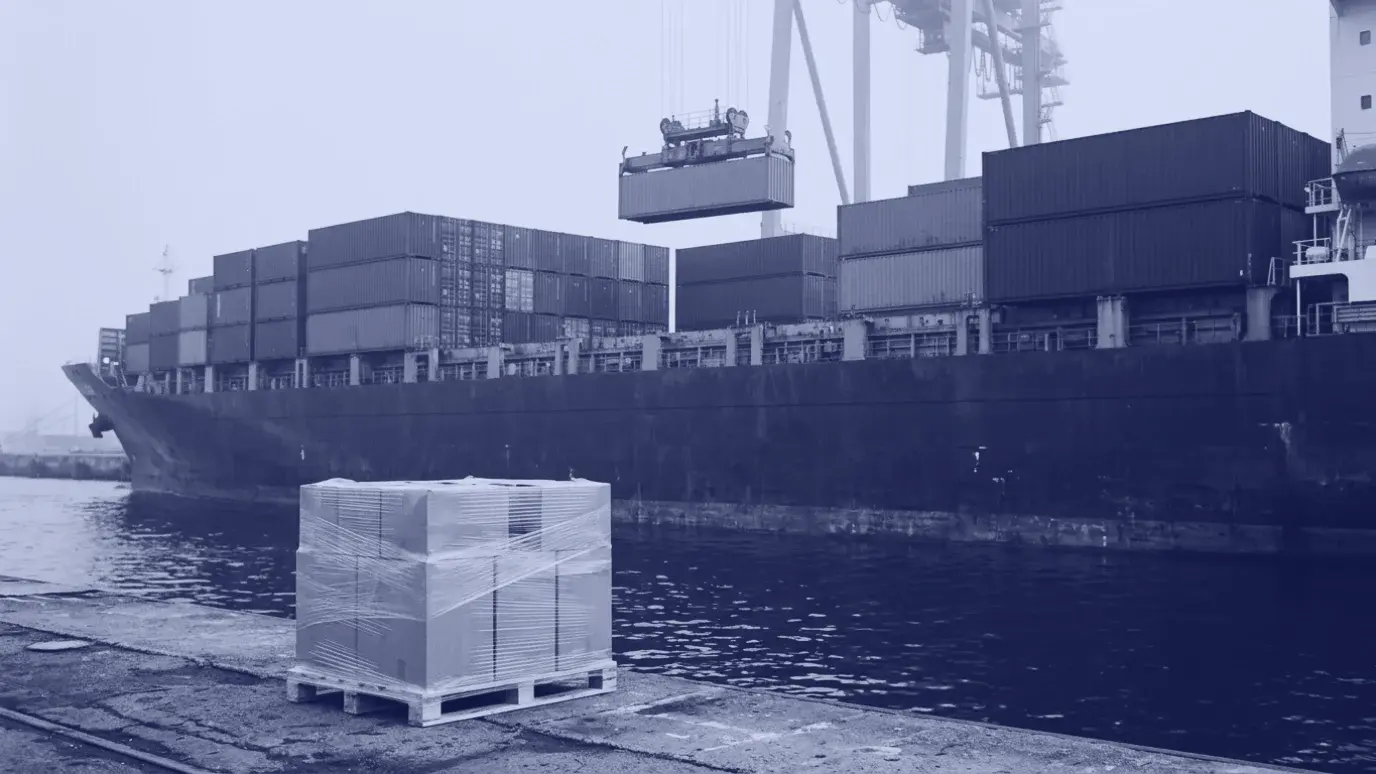
FOB (Free on Board) is an Incoterms 2020 delivery rule, defined only for sea and inland waterway transport, under which the seller loads the goods on the vessel the buyer names and the buyer carries the risk from that moment. In the garment trade, “FOB” also names full-package production, in which the factory sources the fabric and trims too.
- Published:
- Fact-checked by:
- Gizem Polat
Key facts
- FOB (Free on Board) is an Incoterms 2020 rule defined only for sea and inland waterway transport.
- Under FOB the seller loads the goods on the buyer’s vessel and clears them for export; the buyer pays the main freight and import costs, and the seller has no duty to insure.
- Risk passes to the buyer when the goods are loaded on the vessel; the old “ship’s rail” test has not been used since Incoterms 2010.
- For container, road or air shipments, choose a rule open to any transport mode, such as FCA, instead of FOB.
- In garments, “FOB” also names full-package production, in which the factory sources fabric and trims; ask who owns the materials and which port is the delivery point.
- The Turkish Statistical Institute (TÜİK) values exports at FOB and imports at CIF in its foreign trade statistics.
FOB (Free on Board) is an Incoterms rule that fixes where, and at whose risk, goods pass from seller to buyer in an international sale. Under Incoterms 2020 it is defined only for sea and inland waterway transport: the seller loads the goods on the vessel the buyer names, at the named port of loading, and handles export clearance; after loading, the risk is the buyer’s. In the garment trade, “FOB” also names full-package production, in which the factory sources the fabric and trims too.
What does FOB mean in shipping?
FOB is short for Free on Board, one of the eleven Incoterms rules published by the ICC (International Chamber of Commerce). As of October 16, 2026, the current edition is Incoterms 2020. FOB is one of four rules, with FAS, CFR and CIF, defined only for sea and inland waterway transport (U.S. International Trade Administration).
Who pays what under FOB?
The table summarizes the split (ICC Academy, May 13, 2025; Trade Finance Global).
| Item | Seller | Buyer |
|---|---|---|
| Moving goods to the port and loading on the vessel | Does it and pays | Names the vessel and loading point in time |
| Export clearance | Does it and pays | Helps with documents and information if needed |
| Main carriage (freight) | No duty | Contracts for the carriage and pays |
| Insurance | No duty to insure | Owes the seller no insurance, but carries the risk |
| Import clearance and taxes | — | Does it and pays |
| Risk | Until loading | After loading |
The old “ship’s rail” test (risk passing as the goods crossed the rail) has not applied since Incoterms 2010 (Evirgen, 2012, p. 20). If the buyer names the vessel late, or the vessel arrives late, does not take the cargo or closes loading early, risk and extra costs pass to the buyer from the agreed date or the end of the delivery period, even before loading (ICC Academy, May 13, 2025), provided the goods are clearly identified as the contract goods (Trade Finance Global).
Write the rule, the port and the edition on the quote: “FOB (port name), Incoterms 2020.” For freight and customs, see logistics and customs firms; for contract wording, ask a customs broker or legal adviser.
Does an FOB price include shipping?
No, not the main freight. An FOB price is the price of the goods loaded on the vessel at the loading port: it covers the seller’s costs up to loading, not the main carriage or insurance (Trade Finance Global, A9/B9). A CIF price is the FOB price plus freight and insurance to the destination port (Evirgen, 2012, pp. 21–22).
Hypothetical example, not a real price: a factory’s FOB quote is US$10.00 per piece. With US$0.40 of freight and US$0.05 of insurance per piece, the CIF quote is US$10.45.
FOB vs CIF vs FCA: what is the difference?
| Rule | Transport | When does risk pass to the buyer? | Freight and insurance |
|---|---|---|---|
| FOB | Sea, inland waterway | When the goods are loaded on the vessel | Buyer pays freight; insurance not mandatory |
| CIF | Sea, inland waterway | When the goods are loaded on the vessel | Seller pays, to the destination port |
| FCA | Any mode | When the goods are handed to the carrier the buyer names, at the agreed place | Buyer pays freight; insurance not mandatory |
FOB does not fit when the goods are handed to a carrier or terminal before loading, as in container shipments; ICC Academy (May 13, 2025) and Trade Finance Global point to FCA there. FOB and FAS differ at loading: under FAS the goods are delivered alongside the ship and the buyer pays for loading (ICC Academy, May 13, 2025).
If a quote says “FOB factory” or “FOB truck,” it mixes a sea rule with a land delivery point; a Turkish thesis calls FOB on land shipments incorrect use and such wording confusing (Evirgen, 2012, pp. 42, 45). Ask for the delivery point in writing.
What does FOB mean in garment manufacturing?
In the garment trade “FOB” has two meanings: the Incoterms delivery rule and full-package production, in which the manufacturer also sources and finances the fabric and trims. Gereffi and Frederick (2010, p. 12) call this model “OEM/FOB/package contractor” and add that FOB is technically an international trade term.
CBI says FOB is the most used Incoterm in the apparel industry. In its cost model an FOB calculation has two parts: the cut-and-make labor (CM) and the fabric, trims and packing on the bill of materials (BOM) (September 26, 2024).
On a quote with an “FOB price,” ask who owns the materials, which port is the delivery point, and which MOQ and lead time the price assumes. See the contract garment manufacturing guide for the models and clothing manufacturers in Turkey for first-order shipping and payment terms.
What does FOB value mean in trade statistics?
In official Turkish export figures, “FOB value” is a valuation basis: the Turkish Statistical Institute (TÜİK) values exports at FOB and imports at CIF (Foreign Trade Statistics Microdata Set 2025, August 2026, p. 8).
Frequently asked questions
What does FOB port mean?
It is the named port of loading in an FOB sale: the seller delivers by loading the goods on the vessel the buyer has named at that port, and the risk passes to the buyer there. Write the port on the quote, as in “FOB (port name), Incoterms 2020,” so both sides read costs and risk at the same place.
Who pays freight and insurance under FOB?
The buyer pays the main freight. The seller has no duty to contract for carriage, though by agreement it may do so at the buyer’s risk and cost; if the seller takes the freight on, the rule becomes CFR or CIF (Trade Finance Global, A4). Neither party owes the other insurance, but the buyer carries the risk after loading, so insuring is the buyer’s decision (Trade Finance Global, A5/B5).
Can FOB be used for road or air freight?
No. In Incoterms 2020 FOB is defined only for sea and inland waterway transport; for road, air and container shipments choose a rule open to any mode, such as FCA or DAP (U.S. International Trade Administration; ICC Academy, November 19, 2024).
Sources (9)
- ICC, Incoterms® 2020 (eleven rules, “updated 2020”; the rule text is sold on ICC Knowledge 2 Go; accessed October 16, 2026)
- U.S. International Trade Administration, Know Your Incoterms (rule groups and the place of FOB; accessed October 16, 2026)
- ICC Academy, FOB & FAS Incoterms 2020 explained: Key differences, M. A. Bustamante Morales, May 13, 2025 (the author’s views, not the official ICC text; accessed October 16, 2026)
- ICC Academy, FCA & FOB Incoterms 2020 explained: Key differences, M. A. Bustamante Morales, November 19, 2024 (the author’s views; accessed October 16, 2026)
- Trade Finance Global, FOB | Free On Board (named port of shipment) Incoterms 2020 [UPDATED] (summary of rule clauses A1–A10 and B1–B10; secondary source; accessed October 16, 2026)
- TÜİK (Turkish Statistical Institute), Dış Ticaret İstatistikleri Mikro Veri Seti 2025 (Foreign Trade Statistics Microdata Set 2025; in Turkish; Publication No. 4831, August 2026; p. 8, “Değer hesaplama” [value calculation]; accessed October 16, 2026)
- Evirgen, A., Uluslararası ticari teslim şekillerinden FOB teslimde taraf yükümlülükleri (Obligations of the parties under FOB delivery among international commercial delivery terms; title translated by Tekstil Rehberi; in Turkish), master’s thesis, Istanbul Kültür University, February 2012 (based on Incoterms 2010; pp. 19–22, 42, 45; accessed October 16, 2026)
- Gereffi, G. and Frederick, S., The Global Apparel Value Chain, Trade and the Crisis: Challenges and Opportunities for Developing Countries, World Bank Policy Research Working Paper 5281, April 2010 (p. 12: Assembly/CMT and OEM/FOB/Package Contractor definitions; accessed October 16, 2026)
- CBI, How to calculate the cost price of an apparel item?, last updated September 26, 2024 (accessed October 16, 2026)
Author and fact-checking
Written by
Export and Trade Editor
Can Öztürk is Tekstil Rehberi's export and trade editor. He writes about export procedures, customs and origin documents, Incoterms, target markets, export data and government support, as well as guides for international buyers sourcing from Turkey, taking figures from TİM, TÜİK and official regulations.
Content by Can ÖztürkFact-checked by: Gizem Polat
This content was prepared by the Tekstil Rehberi editorial team. Before publication, our verification editor checked its figures, dates and sources against primary sources.
Spotted an error? Email us at [email protected] How we work →
Articles on this topic

BSCI Audit in Turkey: Checklist, Ratings and How It Differs From SMETA
How a BSCI audit runs, the 13 performance areas, the A–E rating and a 30-day preparation checklist for Turkish factories, plus how Sedex SMETA differs.

Types of Garment Samples: Proto, Fit, Size Set and PP Sample
The types of garment samples in the order they are made: proto, fit, size set and PP. What each sample is for, who sews and approves it, how many rounds to plan and how to put approval in writing.
A.TR Certificate: How It Is Issued, How Long It Is Valid and How to Verify It
How an A.TR certificate is issued in Turkey, the four-month presentation deadline, a box-by-box form guide, QR verification, which markets need it and a pre-shipment checklist.