What is Linen?
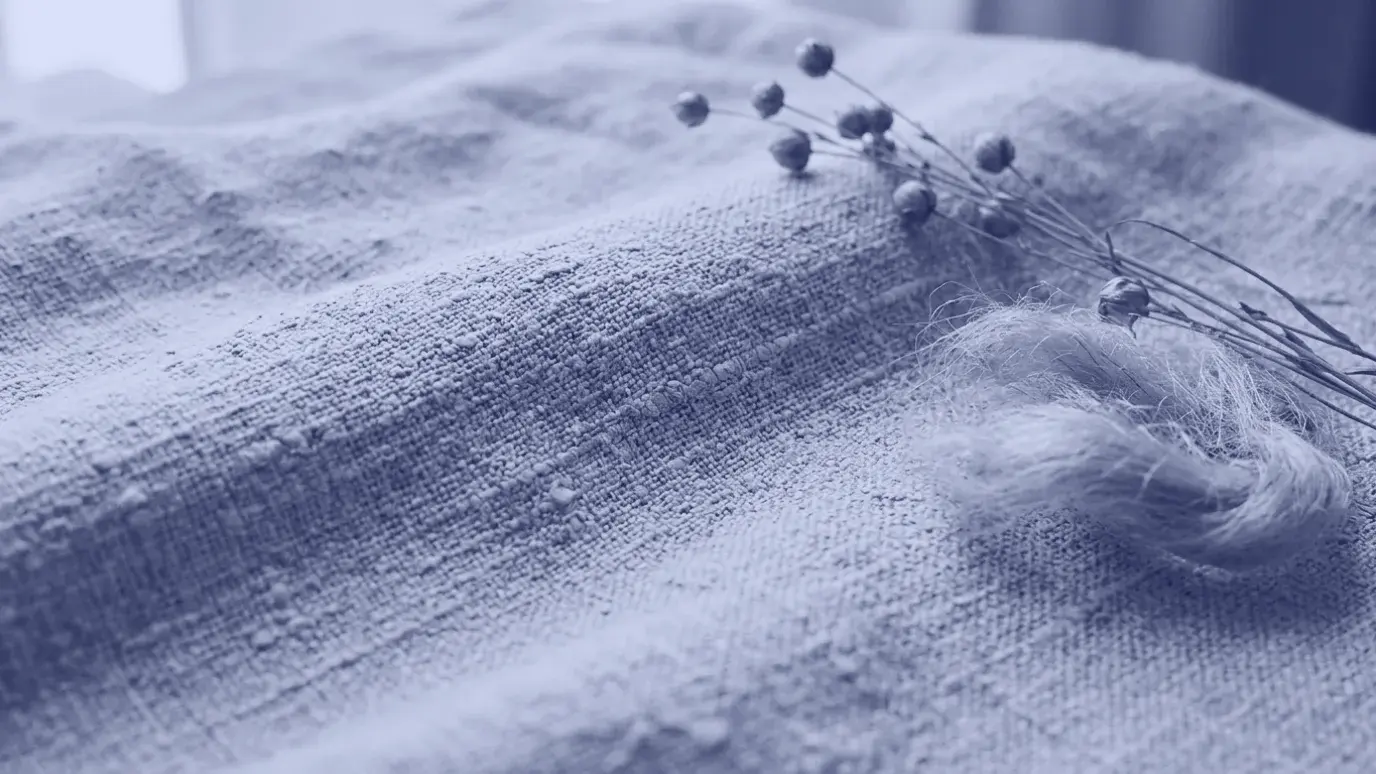
Linen is the cellulosic fiber obtained from the bast layer of the flax plant, and also the fabric woven from yarn spun from it. It is strong and absorbs moisture well, but stretches little and creases easily; it is used in clothing and in home textiles such as bedding. In Turkish it is called keten.
- Published:
- Fact-checked by:
- Gizem Polat
Key facts
- Linen is a cellulosic fiber from the bast of the flax plant; the same word names the fabric woven from it.
- Linen fiber is strong, and its strength rises when wet; but its elasticity is low and the fabric creases easily.
- Linen’s weak points are a low crease recovery angle, poor dimensional stability, a stiff handle and low elasticity.
- When calculating fiber content, the EU regulation allows a moisture allowance of 12% for linen and 8.5% for normal cotton.
- Hank length is 300 yards for linen and 840 yards for cotton; name the yarn count system when giving a count.
Properties
- Fiber content
- Bast (stem) fiber of the flax plant (Linum usitatissimum); cellulosic. Used pure or in blends
- Structure
- Woven fabric; the weave (plain, twill, etc.) is not implied by the name and is stated separately
- Weight range
- No standard range; it varies with yarn count and weave density. Ask for weight in g/m² together with the test method (e.g. EN 12127)
- Stretch
- Low elasticity; stretches little and creases easily
- Uses
- Clothing; home textiles such as bedding, pillows and upholstery; technical uses such as sports equipment and insulation
- Care
- Poor dimensional stability and prone to creasing. Dimensional change after washing is measured by ISO 5077, using ISO 6330 washing and drying procedures.
Linen is a cellulosic fiber obtained from the bast layer of the flax plant (Linum usitatissimum), and the fabric woven from yarn spun from that fiber is also called linen. In English the plant is flax and the fabric is linen; the EU textile fiber names regulation names the fiber “flax (or linen)”. Linen fiber is strong and absorbs moisture well, but its elasticity is low and the fabric creases easily. It is used in clothing and in home textiles such as bedding, pillows and upholstery. In Turkish it is called keten.
What does “linen” mean?
The word covers the plant, the fiber and the fabric together. The Turkish dictionary of the Turkish Language Association (TDK) gives keten as a plant whose fibers are used in weaving and, as an adjective, “made from the fibers of this plant”; keten bezi (linen cloth) is among its compounds. The EU textile fiber regulation (1007/2011, Annex I) defines “flax (or linen)” as the fiber obtained from the bast of the flax plant, and CottonWorks likewise describes linen as a cellulosic fiber from the bast surrounding the plant’s stem. The Getty Art & Architecture Thesaurus gives “linen” as the general name of fabrics woven from the spun fiber of the flax plant. By the same regulation, cotton is obtained from the bolls of the cotton plant: cotton is a seed fiber, linen a stem (bast) fiber.
How flax fiber is obtained
CottonWorks summarizes the process as follows:
- Flax is grown to produce long, thin stalks; when mature, it is pulled from the ground.
- Non-fiber material in the stalk is broken down by retting; the fiber mass is rinsed and dried.
- Breaking and scutching separate the fiber from the woody part of the stalk.
- Hackling separates the long fibers from the short ones.
- The fiber is spun; linen yarn is given S twist.
Properties of linen
| Property | Finding | Source |
|---|---|---|
| Strength | High strength as a fiber; strength rises when wet | Karaman Atmaca (2019); UAL (University of the Arts London, Sustainable Fibers and Fabrics) |
| Moisture | Absorbs moisture well and releases it quickly. In calculating fiber content the EU regulation allows a 12% moisture allowance for linen (8.5% for normal cotton) | UAL; EU 1007/2011 Annex IX |
| Heat | High thermal conductivity; because the fiber does not trap air, it is not an insulator | Karaman Atmaca (2019); UAL |
| Elasticity and creasing | Low crease recovery angle, low elasticity, stiff handle, poor dimensional stability. Repeated folding in the same place can cause breaks | Karaman Atmaca (2019); UAL |
| Surface | Smooth fiber surface; looks and feels smooth and lustrous | Karaman Atmaca (2019); UAL |
The moisture allowance in the table is a trade convention, not a measurement result. The findings are at fiber level; yarn count, weave density and finishing also shape fabric behavior. On heat the sources do not point the same way: the Alliance for European Flax-Linen & Hemp, a European linen industry body, reports, citing a 2014 comfort study, that linen retains heat better than viscose and cotton. Do not tie a coolness expectation to a single number: air permeability (EN ISO 9237) and thermal and water-vapor resistance (EN ISO 11092) measure different things.
Uses
The Alliance groups linen uses into three areas: clothing (fashion), home textiles and interiors (from bedding to pillows and upholstery), and technical applications. On the technical side it names sports equipment such as tennis rackets, and thermal and acoustic insulation.
Linen, hemp, jute and ramie
All four are bast fibers, but they come from different plants. The EU regulation (Annex I) defines linen as coming from Linum usitatissimum, true hemp from Cannabis sativa, jute from Corchorus olitorius and Corchorus capsularis, and ramie from Boehmeria nivea and Boehmeria tenacissima, each as a separate fiber. On labels and in quotations, write the fiber under the name used in the regulation.
What to specify when sourcing linen
- State the fiber percentage. “100% linen” and a blend do not behave the same. As of October 2026, EU Regulation 1007/2011 (Article 9) requires the label of textile products placed on the EU market to show the names and percentages by weight of all fibers, in descending order. Confirm the labeling rules for your own market with a regulatory specialist.
- Name the yarn count system. In English count systems the hank length depends on the fiber: 840 yards for cotton and 300 yards for linen (MEB, 2014). For detail, see the yarn count conversion guide.
- State weight in g/m², with the test method. Mass per unit area from small samples is measured to EN 12127.
- Get linen's shrinkage in writing: the ISO 5077 measurement should follow ISO 6330 washing and drying procedures. Linen’s dimensional stability is reported as poor.
- Judge creasing on the sample. Creasing is in the nature of the fiber; decide whether it is acceptable for your product by looking at a washed sample.
Frequently asked questions
What is the difference between linen and cotton?
They come from different parts of different plants. The EU regulation defines cotton as the fiber from the bolls of the cotton plant and linen as the fiber from the bast of the flax plant (Annex I): cotton is a seed fiber, linen a stem fiber. Karaman Atmaca (2019) lists linen fiber’s high strength alongside its low crease recovery angle and low elasticity, which is why linen fabric creases easily. The moisture allowances accepted by the regulation also differ: 12% for linen, 8.5% for normal cotton.
Does linen shrink?
Karaman Atmaca (2019) describes linen’s dimensional stability as poor. The amount of shrinkage varies by fabric, so have it measured on a sample washed to ISO 5077 and ISO 6330.
Does linen keep you cool in summer?
The sources do not give one answer. Karaman Atmaca (2019) says linen fiber has high thermal conductivity, while UAL says the fiber has no insulating property because it does not trap air. The European linen industry body, citing a 2014 comfort study, reports that linen retains heat better than viscose and cotton. In fabric, coolness also depends on weight, weave density and finishing; ask separately for air permeability (EN ISO 9237) and thermal resistance (EN ISO 11092) values. For test data across fibers, see the breathable fabrics guide.
Sources (14)
- Regulation (EU) No 1007/2011 on textile fibre names and related labelling, Article 9, Annex I (fibre names) and Annex IX (agreed allowances), consolidated text of 15.02.2018 (accessed October 9, 2026)
- CottonWorks (Cotton Incorporated), Textile Encyclopedia: Linen (accessed October 9, 2026)
- Getty Research Institute, Art & Architecture Thesaurus: linen (material) (AAT 300014069; accessed October 9, 2026)
- Turkish Language Association (TDK), Güncel Türkçe Sözlük (current Turkish dictionary; in Turkish), entry “keten” (accessed October 9, 2026)
- Karaman Atmaca, Ö. D. (2019). Nanopartikül esaslı sol-jel kaplamalarla keten kumaşın multifonksiyonel performansının geliştirilmesi (Improving the multifunctional performance of linen fabric with nanoparticle-based sol-gel coatings; in Turkish). Pamukkale University Graduate School of Natural and Applied Sciences, master’s thesis (pp. 1–2)
- University of the Arts London, Centre for Learning and Teaching in Art and Design, Sustainable Fibres and Fabrics: Linen / bast fibre properties (accessed October 9, 2026)
- Alliance for European Flax-Linen & Hemp, Flax performance and properties (industry body; undated; accessed October 9, 2026)
- Alliance for European Flax-Linen & Hemp, Linen home (industry body; undated; accessed October 9, 2026)
- T.C. Millî Eğitim Bakanlığı (Turkish Ministry of National Education), Tekstil Teknolojisi: İplik Numaralandırma (Textile Technology: Yarn Numbering; vocational training module; in Turkish), Ankara, 2014 (copy on the Ankara University open courseware page; accessed October 8, 2026)
- EN 12127:1997 Textiles. Fabrics. Determination of mass per unit area using small samples (EVS-EN 12127:2000 record; applies to woven and knitted fabrics)
- EN ISO 9237:1995 Textiles: Determination of permeability of fabrics to air (EVS-EN ISO 9237:2000 record)
- EN ISO 11092:2026 Textiles: Physiological effects, Measurement of thermal and water-vapour resistance under steady-state conditions (EVS record; valid since June 15, 2026)
- ISO 5077:2007 Textiles: Determination of dimensional change in washing and drying (confirmed in 2022)
- ISO 6330:2021 Textiles: Domestic washing and drying procedures for textile testing
Author and fact-checking
Written by
Fabrics and Fibers Editor
Elif Karaca is Tekstil Rehberi's fabrics and fibers editor. She writes guides and glossary entries on knitted, woven and nonwoven fabrics, fiber properties and choosing the right fabric for each product, and bases values such as GSM, width, shrinkage and color fastness on standards and mill technical data sheets.
Content by Elif KaracaFact-checked by: Gizem Polat
This content was prepared by the Tekstil Rehberi editorial team. Before publication, our verification editor checked its figures, dates and sources against primary sources.
Spotted an error? Email us at [email protected] How we work →
Articles on this topic
Breathable Fabrics for Summer: Linen, Cotton, Viscose and Modal
No fabric stops sweating, but some manage sweat better. What test data show for linen, cotton, viscose and modal, how construction and weight change the result, and which tests to ask a fabric supplier for.