What is Muslin?
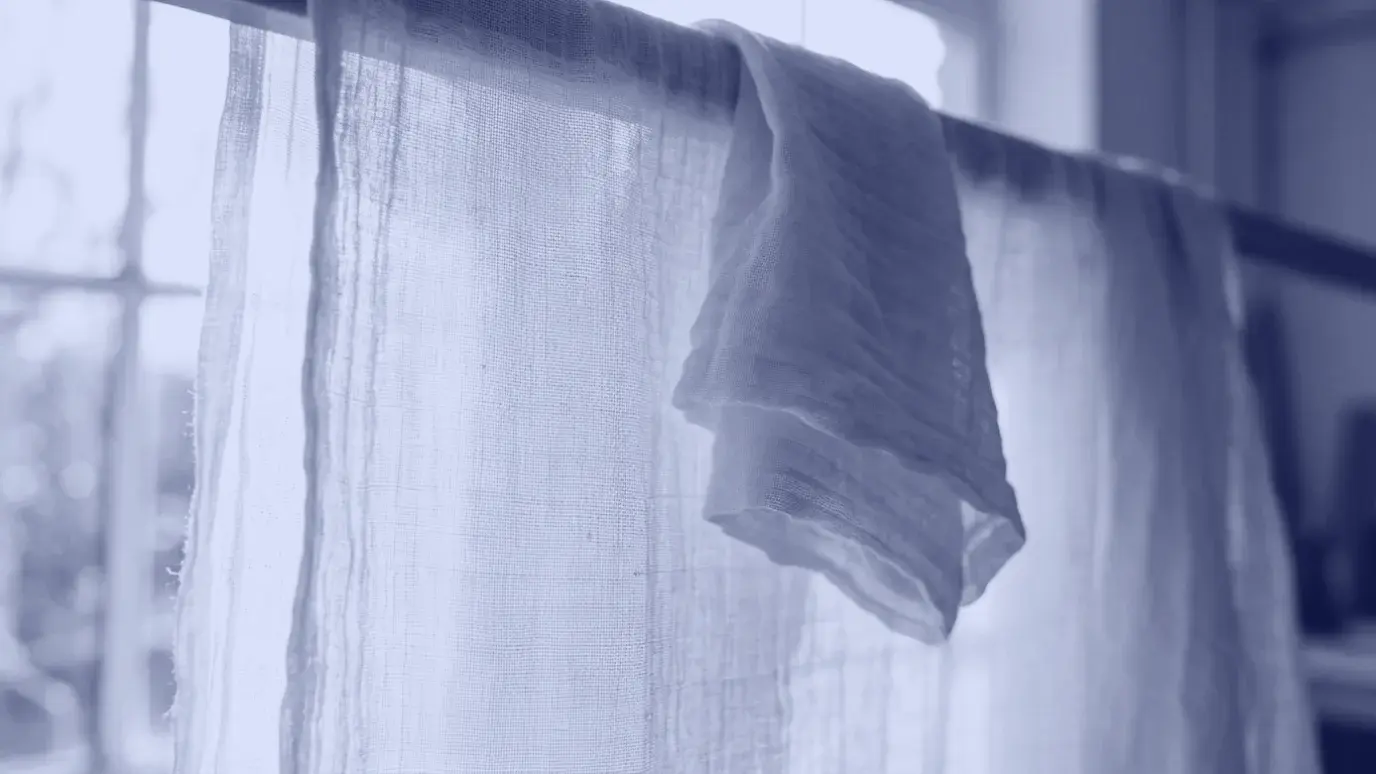
Muslin is a fine plain-weave cotton cloth. Dictionaries say it is made in a very wide range of fineness; in Turkey the name is used especially for soft, loosely woven cotton cloth, in single or multiple layers, for baby swaddles and summer clothing.
- Published:
- Fact-checked by:
- Gizem Polat
Key facts
- Dictionaries define muslin as a plain-weave cotton fabric; Getty AAT calls it a very fine white cotton.
- Muslin is not tied to one fineness: one dictionary-based definition covers weights from very fine and sheer to coarse and heavy.
- Turkish sellers present muslin as soft, loosely woven cotton cloth for baby blankets, swaddles and summer clothing, while TDK defines muslin as a densely woven thin fabric.
- Turkish sellers offer muslin in single, double or multiple layers; one producer’s guide suggests 90–120 g/m² for swaddles and 120–150 g/m² for shirts and dresses.
- In English sewing usage, “muslin” also means a trial garment (toile) and the fabric used to make it.
Properties
- Fiber content
- Cotton: Getty AAT, Random House and Collins define it as plain-weave cotton. The FIT Fashion History Timeline says silk and wool muslins were also used in the 19th and 20th centuries; Turkish seller pages also mention bamboo or modal blends
- Structure
- Woven, plain weave. In Turkey products are listed as single, double and multi-layer; one producer describes double layer as two thin layers joined with point bonds (trade claim)
- Weight range
- No standard range. Haynes (via FIT) gives a range from very fine and sheer to coarse and heavy. One producer page gives a general range of 90–180 g/m² (2.7–5.3 oz/yd²) (Bursa Kumaş, August 11, 2025; commercial source)
- Uses
- Baby swaddles and mouth cloths; summer clothing; home textiles such as tablecloths, curtains and bedspreads (Turkish seller pages). Dictionaries also mention sheets, underwear, linings, shirting, pillowcases and furniture upholstery
- Care
- Care instructions depend on fiber content and finishing; follow the label. Seller pages recommend gentle washing at 30 °C and avoiding bleach (Bursa Kumaş; Kumaş Kumaş); one producer reports about 3–5% shrinkage in the first wash (trade claim). Dimensional change after washing is measured by ISO 5077, using ISO 6330 procedures.
Muslin is a fine plain-weave cotton cloth. The Getty Art & Architecture Thesaurus defines muslin as a very fine, plain-weave, white cotton fabric made in a wide range of qualities. On Turkish seller and producer pages, the name is used especially for soft, loosely woven cotton cloth for baby swaddles and mouth cloths (ağız bezi) and for summer clothing.
What is muslin according to sources?
Definitions vary by source. The table puts dictionary and trade definitions side by side.
| Source | Definition |
|---|---|
| Getty AAT | Very fine, plain-weave, white cotton, in a wide range of qualities. Originally from India; used in Europe and North America for costumes and sometimes as an artist’s material |
| Random House; Collins | Random House: cotton fabric of various fineness, especially plain-weave cotton used for sheets. Collins: fine, plain-weave cotton fabric |
| Fairchild dictionary (via FIT) | Plain-weave fabric of cotton fibers, unbleached or bleached, in a wide weight range. The FIT page also quotes Haynes on weights ranging from very fine and sheer to coarse and heavy |
| SILKNOW | Plain-weave lightweight cotton, cotton-blend or silk fabrics, from the lightest sheers to heavy sheeting. The most common uses are underwear, linings, shirting, sheets, pillowcases and furniture upholstery |
| TDK “muslin” | A densely woven, glossy, thin, soft fabric (of French mousseline origin) |
| Turkish seller and producer pages | Loosely woven thin cotton cloth; mostly 100% cotton; single, double or multi-layer |
The TDK (Turkish Language Association) entry for “muslin” speaks of a densely woven fabric, while sellers describe a loosely woven one; resolve this difference with warp and weft density (ISO 7211-2) rather than with subjective words. Origin stories differ too: Getty AAT says the fabric originally came from India, SILKNOW says the name comes from Mosul (Mesopotamia), and the Fairchild textile dictionary (Tortora and Johnson, via FIT) says muslin was first made in Mosul.
Single, double and multi-layer muslin
Turkish sellers and producers list muslin by number of layers. One producer describes double layer as two thin layers joined with point bonds and writes that it feels fuller and softer than a single layer of the same weight (Bursa Kumaş). One seller treats two layers as standard for swaddles, covers and clothing and says four layers approach terry and piqué uses (kumas.com); another recommends three layers for blankets and covers (Metezer). These are trade claims. Bursa Kumaş suggests the following weight bands by use (August 11, 2025; one producer’s suggestion, not a standard):
| Use | Suggested weight (g/m²) |
|---|---|
| Baby swaddles and mouth cloths | 90–120 (2.7–3.5 oz/yd²) |
| Shirts and dresses | 120–150 (3.5–4.4 oz/yd²) |
| Home textiles | 140–180 (4.1–5.3 oz/yd²) |
Muslin, tülbent, gauze dressing cloth and the sewing “muslin”
| Name | Definition | Difference from muslin |
|---|---|---|
| Tülbent | TDK: thin, loosely woven, light and soft cotton cloth; also a headscarf made of it | TDK’s definition matches how sellers describe muslin; separate the two by a density value |
| Gazlı bez (medical gauze) | TDK: thin, loosely woven, sterilized medical material prepared in various sizes and shapes and used to dress wounds | The structure is loose, but the name describes a medical product; in a fabric order, write the structure instead of this name |
| “Muslin” (sewing) | FIT: tailors and designers use muslin for trial garments (toile), and a trial garment is also called a “muslin” | In English-language sources muslin also means a trial fabric |
What to specify when sourcing muslin
- State the number of layers and the fiber: single, double or multi-layer; 100% cotton or a bamboo or modal blend.
- Ask for warp and weft density: ISO 7211-2 gives the number of threads per unit length.
- Ask for the weight in g/m² and the method. Mass per unit area from small samples is measured to EN 12127; to calculate it from a sample, use the fabric GSM calculator, and to convert kilograms to meters, the meter-kg calculator.
- Have shrinkage measured: by ISO 5077, with ISO 6330 procedures; carry the result into the cut size with the shrinkage calculator.
- For baby products, ask for documents: get test reports suited to the product and the target market, and certificates such as OEKO-TEX, in writing from the supplier; consult a specialist on the requirements for your market.
For a general comparison, see the fabric types guide. To find suppliers, see the woven fabric category, for baby products, baby and kids clothing manufacturers in Turkey, and for blankets, blanket manufacturers in Turkey.
Frequently asked questions
Is muslin breathable?
No fabric stops sweating; what a fabric can do is absorb sweat, spread it and let it evaporate. Muslin is generally cotton, and cotton absorbs moisture well: EU Regulation 1007/2011 on textile fibre names (Annex IX) uses an agreed moisture regain of 8.5% for cotton. A seller page and a news item describe muslin as a breathable fabric that does not make you sweat (Kumaş Kumaş; Ensonhaber/İHA), but these sources give no measured values; they are trade claims and news narration. Because layers, weight and structure can change the result, ask for air permeability (EN ISO 9237) and water-vapor resistance (EN ISO 11092) values. How to read the measurements is explained in breathable fabrics.
Is muslin the same as medical gauze?
No. TDK defines gazlı bez as a thin, loosely woven, sterilized medical material used to dress wounds, while muslin is a plain-weave cotton fabric. Their weaves may look alike, but gauze dressing cloth is the name of a medical product. In a fabric order, write the structure, fiber and density instead of “gauze”. The sources reviewed did not establish how fabric sold as “double gauze” relates to muslin.
Does muslin shrink?
One producer reports about 3–5% shrinkage in the first wash (Bursa Kumaş). This is a producer’s claim; the value for your own fabric varies with fiber, structure and finishing, so have it measured by ISO 5077.
Sources (19)
- TDK Güncel Türkçe Sözlük (Turkish Language Association dictionary), entry “muslin” (accessed October 11, 2026)
- TDK Güncel Türkçe Sözlük (Turkish Language Association dictionary), entry “tülbent” (accessed October 11, 2026)
- TDK Güncel Türkçe Sözlük (Turkish Language Association dictionary), entry “gazlı bez” (gauze dressing cloth; accessed October 11, 2026)
- Getty Research Institute, Art & Architecture Thesaurus: muslin (AAT 300014087; accessed October 11, 2026)
- Dictionary.com, entry “muslin” (Random House Unabridged Dictionary; Collins English Dictionary; accessed October 11, 2026)
- FIT Fashion History Timeline, Muslin (quoting Christine Haynes, How to Speak Fluent Sewing, 2015; Calasibetta and Tortora, The Fairchild Dictionary of Fashion, 2003; Tortora and Johnson, The Fairchild Books Dictionary of Textiles, 2013; accessed October 11, 2026)
- SILKNOW Silk Heritage Thesaurus: Muslin (citing Getty AAT; accessed October 11, 2026)
- Bursa Kumaş (fabric producer and seller), Müslin Kumaş Nedir? Özellikleri, Türleri, Fiyatları ve Kullanım Rehberi (What is muslin fabric? Properties, types, prices and use guide; Turkish; blog, August 11, 2025; commercial source; accessed October 11, 2026)
- Metezer Kumaş (online fabric seller), Müslin Kumaş Nedir? Özellikleri, Kullanım Alanları ve Bakımı (What is muslin fabric? Properties, uses and care; Turkish; undated; commercial source; accessed October 11, 2026)
- kumas.com (online fabric seller), Müslin Kumaş: %100 Pamuk, Metreyle (Muslin fabric: 100% cotton, by the meter; Turkish; product list; commercial source; accessed October 11, 2026)
- Kumaş Kumaş (online fabric seller), Müslin Kumaş (Muslin fabric; Turkish; product page; commercial source; accessed October 11, 2026)
- Ensonhaber (İHA news agency), Denizli’nin müslin bezi yeniden rağbet gördü (Denizli’s muslin cloth is in demand again; Turkish; news, October 1, 2023; accessed October 11, 2026)
- EN 12127:1997 Textiles. Fabrics. Determination of mass per unit area using small samples (BS EN 12127:1998 record; applies to woven and knitted fabrics)
- ISO 7211-2:2024 Textiles: Methods for analysis of woven fabrics construction: Determination of number of threads per unit length (BSI record, published August 22, 2024)
- ISO 5077:2007 Textiles: Determination of dimensional change in washing and drying (confirmed in 2022)
- ISO 6330:2021 Textiles: Domestic washing and drying procedures for textile testing
- EN ISO 9237:1995 Textiles: Determination of permeability of fabrics to air (EVS-EN ISO 9237:2000 record)
- EN ISO 11092:2026 Textiles: Physiological effects, measurement of thermal and water-vapour resistance under steady-state conditions (sweating guarded-hotplate test) (EVS record; valid from June 15, 2026)
- Regulation (EU) No 1007/2011 on textile fibre names and related labelling, Annex IX (agreed moisture regains), consolidated text of 15 February 2018
Author and fact-checking
Written by
Fabrics and Fibers Editor
Elif Karaca is Tekstil Rehberi's fabrics and fibers editor. She writes guides and glossary entries on knitted, woven and nonwoven fabrics, fiber properties and choosing the right fabric for each product, and bases values such as GSM, width, shrinkage and color fastness on standards and mill technical data sheets.
Content by Elif KaracaFact-checked by: Gizem Polat
This content was prepared by the Tekstil Rehberi editorial team. Before publication, our verification editor checked its figures, dates and sources against primary sources.
Spotted an error? Email us at [email protected] How we work →
Articles on this topic
Bed Linen Fabric Types: Percale, Sateen and Thread Count
Percale, sateen, ranforce and flannel compared: what thread count means per inch and as the Turkish per-centimeter “tel”, why “600 thread count” can mislead, and a checklist for writing a spec.
Knit vs Woven Fabric: How to Tell Them Apart
How knit and woven fabrics differ, five checks to tell them apart, the cases that mislead, how to choose by product, and what changes in production, testing and customs classification.
How to Source Fabric from Turkey: Find, Verify, Compare and Order
What Turkish fabric mills make and who they sell to, where to find them, what to plan for on MOQ and lead time, which tests to request, how EU, UK and US duty rules differ and how to verify a supplier.