What is Knitted Fabric?
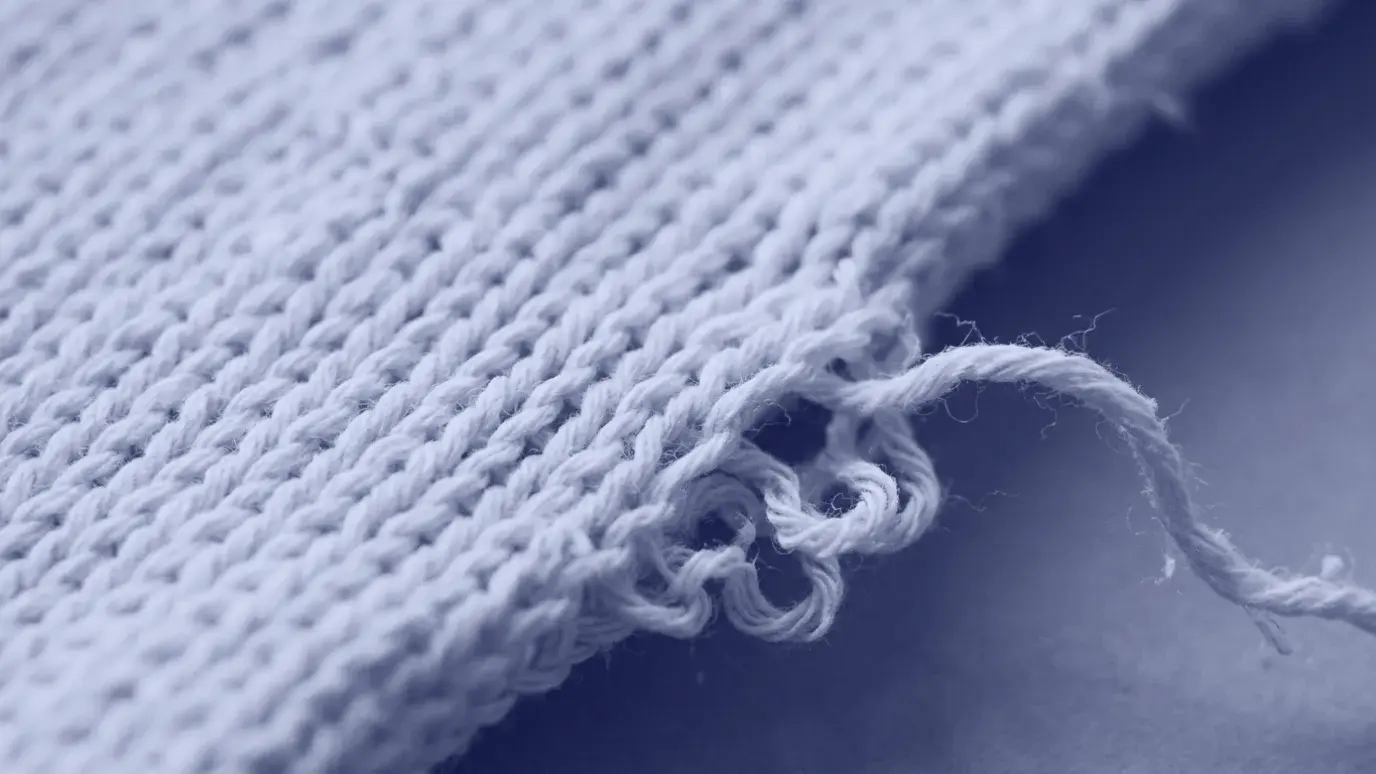
Knitted fabric is made by turning yarn into loops and intermeshing the loops with one another; the loop structure gives the fabric natural stretch. It falls into two main groups, weft knits and warp knits. Single jersey, rib and interlock are weft knits.
- Published:
- Updated:
- Fact-checked by:
- Gizem Polat
Key facts
- Knitted fabric is formed by turning yarn into loops and connecting each loop to its neighbors; in woven fabric two sets of yarn cross at right angles.
- Knitted fabrics fall into two main groups: weft knits and warp knits.
- The loop structure gives knits natural stretch; the stretch of woven fabric is limited by yarn properties and weave structure.
- A cut edge of weft knit can curl and stitches can run; warp knit generally does not unravel.
- Single jersey, rib and interlock are weft (circular) knits, each with a different weight and stretch.
Properties
- Fiber content
- Knitted from cotton, viscose, polyester and blends; elastane versions exist
- Structure
- Yarn is formed into loops and the loops are intermeshed. Two main groups: weft knitting and warp knitting; produced on flat and circular machines
- Weight range
- No single range; weight varies widely with fabric type, yarn count and machine gauge (see the single jersey, interlock and polar fleece entries)
- Stretch
- Stretches naturally because of the loop structure. In weft knits the stretch is generally greater along the courses (crosswise); in warp knits generally along the wales (lengthwise)
- Uses
- T-shirts, joggers, sweatshirts, sweaters, jackets, socks and underwear (weft knits); swimwear, lace, tulle curtains, towels and carpets (warp knits); medical and technical fabrics
- Care
- Care instructions depend on fiber content and finishing. Dimensional change after washing is measured by ISO 5077, using ISO 6330 washing and drying procedures.
Knitted fabric is made by forming yarn into loops with special needles and linking each loop to the loops before, after and beside it (Dönmez, 2008). In weaving, two sets of yarn cross at right angles; in knitting, the yarn forms interlocking chains of loops (NPTEL; CottonWorks). This loop structure gives the fabric natural stretch and lets it hug the body (Dönmez, 2008). T-shirts, joggers, sweaters, socks and underwear are made of knitted fabric (Marmaralı, 2004, cited in Dönmez, 2008).
Knitted fabric structure
In knitted fabric the horizontal rows of loops are called courses and the vertical columns wales (CottonWorks). The face made of knit stitches is generally used as the front and the face made of purl stitches as the back (Marmaralı, 2004, cited in Dönmez, 2008).
In knitted fabric the greatest stretch is usually along the courses, that is, crosswise, but this does not hold for every fabric, and the stretch should be tested before buying (University of Kentucky Extension, 2006). Compared with a knit, plain-weave woven fabric resists stretching better in the main directions and looks similar on both faces, whereas the front and back of a weft knit made of simple loops look different from each other (NPTEL).
Weft knit vs warp knit
Knitting is divided into two main groups, weft knitting and warp knitting (Dönmez, 2008). The table compares them.
| Weft knit | Warp knit | |
|---|---|---|
| Loop formation | Adjacent needles form loops one after another in the horizontal direction; one yarn forms a row (CottonWorks; Dönmez, 2008) | Loops form in the vertical direction from separate lengthwise yarns (CottonWorks; Dönmez, 2008) |
| Unraveling and edge | Can unravel across the width when the yarn of the last row is pulled (Dönmez, 2008); curls, runs and unravels at the ends (CottonWorks) | Generally does not unravel, or unravels only lengthwise (Dönmez, 2008); no curling or fraying when cut horizontally (CottonWorks) |
| Stretch | More along the courses (NPTEL) | More along the wales (NPTEL) |
| Machines | Flat, circular and so-called Cotton machines (Dönmez, 2008) | Warp knitting machines and raschel machines (Çeken, 2008, cited in Dönmez, 2008) |
| Example products | T-shirts, joggers, sweatshirts, sweaters, jackets, socks, underwear; medical and technical fabrics (Marmaralı, 2004, cited in Dönmez, 2008) | Fancy fabrics, swimwear, lace, tulle curtains, towels, carpets; filters, greenhouse covers, sacks, fishing nets (Marmaralı, 2004, cited in Dönmez, 2008) |
A circular machine arranges its needles in a cylindrical bed and so produces fabric in tubular form (Dönmez, 2008); flat machines are used for products such as sweaters (CottonWorks). In the Turkish industry the single-bed circular machine is also called a “single jersey machine” (süprem makinesi) and the double-bed machine a “rib machine” (ribana makinesi) (Çeken, 2008, cited in Dönmez, 2008). The “towels” in the warp-knit column of the table refers to products made with a knitted structure; woven terry cloth, made from a ground warp, a pile warp and a weft, is a different fabric.
Main knitted fabrics
- Single jersey: knitted on a single-bed machine; crosswise stretch is about twice the lengthwise stretch, and the cut edge curls (CottonWorks).
- Rib knit and 2x2 rib: double-bed; in the Turkish market the most-used “ribana” is 1x1 rib and “kaşkorse” is 2x2 rib (Dönmez, 2008). Rib stretches to about twice the width of single jersey and, if properly knitted, does not curl (CottonWorks).
- Interlock: made by knitting two 1x1 ribs into each other; both faces look the same, it is very stable and does not curl (CottonWorks).
- Piqué: has a micro-mesh (small-hole) texture on the surface; used in polo shirts and sportswear (CottonWorks).
- Two-thread and three-thread fleece: an extra yarn is knitted with floats on the reverse (CottonWorks); in the trade they are described as brushed or unbrushed (Uyanık, 2023). CottonWorks calls the brushed types fleece and the unbrushed type French terry, and regards three-end fleece as the most stable and fullest fleece structure.
- Polar fleece: a brushed, mostly polyester knit (see the polar fleece entry).
Double-bed (double-knit) fabrics are more stable than single-bed ones and curl less (CottonWorks).
How to tell knit from woven
- Look through a magnifier: in a knit the yarn forms a chain of loops; in a woven fabric two sets of yarn run at right angles (Dönmez, 2008; NPTEL).
- Test the stretch: knitted fabric stretches by itself; the stretch of a woven fabric is limited by yarn properties and weave structure (Dönmez, 2008). Woven fabric with elastane, or a stable interlock, can blur this rule.
- Look at the cut edge: a weft knit curls at the ends, runs and unravels (CottonWorks). A warp knit does not curl or fray when cut horizontally (CottonWorks); the edge check alone is therefore not enough, so use it together with the first two steps.
In specifications and testing
In a knitted fabric order, state the structure (weft or warp, fabric type), the fiber, the yarn, the machine gauge and the weight together. The number of courses and wales per cm is measured by EN 14971, and the mass per unit area on a small specimen by EN 12127, which applies to woven and knitted fabrics. Dimensional change after washing is determined by ISO 5077, and the washing and drying procedure by ISO 6330. For weight ranges see fabric weight for T-shirts, hoodies and joggers, and for T-shirt fabrics see T-shirt fabric types; a general comparison of knit, woven and nonwoven fabrics is in the fabric types guide.
If you are looking for a fabric supplier, see the knitted fabric category.
Frequently asked questions
What is the difference between knitted and woven fabric?
In knitting, yarn is formed into loops and the loops intermesh; in weaving, warp and weft cross at right angles. The loop structure gives knits natural stretch; the stretch of woven fabric is limited by yarn properties and weave structure (Dönmez, 2008).
What is the difference between weft and warp knitting?
In weft knitting, loops are formed one after another in the horizontal direction by adjacent needles; in warp knitting, loops are formed in the vertical direction from separate lengthwise yarns (CottonWorks). A weft knit can unravel across the width; a warp knit generally does not unravel (Dönmez, 2008).
Is tricot (Turkish: triko) the same as knitted fabric?
The name means different things depending on the source. TDK defines the Turkish word triko, derived from tricot, as a type of wool fabric produced by knitting. The Pratt Institute uses the name tricot for a warp-knit fabric, mostly knitted from synthetic filament yarn. In a quotation, state the structure (weft or warp, fabric type) and the fiber instead of writing “triko”.
Does knitted fabric shrink in the wash?
Dimensional change depends on the fiber, the yarn and the finishing. It is measured by ISO 5077, with washing and drying to ISO 6330 procedures; ask the supplier for the length and width change after washing.
Sources (12)
- Dönmez, E. T. (2008). Yuvarlak örme kumaşlarda kumaş gramajına etki eden faktörler üzerine bir araştırma (A study on the factors affecting fabric weight in circular knitted fabrics; in Turkish). Dokuz Eylül University Graduate School of Natural and Applied Sciences, master’s thesis (pp. 1-4, 8, 13-15)
- CottonWorks (Cotton Incorporated): Knit Basics (accessed October 9, 2026)
- CottonWorks (Cotton Incorporated): Single Knits and Double Knits (accessed October 9, 2026)
- NPTEL, Knitting Technology, Module 1 FAQ
- Baker, M. M. (2006). Understanding Fabric Grain (CT-MMB.210). University of Kentucky Cooperative Extension Service
- Pratt Institute Textile Research Lab: Knits (accessed October 9, 2026)
- TDK Güncel Türkçe Sözlük (Turkish Language Association dictionary), entry “triko” (accessed October 9, 2026)
- EN 14971:2006 Textiles. Knitted fabrics. Determination of number of stitches per unit of length and unit area (BS EN 14971:2006 record)
- Uyanık, S. (2023). İki iplik örme kumaşlarda farklı astar ipliği oranlarının kumaş özelliklerine etkileri (The effects of different backing yarn ratios on the properties of two-thread knitted fabrics; in Turkish). Çukurova University Journal of the Faculty of Engineering, 38(3), 819-826
- EN 12127:1997 Textiles. Fabrics. Determination of mass per unit area using small samples (BS EN 12127:1998 record; applies to woven and knitted fabrics)
- ISO 6330:2021 Textiles: Domestic washing and drying procedures for textile testing
- ISO 5077:2007 Textiles: Determination of dimensional change in washing and drying (confirmed in 2022)
Author and fact-checking
Written by
Fabrics and Fibers Editor
Elif Karaca is Tekstil Rehberi's fabrics and fibers editor. She writes guides and glossary entries on knitted, woven and nonwoven fabrics, fiber properties and choosing the right fabric for each product, and bases values such as GSM, width, shrinkage and color fastness on standards and mill technical data sheets.
Content by Elif KaracaFact-checked by: Gizem Polat
This content was prepared by the Tekstil Rehberi editorial team. Before publication, our verification editor checked its figures, dates and sources against primary sources.
Spotted an error? Email us at [email protected] How we work →
Related calculators
- GSM calculator GSM from a sample, oz/yd² conversion and weight per linear meter.
- Meter-to-kg converter Meters, yards, m², kilograms and pounds from width and GSM; tubular fabric and tolerance.
- Fabric consumption calculator Quantity, consumption and waste to order meters, kilograms and rolls.
- Shrinkage calculator Shrinkage percent from a wash test; cut and marker size for a shrinkage rate.
Articles on this topic
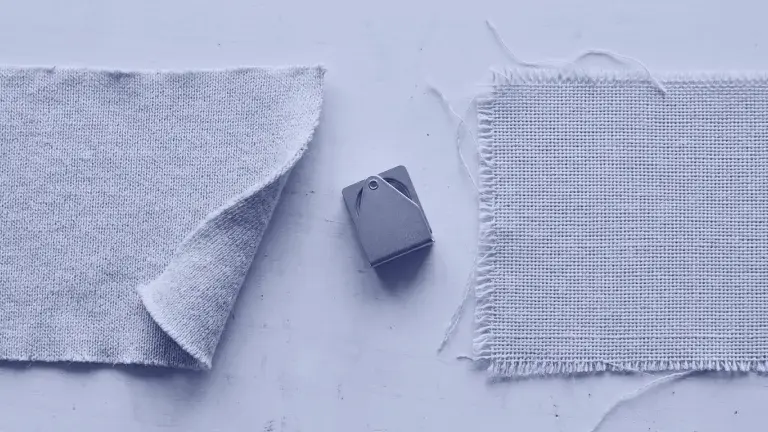
Knit vs Woven Fabric: How to Tell Them Apart
How knit and woven fabrics differ, five checks to tell them apart, the cases that mislead, how to choose by product, and what changes in production, testing and customs classification.
How to Source Fabric from Turkey: Find, Verify, Compare and Order
What Turkish fabric mills make and who they sell to, where to find them, what to plan for on MOQ and lead time, which tests to request, how EU, UK and US duty rules differ and how to verify a supplier.
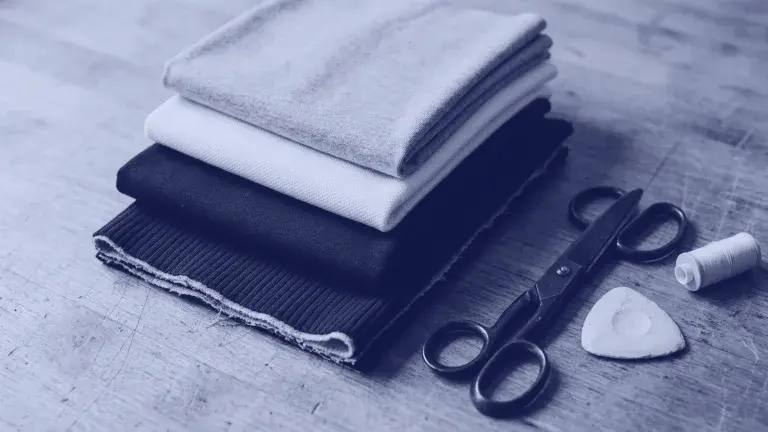
T-Shirt Fabric Types: A Buyer’s Guide to Jersey, Piqué, Interlock and Rib
How single jersey, piqué, interlock and rib behave in a T-shirt, how to write the fabric spec for your supplier, and what Turkish terms such as süprem and penye mean.