What is Ranforce (Renforcé)?
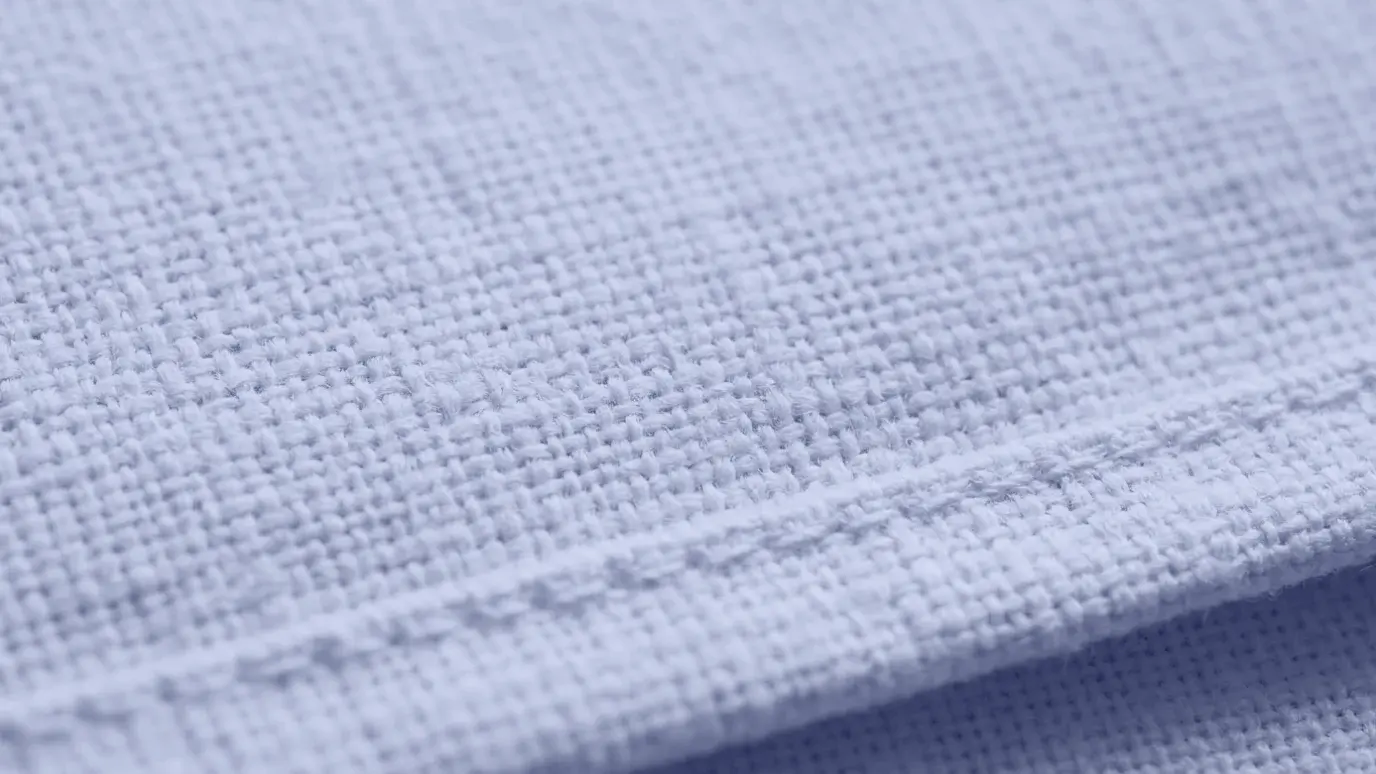
Ranforce is a trade name, widely used in Turkey, for a matte plain-weave fabric, mostly cotton, used in duvet cover sets and sheets. It has no standard definition; thread count and fiber content vary by seller.
- Published:
- Fact-checked by:
- Gizem Polat
Key facts
- Ranforce is a common bed linen fabric name in Turkey, but the TDK Turkish dictionary has no entry for it; thread count and fiber vary by seller.
- Seller sources describe ranforce as a plain-weave, mostly 100% cotton fabric; some brands also call blended fabrics ranforce.
- The often-quoted 57 tel (warp plus weft ends per cm) works out to about 145 TC per inch; a Denizli firm lists ranforce sets at 145 and 160 TC.
- Ranforce is in the same plain-weave family as percale; sources list percale at a higher thread count, and no standard boundary between them was found.
- No fabric stops sweating; breathability claims for ranforce are tested by air permeability (EN ISO 9237) and water-vapor resistance (EN ISO 11092).
Properties
- Fiber content
- Mostly 100% cotton; some brands also call blended fabrics ranforce (Baxana)
- Structure
- Woven, plain weave (1/1). Trade claims: 30/1 (Ne) yarn and 57 tel (warp plus weft ends per cm, about 145 TC); a hotel textile firm lists 145 and 160 TC
- Weight range
- No sourced weight range was found; ask for weight in g/m² (1 oz/yd² ≈ 33.9 g/m²) and state whether it is measured greige or finished
- Uses
- Duvet cover sets, sheets, bedspreads, pajama sets
- Care
- Care instructions depend on fiber content and finishing. One home textile brand recommends washing at 30–40 °C and says slight shrinkage may occur in the first wash. Dimensional change after washing is measured by ISO 5077, using ISO 6330 procedures.
Ranforce is a fabric name widely used in Turkey for duvet cover sets and sheets: a matte plain-weave fabric, mostly cotton, that Turkish sellers list at a lower thread count than percale and sateen. It is an established trade name, not a fiber name. No definition was found in the dictionary and standard sources reviewed, and a search of the Turkish Language Association’s dictionary (TDK) for “ranforce” returned nothing (accessed October 11, 2026). The information below therefore rests on seller and trade sources; thread count and fiber content can differ from product to product.
Ranforce structure
A home textile brand describes ranforce as a plain-weave fabric made from 100% cotton yarn (Karaca, June 25, 2026). Plain weave binds warp and weft in a simple one-up, one-down order (CottonWorks). A trade information site gives ranforce a 30/1 yarn (read as Ne 30/1 for cotton) and a density of 57 tel (TekstilBilgi, 2020). Karaca also cites 57 tel as the density of ranforce and writes that ranforce yarn is thicker than sateen yarn. The German name Renforcé is likewise used for plain-weave cotton bed linen fabric (Utopia, 2019).
The name does not settle the fiber content either: a retail guide writes that plain weaves of 100% cotton are generally called ranforce, and that some brands apply the name to blends as well (Baxana).
How to read “tel” and “TC”
What thread count adds up, and how plied yarn enters the tally, is explained in the percale entry. For ranforce the unit is the real question: ASTM D3775 says warp and weft counts are reported per 1 cm in the metric system and per 1 inch in the inch-pound system. Product cards sometimes show both measures together; a Fabricbox card for a sateen set lists 118 tel and 300 TC. Multiplying 118 by 2.54 gives a figure close to 300, so tel stands for a per-centimeter count and TC for a per-inch one, each adding warp and weft. By the same factor, 57 tel is about 145 TC.
A hotel textile firm in Denizli lists its ranforce sets at 145 and 160 TC, and the same page says ranforce is mostly woven between 140 and 180 TC (Oteltekstilci). Some pages write the unit as “per cm²” or “per in²”; the quotation should spell the unit out.
Ranforce, percale, sateen and poplin
| Fabric | Weave | Density quoted in sources | Description in sources |
|---|---|---|---|
| Ranforce | Plain weave | 57 tel (about 145 TC); 145 and 160 TC | Matte; yarn thicker than sateen yarn; prone to creasing (Karaca) |
| Percale | Plain weave | 160–300 TC in sheets (CottonWorks); 210 TC (Oteltekstilci) | Smooth, slightly crisp; combed yarn (CottonWorks) |
| Cotton sateen | Sateen (satin) weave | 82 tel and above (Karaca); 210–300 TC (Oteltekstilci) | Fluid drape (Karaca); smooth, lustrous face (CottonWorks) |
| Poplin | Plain weave | No accepted density definition found | Finely ribbed surface; dresses and children’s clothing (Collins) |
Ranforce and percale belong to the same weave family; the percale entry covers how they compare. In the table above percale appears at higher thread counts, but no standard line between the two was found. Poplin is also a plain weave; Collins describes it by its finely ribbed surface, and in the sources poplin is mentioned more for garments and ranforce for bed linen. No source describes a ribbed surface for ranforce. Sateen differs by weave; the sateen entry explains what its long floats do.
Uses
Ranforce is used in duvet cover sets, sheets, bedspreads and pajama sets (Altınbaşak). Karaca finds it suitable for children’s rooms, guest rooms and everyday use. Producers are listed under bed linen and bedspread makers and, for pajama sets, pajama and loungewear manufacturers; the fabrics themselves are set side by side in the guide to bed linen fabrics.
Care and shrinkage
Cotton fabric can shrink in the first wash. Karaca says slight shrinkage is possible, that quality brands balance it by sanforizing, and recommends washing at 30–40 °C. The shrinkage percentage depends on fabric and finishing; the dependable figure comes from washing and drying a sample to ISO 6330 and measuring the change to ISO 5077. The shrinkage calculator turns that figure into a cutting allowance.
What to specify when sourcing ranforce
- Do not write only “ranforce”: the quotation should carry the fiber content (%), the yarn count (for example Ne 30/1; see the yarn count converter), thread density per centimeter or per inch with the unit stated, and the weave.
- Do not rely on thread count alone: Altınbaşak says that looking only at thread count is not enough and that the quality of the yarn has to be weighed in as well. Weight, too, is not a sufficient quality measure by itself.
- Ask whether the weight is greige or finished: the quotation should show g/m² together with the stage at which the fabric was weighed. The measurement standard is EN 12127; the fabric GSM calculator turns sample dimensions into g/m².
Frequently asked questions
Is ranforce breathable?
Sweating cannot be switched off by any fabric; it is the body’s own cooling system. Ranforce is mostly cotton, and cotton takes up moisture readily: the agreed regain in the EU fibre-labeling regulation (1007/2011, Annex IX) is 8.5% for cotton against 1.5% for polyester. Karaca calls ranforce breathable and “tok” (full-bodied) in the cold season; these are the seller’s own statements and come without measured values. A claim like that is checked with two measurements: how much air the fabric lets through (EN ISO 9237) and how strongly it resists water vapor (EN ISO 11092). A knitted-fabric study (Suganthi et al., 2024) found that lighter, thinner and more open structures let more water vapor through; it concerns knits, not woven cloth. The method to follow is set out in breathable fabrics.
Is ranforce 100% cotton?
It is mostly described that way, but the name does not guarantee fiber content; some brands also call blends ranforce (Baxana). Check the fiber percentage on the label and have it written in the quotation.
Is ranforce the same as percale?
Not exactly. Both are plain-weave fabrics. Percale is quoted at 160–300 TC in sheets (CottonWorks) and ranforce at 145 and 160 TC (Oteltekstilci), but nothing in the sources fixes a dividing line, so order against measurable values; the percale entry has the details.
Sources (20)
- Karaca Blog: Pamuk Saten mi Ranforce mu? Nevresim Kumaşlarını Karşılaştırıyoruz (Cotton sateen or ranforce? A comparison of bed linen fabrics; Turkish; home textile retailer; June 25, 2026; accessed October 11, 2026)
- TekstilBilgi.net: Ranforce Kumaş Özellikleri (Properties of ranforce fabric; Turkish; information site; January 24, 2020; accessed October 11, 2026)
- Oteltekstilci (hotel textile firm based in Denizli): Ürün Rehberi (Product guide; Turkish; undated; accessed October 11, 2026)
- Baxana (online home textile store): Nevresim, Pike ve Çarşaf Rehberi (Duvet cover, piqué and sheet guide; Turkish; undated; accessed October 11, 2026)
- Altınbaşak (home textile retailer): Ranforce Kumaş, Dayanıklılığı ve Kullanım Alanları (Ranforce fabric, durability and uses; Turkish; undated; cited for uses; accessed October 11, 2026)
- Altınbaşak (home textile retailer): Nevresim Takımında Tel Sayısı Kaç Olmalı? (How many tel should a duvet cover set have?; Turkish; undated; accessed October 11, 2026)
- Fabricbox: Hestia Pamuk Saten Nevresim Takımı 300 TC / 120 Tel, product card (Hestia cotton sateen duvet cover set; Turkish; thread count listed as 118 tel - 300 TC; accessed October 11, 2026)
- Utopia.de, Annika Reketat: Renforcé, Eigenschaften und Besonderheiten des Bettwäschestoffs (Renforcé, properties and characteristics of the bed linen fabric; German; August 26, 2019; used to compare German usage)
- TDK Güncel Türkçe Sözlük (Turkish Language Association dictionary): searches for “ranforce” and “ranforse” returned no result (accessed October 11, 2026)
- CottonWorks (Cotton Incorporated), Learning Hub: Basic Woven Fabric Designs (accessed October 11, 2026)
- CottonWorks (Cotton Incorporated), Textile Encyclopedia: Thread Count (accessed October 11, 2026)
- ASTM D3775-17(2023) Standard Test Method for End (Warp) and Pick (Filling) Count of Woven Fabrics (accessed October 11, 2026)
- Dictionary.com, entry “poplin” (Collins English Dictionary; Random House Unabridged Dictionary; accessed October 11, 2026)
- Suganthi S., Pachiayappan K. M., Krithika S. M. U., Prakash C. (2024). Thermal comfort properties of natural and manmade cellulosic fabrics. Indian Journal of Fibre & Textile Research, 49(4), 403-407
- Regulation (EU) No 1007/2011 on textile fibre names and related labelling, Annex IX (agreed moisture regains), consolidated text of 15 February 2018
- EN ISO 9237:1995 Textiles: Determination of permeability of fabrics to air (EVS-EN ISO 9237:2000 record)
- EN ISO 11092:2026 Textiles: Physiological effects: Measurement of thermal and water-vapour resistance under steady-state conditions (EVS record)
- EN 12127:1997 Textiles. Fabrics. Determination of mass per unit area using small samples (EVS-EN 12127:2000 record)
- ISO 6330:2021 Textiles: Domestic washing and drying procedures for textile testing
- ISO 5077:2007 Textiles: Determination of dimensional change in washing and drying (confirmed in 2022)
Author and fact-checking
Written by
Home Textiles Editor
Ayşe Kaya is Tekstil Rehberi's home textiles editor. She covers towels, bathrobes, bed linen, curtains, carpets and upholstery, as well as Turkey's home textile clusters such as Denizli, Bursa and Uşak, and checks product specifications and production data against industry reports and standards.
Content by Ayşe KayaFact-checked by: Gizem Polat
This content was prepared by the Tekstil Rehberi editorial team. Before publication, our verification editor checked its figures, dates and sources against primary sources.
Spotted an error? Email us at [email protected] How we work →
Articles on this topic
Denizli Towel and Bathrobe Industry: How Turkey's Home Textile Hub Works
Why Denizli leads Turkey's towel and bathrobe production, how the chain runs from yarn to sewing, how to read the 2025 numbers and what to ask a supplier.
Bed Linen Fabric Types: Percale, Sateen and Thread Count
Percale, sateen, ranforce and flannel compared: what thread count means per inch and as the Turkish per-centimeter “tel”, why “600 thread count” can mislead, and a checklist for writing a spec.