What is Plaid?
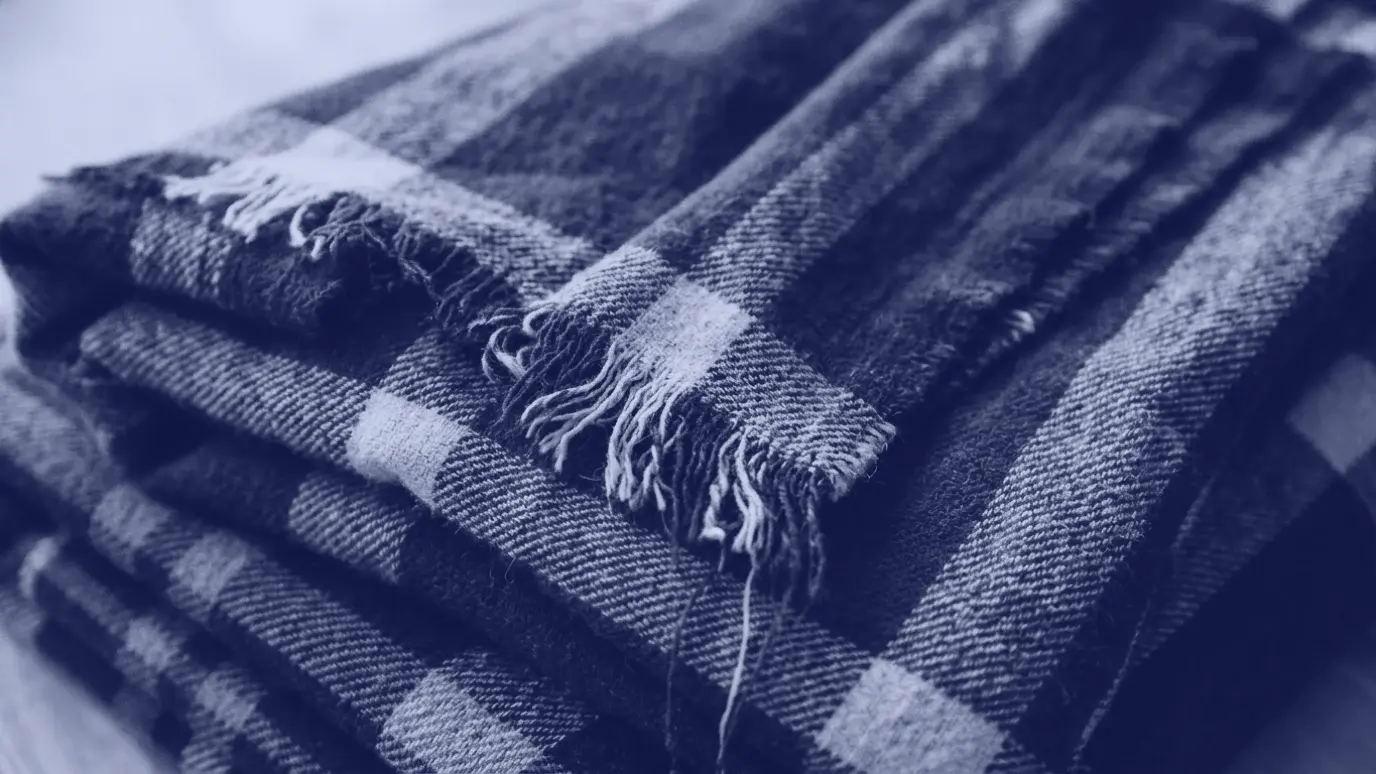
Plaid is a checked pattern formed when horizontal and vertical bands of different colors and widths cross at right angles; fabric with this pattern is also called plaid. The Turkish word ekose is a broad term that covers what English separates into plaid, tartan and check.
- Published:
- Updated:
- Fact-checked by:
- Gizem Polat
Key facts
- Plaid is a checked pattern made by crossing bands of different colors and widths; it is not a fiber or a weave name.
- The Turkish word ekose covers the English plaid, tartan and check, which are often confused in everyday use.
- Check is symmetrical squares of equal width; tartan is a kind of plaid from the Scottish tradition, with a repeating color sequence in warp and weft.
- Woven plaid can be plain weave or twill; the pattern can also be printed.
Properties
- Structure
- A pattern, not a weave: made by yarn-dyed weaving, printing and other methods. In weaving it can be plain weave or twill
- Fiber content
- The pattern is independent of fiber; seen in cotton, wool, linen, silk and mohair fabrics
- Uses
- Garments and accessories such as skirts, kilts, scarves, shawls and aprons; home textiles such as tablecloths and sheets
- Origin
- Came into Turkish from French (écossais); associated with the Scottish tartan tradition
Plaid is a checked pattern formed when horizontal and vertical bands of different colors and widths cross at right angles; fabric with this pattern is also called plaid. The Turkish word is ekose. The Turkish Language Association (TDK) dictionary defines it as “(a pattern or fabric) made of squares of various colors and sizes” (our translation), and notes that the word came into Turkish from French (écossais). Plaid is neither a fiber nor a weave: it is a pattern, and it can be produced by yarn-dyed weaving, printing and other methods.
Plaid, tartan and check
In Turkish ekose is used as a broad term. English separates patterns of the same family into tartan, plaid and check, but in everyday use these terms stand in for each other (Oyman, 2020). The differences can be summarized like this:
| Term | Characteristic |
|---|---|
| Check | Symmetrical squares made of bands of equal width; usually two colors. Buffalo check and windowpane belong to this group |
| Plaid (ekose) | Contains many band widths, repeats and color variations; more complex than check |
| Tartan | A woven plaid from the Scottish clan tradition, in which a similar color sequence repeats in warp and weft; can be plain weave or twill |
Source: Oyman, 2020. According to the same article, the term tartan today means a kind of plaid. Writing only “plaid” in a specification is not enough: say whether you mean check, plaid or tartan, and settle it with a sample (a swatch card or image) and dimensions.
How plaid is made
- Yarn-dyed weaving: The pattern is formed by warp and weft yarns dyed in different colors before weaving. According to Oyman, plaid first arose in weaving and over time spread to all textile design techniques. CottonWorks also describes yarn-dyed weaving, with warp and weft in different colors, for dobby fabrics.
- Printing: Because the pattern spread beyond weaving (Oyman, 2020), it can also be printed on the fabric. In printing, color is applied to the fabric from one side (CottonWorks).
- Weave structure: Woven plaid can be made in plain weave or twill. Oyman writes that tartan can be in either structure, and most of the Anatolian plaid examples in the article are plain weave; the İTÜ course material lists houndstooth and glen plaid among twill fabrics. Twill forms a diagonal line on the surface (CottonWorks), so the same color sequence gives a different texture in the two structures.
Where plaid is used
Plaid appears in clothing and in home textiles. The Scottish Highland kilt and plaid skirts are traditional examples (Oyman, 2020). In Anatolia the pattern has been used mostly in garment accessories (scarves, shawls, sashes, aprons) and in home textiles (tablecloths, sheets); according to Oyman, tablecloths and hamam wraps (peştemal) in Anatolia are still mostly woven in plaid or check today. The traditional weavings examined in the article used cotton, wool, linen, silk and mohair (Oyman, 2020).
What to specify when ordering plaid
- State the production method. Yarn-dyed weaving or printing? In printing, color is applied from one side, so also check the back of the sample; in yarn-dyed weaving the pattern is formed by the yarn.
- Give the pattern size and color sequence. Give the repeat size (cm) and the color order with a swatch card, an image or a dimensioned drawing.
- State the weave structure separately. Plain weave or twill? In twill a diagonal line is visible on the surface.
- Say whether you want the checks to match at the seams. If matching is wanted, write it in the order notes. Plaid fabric needs a special lay in marker planning (pastal), which affects fabric consumption.
Frequently asked questions
Is plaid the same as check?
In everyday language they are mostly used with the same meaning. Technically, check is symmetrical squares of equal width, usually in two colors; plaid is a more complex pattern with different band widths, repeats and color variations (Oyman, 2020).
What is the difference between tartan and plaid?
Tartan is a kind of plaid from the Scottish clan tradition, in which a similar color sequence repeats in warp and weft. According to Oyman, the term tartan today means a kind of plaid; so every tartan is a plaid, but not every plaid is a tartan.
Which fibers is plaid woven from?
The pattern is independent of fiber. Traditional Anatolian plaid weavings were made of raw materials such as cotton, wool, linen, silk and mohair (Oyman, 2020).
Sources (6)
- Oyman, N. R. (2020). Geleneksel ve çağdaş tekstil tasarımında vazgeçilmez bir desen: Ekose (An indispensable pattern in traditional and contemporary textile design: plaid, check and tartan; in Turkish with English abstract). Uluslararası Sosyal Araştırmalar Dergisi, 13(73), 461–479
- Turkish Language Association (TDK), Güncel Türkçe Sözlük (current Turkish dictionary; in Turkish), entry “ekose” (accessed October 9, 2026)
- Istanbul Technical University (İTÜ), Tekstil Teknolojisi (textile technology course material; in Turkish), section “Dimi Dokumalar” (twill weaves) and Table 9 “Dimi dokumadan yapılan kumaşlar” (fabrics made from twill weaves) (accessed October 9, 2026)
- CottonWorks (Cotton Incorporated): Complex Woven Fabric Designs (accessed October 9, 2026)
- CottonWorks (Cotton Incorporated): Cotton Textile Printing Basics (accessed October 9, 2026)
- CottonWorks (Cotton Incorporated): Basic Woven Fabric Designs (accessed October 9, 2026)
Author and fact-checking
Written by
Fabrics and Fibers Editor
Elif Karaca is Tekstil Rehberi's fabrics and fibers editor. She writes guides and glossary entries on knitted, woven and nonwoven fabrics, fiber properties and choosing the right fabric for each product, and bases values such as GSM, width, shrinkage and color fastness on standards and mill technical data sheets.
Content by Elif KaracaFact-checked by: Gizem Polat
This content was prepared by the Tekstil Rehberi editorial team. Before publication, our verification editor checked its figures, dates and sources against primary sources.
Spotted an error? Email us at [email protected] How we work →
Articles on this topic
Bed Linen Fabric Types: Percale, Sateen and Thread Count
Percale, sateen, ranforce and flannel compared: what thread count means per inch and as the Turkish per-centimeter “tel”, why “600 thread count” can mislead, and a checklist for writing a spec.
Knit vs Woven Fabric: How to Tell Them Apart
How knit and woven fabrics differ, five checks to tell them apart, the cases that mislead, how to choose by product, and what changes in production, testing and customs classification.
How to Source Fabric from Turkey: Find, Verify, Compare and Order
What Turkish fabric mills make and who they sell to, where to find them, what to plan for on MOQ and lead time, which tests to request, how EU, UK and US duty rules differ and how to verify a supplier.