What is Aerobin?
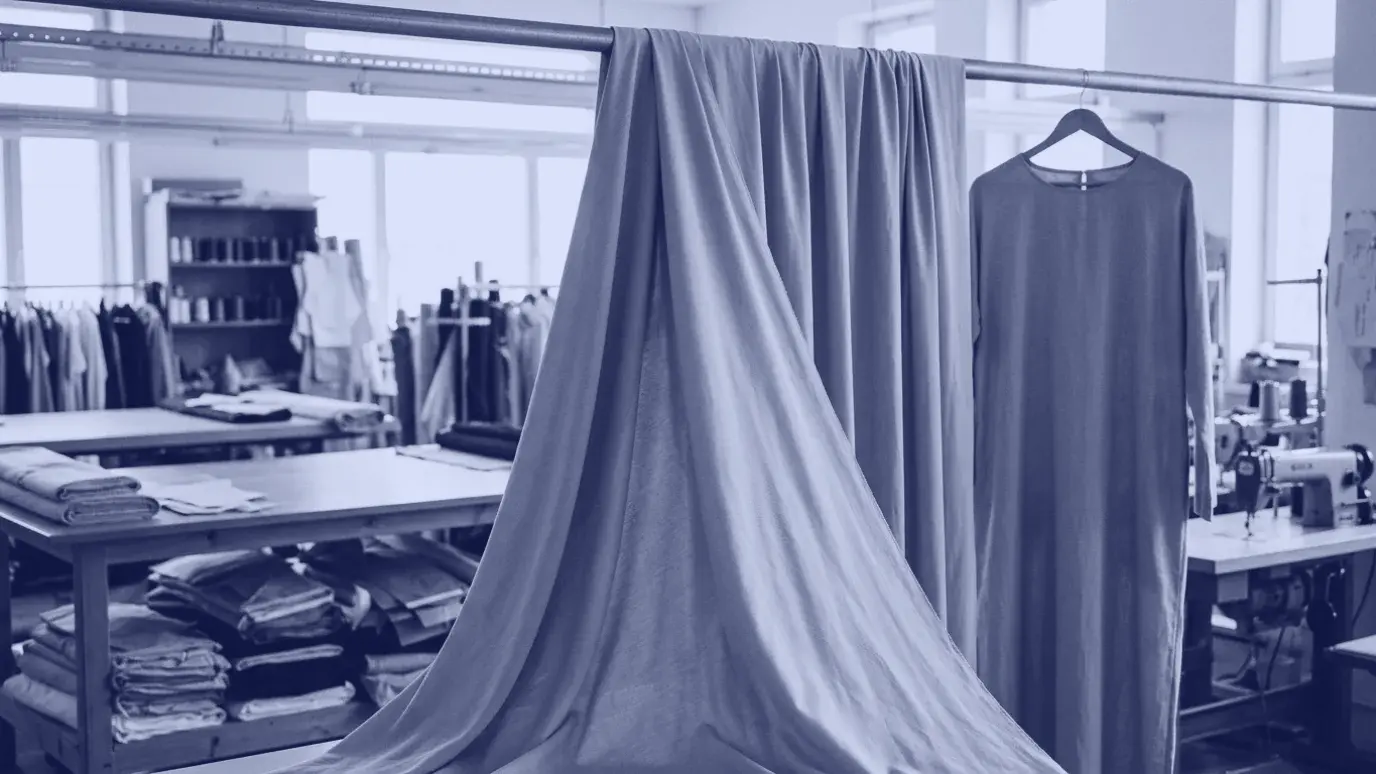
Aerobin is a Turkish trade name, used especially in modest clothing and women's clothing (tunics, ferace, dresses), for a fabric that sources describe as a lightweight, wrinkle-resistant woven. It is not a fiber or weave name, its composition varies by seller, and it has no established English equivalent.
- Published:
- Fact-checked by:
- Gizem Polat
Key facts
- Aerobin is a trade name used in the fabric market, not a fiber or weave name; the sources reviewed give no shared technical definition.
- Seller, blog and news pages describe it mostly as a lightweight, wrinkle-resistant woven fabric used in modest clothing and women's clothing (ferace, tunic, dress).
- The composition varies by source: cotton-polyester-elastane, cotton-viscose-polyamide and viscose-polyester blends are all given.
- Claims such as “does not make you sweat” and “does not wrinkle” recur, but none of the pages reviewed gives air-permeability or water-vapor-resistance values.
- The spelling ayrobin is also used; sub-names such as “linen aerobin”, “aerobin crepe” and “natural aerobin” are not standard either.
Properties
- Fiber content
- No fixed composition. Sources list different blends, such as cotton-polyester-elastane, cotton-viscose-polyamide or viscose-polyester; check the fiber percentages on the label
- Structure
- Described as woven in the sources; the weave (plain weave, crepe, etc.) is not stated consistently
- Weight range
- The sources give no weight; they call it lightweight. Ask for weight in g/m² with the test method
- Stretch
- Seller pages mention versions with elastane; the stretch percentage should be stated on the label and in the test report
- Uses
- Modest clothing (ferace, tunic, cape, cardigan), women's dresses, shirts and blouses
- Care
- Some seller pages recommend washing at a low temperature (30–40 °C); care instructions follow the actual composition. Dimensional change after washing is measured by ISO 5077, using ISO 6330 procedures.
Aerobin is a trade name used in Turkey, especially in modest clothing (tesettür in Turkish) and women's clothing, for a fabric that sources describe as a lightweight, wrinkle-resistant woven. It is not a fiber or weave name, and the sources reviewed give no shared technical definition: the stated fiber composition changes from seller to seller. There is no established English equivalent, so if a Turkish supplier writes “aerobin” in a quote, ask for the composition, weight and construction in writing instead of relying on the name.
What the sources cover
No standard, academic study or manufacturer technical data sheet defining aerobin was found, and the Turkish Language Association (TDK) dictionary has no entry for it (accessed October 11, 2026). The information below comes from newspaper, news, blog and fabric-seller pages, all in Turkish, and none of the pages reviewed gives a test method or test values. For a trade name like aerobin, this entry states as a definition only what is consistent across several sources, and says so where the sources disagree.
What aerobin is and is not
- It is not a fiber name. The sources describe aerobin as a blend of fibers such as cotton, viscose, polyester or polyamide; so aerobin is the name of the fabric, not of a fiber.
- It is not a weave name either. The pages reviewed do not state the weave (plain weave, crepe, etc.) consistently.
- It is described as woven. Several pages call aerobin a woven fabric (“a semi-synthetic woven fabric”, “dense weave”, “weaving technique”); none calls it knitted.
- It has sub-names. Names such as “linen aerobin”, “aerobin crepe” and “natural aerobin” are seen; they are not standard either. One fabric company says an aerobin containing cotton is called “natural aerobin” (Çalı Tekstil); the sources do not explain whether the word “linen” refers to a fiber blend.
- The spelling varies. The spelling ayrobin is used for the same fabric.
Why the composition is inconsistent
The pages reviewed state the composition of aerobin differently:
| Type of source | Stated composition |
|---|---|
| Newspaper site (Hürriyet Mahmure, June 2026) | A mix of polyamide and cotton-viscose fabrics |
| Fabric store blogs (2022) | Cotton and polyamide; one page also gives cotton, viscose and polyamide |
| Fabric information site (TekstilBilgi, January 2022) | Cotton and polyester, with a small amount of elastane |
| Fabric company blog (Defile Tekstil, May 2025) | Viscose and polyester |
Some sources give two different compositions on the same page. None shows a manufacturer or a standard definition; the actual composition is learned only from the product label and fiber analysis.
Commonly described properties (seller claims)
All nine pages reviewed describe aerobin as a fabric used in modest clothing; the products named most often are ferace (a long outer garment), tunic, shirt, cardigan and dress. All of the pages say it is wrinkle-resistant. Many mention lightness, vivid colors and a dense, non-see-through feel; only one page calls it drapey. Three pages recommend washing at a low temperature (30–40 °C); five pages say the composition contains elastane or Lycra, and two of them link it to stretch. These are seller and blog claims, not measurements. One page says in the same text both that the fabric “does not wrinkle” and that it “has a wrinkled look”, so even the expectation about wrinkling is inconsistent in the sources.
Aerobin, fibers and weaves
Cotton, viscose, polyester and polyamide are fibers; plain weave, twill and satin are weaves. Aerobin is neither: it is a product name. That is why two aerobin fabrics need not behave alike: one may be mostly polyester, another mostly cotton-viscose.
What to specify when you order
- Write the composition, not the name: ask for the fiber names and percentages, and the elastane percentage if there is any.
- Ask for weight in g/m², with the test method: ISO 3801 or EN 12127. For the oz/yd² equivalent use the fabric GSM calculator; if you buy rolls by weight, use the fabric meter to kg calculator.
- Ask whether it is woven or knitted, and for the weave: the sources are not consistent on this.
- Tie “does not make you sweat”, “does not wrinkle” and “does not shrink” claims to measurement: EN ISO 9237 for air permeability, EN ISO 11092 for water-vapor resistance, and ISO 5077 for dimensional change after washing (with washing and drying to ISO 6330 procedures). The fabric shrinkage calculator helps with the cut size.
- Calculate the order quantity: for products such as tunics or ferace, the fabric consumption calculator works out the fabric needed from consumption per piece and waste.
You can see which families fabrics fall into in the fabric types guide, and search for makers and suppliers in the Modest Clothing and Woven Fabrics categories.
Frequently asked questions
Is aerobin fabric breathable?
Sweating is the body's way of cooling and no fabric can stop it; a fabric's job is to absorb sweat, spread it and let it evaporate. Most of the pages reviewed say aerobin does not make you sweat, but none gives air-permeability or water-vapor-resistance values; a few pages note that a fabric high in polyester, or entirely polyester, can feel hot. Because the composition varies there is no single answer: the EU fiber labeling regulation accepts moisture allowances of 1.5% for polyester, 8.5% for cotton and 13% for viscose (1007/2011, Annex IX). Decide from the fiber percentages on the label and from EN ISO 9237 and EN ISO 11092 values. More in breathable fabrics for summer.
Does aerobin fabric wrinkle?
The sources do not agree: all of the pages reviewed say it is wrinkle-resistant, but one page also writes “has a wrinkled look” in the same text. These claims are not based on measurement. State your wrinkling expectation in the quote and check the appearance of a sample after washing.
What fiber is aerobin made of?
There is no single answer; as the table above shows, sources give different blends. Learn the fiber percentages from the label and from fiber analysis.
Are aerobin and ayrobin the same fabric?
Three of the sources reviewed use “aerobin” and “ayrobin” together or interchangeably for the same fabric; both are spellings of the same product name. The sources do not explain what “linen aerobin” and “aerobin crepe” mean, and the only explanation for “natural aerobin” is that it contains cotton (Çalı Tekstil). Check their compositions on the label.
Sources (18)
- Hürriyet Mahmure, Aerobin Kumaş Nedir, Nasıldır ve Terletir mi? Aerobin Kumaş Özellikleri ve Kullanım Alanları (What is aerobin fabric, what is it like and does it make you sweat? Features and uses; newspaper site, in Turkish; June 8, 2026; accessed October 11, 2026)
- Bursa Kumaş Pazarım (fabric store blog; in Turkish), Aerobin Kumaş (aerobin fabric; August 25, 2022; accessed October 11, 2026)
- Kardeşler Kumaş (online fabric store blog; in Turkish), Aerobin Kumaş Nedir? (What is aerobin fabric?; September 12, 2022, updated December 14, 2023; accessed October 11, 2026)
- TekstilBilgi.net (in Turkish), Aerobin Kumaş Özellikleri (aerobin fabric features; January 14, 2022; accessed October 11, 2026)
- Defile Tekstil (fabric company blog; in Turkish), Aerobin Kumaş Nedir? Özellikleri ve Yorumları (What is aerobin fabric? Features and reviews; May 23, 2025; accessed October 11, 2026)
- Çalı Tekstil (fabric company blog; in Turkish), Aerobin Kumaş Nedir? Özellikleri Nelerdir? (What is aerobin fabric? What are its features?; undated; accessed October 11, 2026)
- PembeKulis (lifestyle site; in Turkish), Aerobin Kumaş Nedir? Aerobin Kumaş Özellikleri (What is aerobin fabric? Aerobin fabric features; undated; accessed October 11, 2026)
- Kumaş Köşesi (fabric site blog; in Turkish), Aerobin Kumaş Nedir? Nasıldır? Terletir mi? ve 2022 Fiyatları (What is aerobin fabric? What is it like? Does it make you sweat? and 2022 prices; April 26, 2022; accessed October 11, 2026)
- Haberler.com (news site; in Turkish), Aerobin kumaş nedir? Aerobin kumaşın özellikleri nelerdir? (What is aerobin fabric? What are its features?; April 29, 2022; accessed October 11, 2026)
- Turkish Language Association (TDK), Güncel Türkçe Sözlük (current Turkish dictionary; in Turkish): the search for “aerobin” returned no result (accessed October 11, 2026)
- Regulation (EU) No 1007/2011 on textile fibre names and related labelling, Annex IX (agreed allowances), consolidated text of 15.02.2018 (accessed October 8, 2026)
- Baker L. B. (2019). Physiology of sweat gland function: The roles of sweating and sweat composition in human health. Temperature, 6(3), 211-259
- EN ISO 9237:1995 Textiles: Determination of permeability of fabrics to air (EVS-EN ISO 9237:2000 record)
- EN ISO 11092:2026 Textiles: Physiological effects, Measurement of thermal and water-vapour resistance under steady-state conditions (EVS record; valid since June 15, 2026)
- ISO 3801:1977 Textiles: Woven fabrics: Determination of mass per unit length and mass per unit area (EVS record)
- EN 12127:1997 Textiles. Fabrics. Determination of mass per unit area using small samples (EVS-EN 12127:2000 record; applies to woven and knitted fabrics)
- ISO 5077:2007 Textiles: Determination of dimensional change in washing and drying (confirmed in 2022)
- ISO 6330:2021 Textiles: Domestic washing and drying procedures for textile testing
Author and fact-checking
Written by
Fabrics and Fibers Editor
Elif Karaca is Tekstil Rehberi's fabrics and fibers editor. She writes guides and glossary entries on knitted, woven and nonwoven fabrics, fiber properties and choosing the right fabric for each product, and bases values such as GSM, width, shrinkage and color fastness on standards and mill technical data sheets.
Content by Elif KaracaFact-checked by: Gizem Polat
This content was prepared by the Tekstil Rehberi editorial team. Before publication, our verification editor checked its figures, dates and sources against primary sources.
Spotted an error? Email us at [email protected] How we work →
Articles on this topic
Bed Linen Fabric Types: Percale, Sateen and Thread Count
Percale, sateen, ranforce and flannel compared: what thread count means per inch and as the Turkish per-centimeter “tel”, why “600 thread count” can mislead, and a checklist for writing a spec.
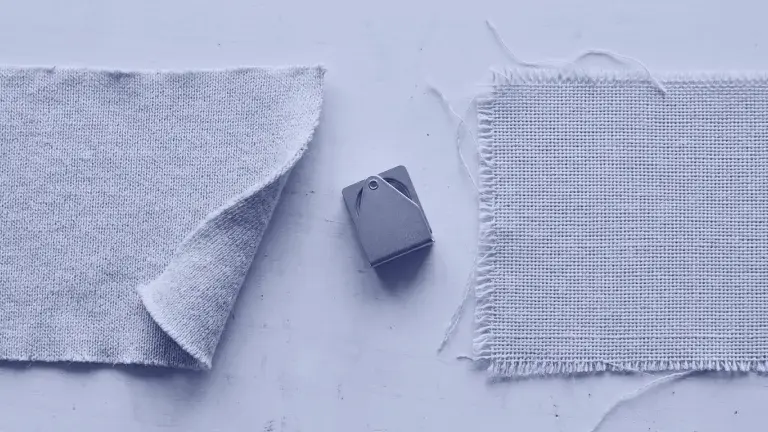
Knit vs Woven Fabric: How to Tell Them Apart
How knit and woven fabrics differ, five checks to tell them apart, the cases that mislead, how to choose by product, and what changes in production, testing and customs classification.
How to Source Fabric from Turkey: Find, Verify, Compare and Order
What Turkish fabric mills make and who they sell to, where to find them, what to plan for on MOQ and lead time, which tests to request, how EU, UK and US duty rules differ and how to verify a supplier.