What is Canvas?
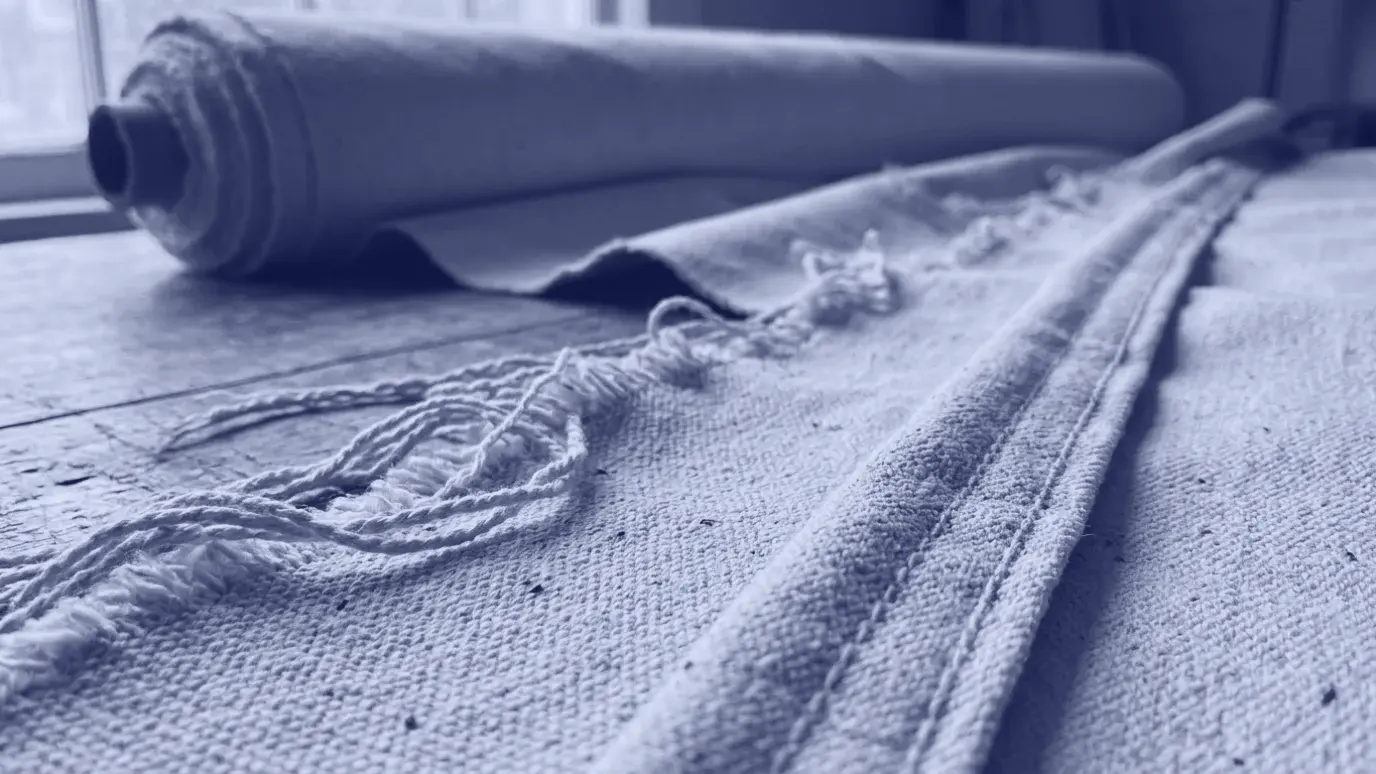
Canvas is a heavy, closely woven plain-weave fabric, made mostly of cotton, linen or hemp. It is used where durability counts, in sails, tents and tarpaulins, as a painting surface, and in bags and shoes. Turkish suppliers call it kanvas.
- Published:
- Fact-checked by:
- Gizem Polat
Key facts
- Canvas is a heavy, closely woven plain-weave fabric; dictionaries name cotton, linen or hemp as the usual fibers, and TRC Needles also mentions silk.
- Canvas is woven in plain weave and denim in twill; the difference comes from the weave.
- Canvas has no single standard weight; in the 1924 US numbered duck specification, No. 12 is about 388 g/m² and No. 1 about 999 g/m².
- In the numbered duck system a higher number means lighter fabric: number = 19 minus the ounce weight of a linear yard 22 inches wide.
- Whether canvas is breathable depends on fiber, weight and density; ask for air permeability (EN ISO 9237) and water-vapor resistance (EN ISO 11092).
Properties
- Fiber content
- Mostly cotton, linen or hemp; the Collins dictionary also lists jute, and TRC Needles occasionally silk. Fiber varies by source and must be written in the specification
- Structure
- Woven; plain weave (1/1). Heavy cotton duck types are woven from plied yarns
- Weight range
- No single range; canvas is made in many qualities and grades. In the 1924 US numbered cotton duck specification, No. 12 weighs about 11.45 oz/yd² (≈388 g/m²) and No. 1 about 29.45 oz/yd² (≈999 g/m²)
- Stretch
- Plain-weave woven fabric; does not stretch unless elastic yarn is added, and is very stable
- Uses
- Sails, tents, awnings, tarpaulins and covers; painting canvas; bags and shoes
- Care
- Care depends on fiber content, coating and finishing. Dimensional change after washing is measured by ISO 5077, using ISO 6330 procedures.
Canvas is a heavy, closely woven fabric in plain weave. The Random House dictionary describes canvas as a closely woven heavy cloth made of cotton, hemp or linen and used for tents and sails; Collins also lists jute among the fibers. Canvas names a structure and weight, not a fiber: the same name is used for cotton, linen or hemp canvas. The painting surface is another meaning of the word. In Turkish, the surface painters paint on is the dictionary entry tuval; the Turkish Language Association (TDK) dictionary has no entry for kanvas.
Canvas structure and fiber
CottonWorks lists canvas among the common fabrics woven in plain weave, and the Pratt Institute also names canvas among plain-weave examples. In plain weave each warp yarn passes over one weft yarn and under the next. The many binding points make the fabric stiff and not very drapey, but very stable: skew, seam slippage, yarn pulling and snagging are rare problems (CottonWorks). Plain-weave fabric does not stretch unless elastic yarn is added (Pratt Institute).
The fiber varies by source. Textile Research Centre Leiden (TRC Needles) describes canvas as a strong, firm, machine-made fabric, made mostly of cotton, linen or occasionally silk, and says it is produced in many qualities and grades, from softly finished to heavily sized (starched). So the name “canvas” alone does not tell you the fiber content, weight or finish.
Weight: the numbered duck system
Heavy, closely woven cotton canvas is also called “duck” in English. An encyclopedia entry divides canvas into two basic types, plain and the more tightly woven duck, and says that in the US grading system a higher number means a lighter canvas (Wikipedia). The document behind this system is a 1924 study of the US Bureau of Standards (Schoffstall and Fisher). It defines numbered duck as a mechanical cotton fabric woven in plain weave from heavy plied yarns. The number is calculated as 19 minus the weight in ounces of a linear yard 22 inches wide, so the heavier the fabric, the lower the number. Examples from the specification's table for hard-woven duck:
| Number | Ounces per linear yard, 22 in wide | oz/yd² | g/m² (approx.) |
|---|---|---|---|
| 12 | 7 | 11.45 | 388 |
| 10 | 9 | 14.72 | 499 |
| 8 | 11 | 18.00 | 610 |
| 4 | 15 | 24.54 | 832 |
| 1 | 18 | 29.45 | 999 |
The g/m² values are calculated with 1 oz/yd² = 33.906 g/m² (NIST SP 811). This is a 1924 US specification: take the weight of today's products from the manufacturer's technical data sheet and from measurement, not from the table. To convert between oz/yd² and g/m², use the fabric GSM calculator.
Uses
The Bureau of Standards study lists these uses for numbered duck: pontoon covers, tarpaulins, tent parts, shades and awnings, hammocks and bags; it adds that the close weave makes duck easy to waterproof. Dictionaries define canvas as a fabric used for tents and sails, and TRC Needles also names tarpaulins, painting canvas and sailmaking. An encyclopedia entry also lists bags, backpacks and shoes (Wikipedia).
Canvas and similar fabrics
| Fabric | Weave | How it differs from canvas |
|---|---|---|
| Denim | 2×1 or 3×1 twill | Denim is woven in twill, with an indigo-dyed warp and an undyed weft; canvas is plain weave (CottonWorks) |
| Linen | Fiber and fabric name | Canvas can also be made of linen fibers; canvas is a structure and weight name, linen a fiber name |
| Painting canvas (tuval) | A painting surface | The name of the cloth painted on; Random House gives it as a separate meaning of canvas |
What to specify when sourcing canvas
- Fiber, with percentages: cotton, linen, hemp and blends do not behave alike.
- Weight in g/m², with the test method: mass per unit area from a small sample is measured to EN 12127, and for woven fabric to ISO 3801. If you buy rolls by weight, the fabric meter to kg calculator gives meters from width and weight.
- Finish and water resistance, separately: is it sized, softly finished or coated? The name “canvas” says none of this.
- Have canvas shrinkage measured: ISO 5077 for width and length change, ISO 6330 for the washing-drying conditions. The fabric shrinkage calculator gives the cut size and the fabric consumption calculator helps with order quantity.
For a comparison of woven fabric families, see the fabric types guide; for suppliers, see the Woven Fabrics category.
Frequently asked questions
Is canvas the same as denim?
No. CottonWorks lists canvas among plain-weave fabrics, and describes denim as a cotton fabric with an indigo-dyed warp and an undyed weft, usually in 2×1 or 3×1 twill.
Is canvas breathable?
Canvas does not stop sweating; sweating is how the body cools, and what the fabric contributes is taking up sweat, spreading it and leaving room for it to evaporate. The sources for this entry contain no air-permeability or water-vapor-resistance measurements for canvas. Suganthi et al. (2024), working with knitted samples, identify fabric structure, weight and thickness as the main drivers of water-vapor permeability: permeability climbs as weight and thickness fall and as the structure loosens. Dictionaries define canvas as a heavy, closely woven fabric, so it does not sit at the permeability-raising end of these factors. Still, the result varies with fiber, weight and density, and nothing can be settled without measurement. If you plan garment use, request air-permeability (EN ISO 9237) and water-vapor-resistance (EN ISO 11092) results; the reading framework is in breathable fabrics for summer.
Are canvas and duck the same?
Duck is the English name for heavy, closely woven cotton canvas. An encyclopedia entry divides canvas into plain and the denser duck, and in the US numbered duck system a higher number means a lighter fabric (Wikipedia).
Are canvas and tuval the same?
Random House gives the piece of canvas painted on as one meaning of canvas. The TDK dictionary has no entry for kanvas; its entry tuval defines the stretched coarse cloth of linen, hemp or cotton that is painted on. When you describe the fabric, say canvas; for the painting surface, say tuval (painting canvas), to reduce confusion.
Sources (17)
- Textile Research Centre Leiden, TRC Needles: Canvas (definition based on Tortora and Johnson, 2012, The Fairchild Books Dictionary of Textiles, p. 96; last modified January 22, 2017; accessed October 11, 2026)
- Dictionary.com, “canvas” entry (Random House Unabridged Dictionary; Collins English Dictionary; accessed October 11, 2026)
- CottonWorks (Cotton Incorporated), Learning Hub: Basic Woven Fabric Designs (accessed October 11, 2026)
- CottonWorks (Cotton Incorporated), Textile Encyclopedia: Denim (accessed October 11, 2026)
- Pratt Institute Textile Research Lab: Wovens (accessed October 11, 2026)
- Schoffstall, C. W. and Fisher, R. T. (September 26, 1924). Development of the Standard Numbered Cotton Duck Specification. Technologic Papers of the Bureau of Standards, No. 264 (Part I and the attached specification, Bureau of Standards Circular No. 136, Table 1)
- NIST Special Publication 811, Guide for the Use of the International System of Units, Appendix B.8: Factors for units listed alphabetically (oz/yd² to kg/m²; accessed October 9, 2026)
- Turkish Language Association (TDK), Güncel Türkçe Sözlük (current Turkish dictionary; in Turkish), entry “tuval” (no result found for “kanvas”; accessed October 11, 2026)
- Wikipedia, Canvas (encyclopedia; secondary source, used only for the plain and duck types, the US numbering system and bag and shoe uses; accessed October 11, 2026)
- Suganthi S., Pachiayappan K. M., Krithika S. M. U., Prakash C. (2024). Thermal comfort properties of natural and manmade cellulosic fabrics. Indian Journal of Fibre & Textile Research, 49(4), 403-407
- Baker L. B. (2019). Physiology of sweat gland function: The roles of sweating and sweat composition in human health. Temperature, 6(3), 211-259
- EN ISO 9237:1995 Textiles: Determination of permeability of fabrics to air (EVS-EN ISO 9237:2000 record)
- EN ISO 11092:2026 Textiles: Physiological effects, Measurement of thermal and water-vapour resistance under steady-state conditions (EVS record; valid since June 15, 2026)
- ISO 3801:1977 Textiles: Woven fabrics: Determination of mass per unit length and mass per unit area (EVS record)
- EN 12127:1997 Textiles. Fabrics. Determination of mass per unit area using small samples (EVS-EN 12127:2000 record; applies to woven and knitted fabrics)
- ISO 5077:2007 Textiles: Determination of dimensional change in washing and drying (confirmed in 2022)
- ISO 6330:2021 Textiles: Domestic washing and drying procedures for textile testing
Author and fact-checking
Written by
Fabrics and Fibers Editor
Elif Karaca is Tekstil Rehberi's fabrics and fibers editor. She writes guides and glossary entries on knitted, woven and nonwoven fabrics, fiber properties and choosing the right fabric for each product, and bases values such as GSM, width, shrinkage and color fastness on standards and mill technical data sheets.
Content by Elif KaracaFact-checked by: Gizem Polat
This content was prepared by the Tekstil Rehberi editorial team. Before publication, our verification editor checked its figures, dates and sources against primary sources.
Spotted an error? Email us at [email protected] How we work →
Articles on this topic
Bed Linen Fabric Types: Percale, Sateen and Thread Count
Percale, sateen, ranforce and flannel compared: what thread count means per inch and as the Turkish per-centimeter “tel”, why “600 thread count” can mislead, and a checklist for writing a spec.
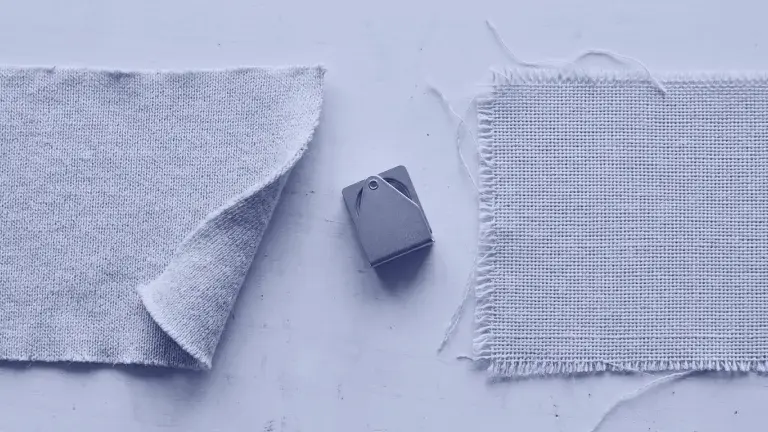
Knit vs Woven Fabric: How to Tell Them Apart
How knit and woven fabrics differ, five checks to tell them apart, the cases that mislead, how to choose by product, and what changes in production, testing and customs classification.
How to Source Fabric from Turkey: Find, Verify, Compare and Order
What Turkish fabric mills make and who they sell to, where to find them, what to plan for on MOQ and lead time, which tests to request, how EU, UK and US duty rules differ and how to verify a supplier.