What is Swatch Card?
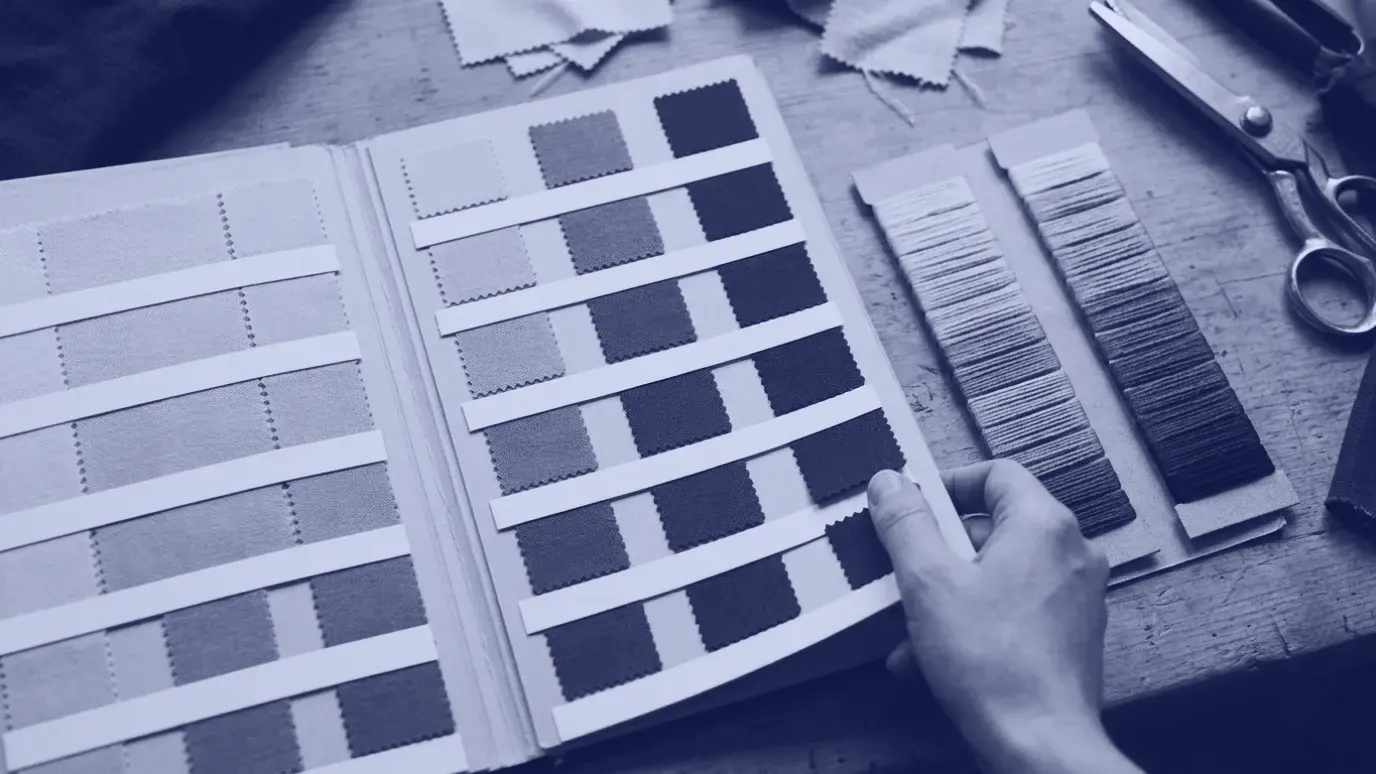
A swatch card (Turkish: kartela) is a collection of small sample pieces that a manufacturer or supplier prepares to show customers its fabric, yarn, trim or color options, so the buyer can choose what to order. Depending on what it shows, it is also called a swatch book, shade card, color card or trim card.
- Published:
- Fact-checked by:
- Gizem Polat
Key facts
- A swatch card is a collection of small sample pieces of fabric, yarn, trims or colors that a manufacturer or supplier prepares to show what it offers; in Turkey it is called kartela.
- The name depends on what is shown: swatch card, swatch book or fabric swatch file for fabric; shade card or color card for colors and thread; trim card for trims.
- A swatch card shows look, color and hand feel; shrinkage, pilling and colorfastness can only be known by testing a washed sample, not by looking at the card.
- Two colors can match under one light and differ under another (illuminant metamerism), so confirm color in writing with a lab dip or an approved sample, not the card alone.
- A useful card lists the quality name or number, composition, width, weight (GSM), color name or code and supplier; this is a Tekstil Rehberi suggestion, not a standard.
A swatch card is a collection of small sample pieces that a manufacturer or supplier prepares to show customers its fabric, yarn, trim or color options. The buyer picks a quality, color or trim from it, and the quote, sample and order follow. In Turkey the same card is called kartela.
What is a swatch card? Meaning in textiles
The Turkish Language Association (TDK) defines kartela as a list that shows the varieties of products such as paint, fabric and carpet in small pieces (our translation; accessed October 16, 2026). The word comes from Italian cartella, and renk kartelası (color card) is a recorded compound. For fabric, a card is fabric samples arranged in pieces, prepared by a kartela elemanı or fabric sample planning staff member (Eleman.net).
Types: fabric, shade, color, yarn and trim cards
The English names depend on what the card shows. The split below is Tekstil Rehberi's arrangement; no independent textile dictionary defines these names.
| Type | What it shows | English names |
|---|---|---|
| Fabric card | Fabric pieces with quality, pattern and color options (Eleman.net) | swatch card (Pantone, Apparel Search), swatch book (Winterthur Library), fabric swatch file (NCVET) |
| Color card | Color tones. Pantone's polyester card holds one 4×4 inch color swatch of 100% polyester knit; the color's spectral data is sold separately | shade card, color card (Apparel Search) |
| Yarn card | A thread maker's color selection tool; Coats publishes separate cards for apparel, denim, embroidery, neon and metallic threads | shade card |
| Trim card | Samples of buttons, zippers and other trims; India's merchandiser qualification file calls them a “swatch file” and “trim cards” | trim card, trims swatch file |
The names overlap, so ask which card a supplier means. A yarn card can be printed or carry small pieces of each thread; DMC offers both versions of its embroidery card.
What is a swatch card used for?
A card shows color, pattern and fabric surface on a real piece, and hand feel (tuşe) can only be judged by touching it. The buyer's route is usually (Tekstil Rehberi summary):
- Choose and get a quote: pick the quality and color on the card; the supplier quotes against that choice.
- Sample and color approval: ask for a sample of the chosen quality and, for color, a lab dip or an approved sample.
- Order: write the quality name, color code and approved sample into the order. The approved sample is the reference for production (contract garment manufacturing guide); India's merchandiser file keeps approved swatches and trim cards in the pre-production file (NCVET, 2025, p. 20).
A useful card lists the quality name or number, composition, width (cm), weight (GSM, g/m²), color name or code and supplier (a Tekstil Rehberi suggestion, not a standard). If the weight is missing, ask the supplier; weighing a small piece yourself magnifies scale error (see the fabric GSM calculator).
Swatch card vs sample: what is the difference?
A card is for choosing; a sample is for approving. Color and print have their own approval pieces (Sarkar, 2016): a lab dip is dyed fabric or yarn for color approval, and a strike-off is printed on the production fabric and base color for print approval.
| Swatch card | Sample | |
|---|---|---|
| Purpose | Compare and choose qualities and colors | Test and approve the chosen quality before the order |
| What you learn | Look, color, pattern, hand feel | Shrinkage, pilling and colorfastness after washing |
Hypothetical example: a brand likes quality “K-2041” (fictional code: 100% cotton single jersey, 160 g/m², navy) on a mill's card. Since the card shows only look and hand feel, it asks for a washed sample length, has shrinkage and pilling measured, approves color in writing against an approved sample, and writes the card code into the order.
What to check before ordering from a swatch card
- Approve color with a lab dip or approved sample, not the card. A lab dip is a trial dyeing on a small sample before bulk dyeing. Get the approval in writing and ask the dye house how many rounds and how much time to expect.
- Dye lots can differ. Fabric is dyed in lots, and shade can vary in production: a Cotton Incorporated bulletin names uneven preparation and small lab weighing errors among the causes (ISP 1014, 2005), and a Turkish Ministry of National Education module notes color differences between rolls and between the ends of one roll (MEGEP, 2008, p. 4). Compare the approved sample's color, weight and width with the production lot (T-shirt fabric guide).
- Light changes color. Two colors can look the same under one light and different under another, called illuminant metamerism (HunterLab, 2022). Do not approve color under one light; India's lab equipment list includes a color-matching light box (NCVET, p. 13).
- State the repeat on patterned fabric. Give the pattern repeat (cm) and color order with the card, an image or a dimensioned drawing, for example on plaid.
For the full buying flow, see how to source fabric from Turkey; for suppliers, fabric, sewing thread and trims companies.
How is a swatch card made?
Eleman.net's job description for a kartela staff member lists the work: sourcing and checking bolts of fabric, cutting the fabric into pieces, trimming the edges, assembling a catalog and entering new fabrics' names and barcodes. At a dye house, the target color may be a card, a fabric piece or the buyer's sample.
Frequently asked questions
What is the difference between a swatch card and a sample?
A card is for choosing: it shows look, color and hand feel. A sample is for testing and approving the chosen quality before the order.
Is a swatch card enough to order fabric?
No. It lets you choose, not approve. Ask for a sample and a test report before production, and approve color in writing with a lab dip or an approved sample.
What is kartela in English?
There is no single translation: swatch card, swatch book or swatch file for fabric; shade card or color card for colors and thread; trim card for trims.
Sources (13)
- TDK Güncel Türkçe Sözlük (Turkish Language Association dictionary), entry “kartela” (sense 2: a list showing the varieties of paint, fabric, carpet and similar products; compound “renk kartelası”; origin Italian cartella; in Turkish; accessed October 16, 2026)
- NCVET (India's National Council for Vocational Education and Training) / Apparel, Made-ups & Home Furnishing Sector Skill Council, Qualification File: Merchandiser - Apparel, Made-Ups & Home Furnishings, QG-05-AP-03576-2025-V2-AMHSSC, approved February 18, 2025 (pp. 12-13 Annexure: Tools and Equipment, lab set-up; p. 20 AMH/N0904 PC5; accessed October 16, 2026)
- Eleman.net, Kartela Elemanı Nasıl Olunur? (Becoming a swatch card staff member; title translated by Tekstil Rehberi; occupation page, undated; in Turkish; accessed October 16, 2026)
- Pantone, Fashion, Home + Interiors Polyester Standards Swatch Cards (manufacturer product page; accessed October 16, 2026)
- Coats, Shade Cards (manufacturer page, undated; accessed October 16, 2026)
- DMC, Printed Embroidery Shade Card (manufacturer product page; accessed October 16, 2026)
- HunterLab, Color Matching Challenges in Textiles: Detecting Illuminant Metamerism, October 31, 2022 (measuring-instrument maker's blog; accessed October 16, 2026)
- Apparel Search, Fabric Swatch Cards (directory of swatch card makers; for the names “swatch card” and “color card”; undated; accessed October 16, 2026)
- Cotton Incorporated, ISP 1014: Lab-to-Plant Correlation in Dyeing, technical bulletin, 2005 (pp. 1–4: fabric preparation, weighing and production shade variability; accessed October 16, 2026)
- T.C. Millî Eğitim Bakanlığı (Turkish Ministry of National Education), MEGEP, Giyim Üretim Teknolojisi: Kesimhanede Son İşlemler (Garment Production Technology: Final Operations in the Cutting Room; 542TGD180; in Turkish), Ankara 2008 (sections 1.1 and 1.2.1, pp. 3–4: color differences between and within fabric rolls; accessed October 16, 2026)
- Sarkar, P. (July 24, 2016). What is Lab Dip?, Online Clothing Study (industry education site; accessed October 16, 2026)
- Sarkar, P. (July 24, 2016). What is Strike-off?, Online Clothing Study (accessed October 16, 2026)
- Winterthur Library Digital Collections, Swatch Books and Salesmen's Sample Books (collection description; for the name “swatch book”; accessed October 16, 2026)
Author and fact-checking
Written by
Terminology and Glossary Editor
Nihan Özkan is Tekstil Rehberi's terminology and glossary editor. She manages the textile glossary and keeps definitions consistent, Turkish–English equivalents accurate and related terms linked.
Content by Nihan ÖzkanFact-checked by: Gizem Polat
This content was prepared by the Tekstil Rehberi editorial team. Before publication, our verification editor checked its figures, dates and sources against primary sources.
Spotted an error? Email us at [email protected] How we work →
Articles on this topic
Denizli Towel and Bathrobe Industry: How Turkey's Home Textile Hub Works
Why Denizli leads Turkey's towel and bathrobe production, how the chain runs from yarn to sewing, how to read the 2025 numbers and what to ask a supplier.
Digital Product Passport for Textiles: EU Timeline and Data
The EU digital product passport for textiles is not mandatory yet and has no official start date. Confirmed, planned and expected dates, draft data fields, the unsold-clothing destruction ban and a preparation checklist.
Knit vs Woven Fabric: How to Tell Them Apart
How knit and woven fabrics differ, five checks to tell them apart, the cases that mislead, how to choose by product, and what changes in production, testing and customs classification.