What is Velour?
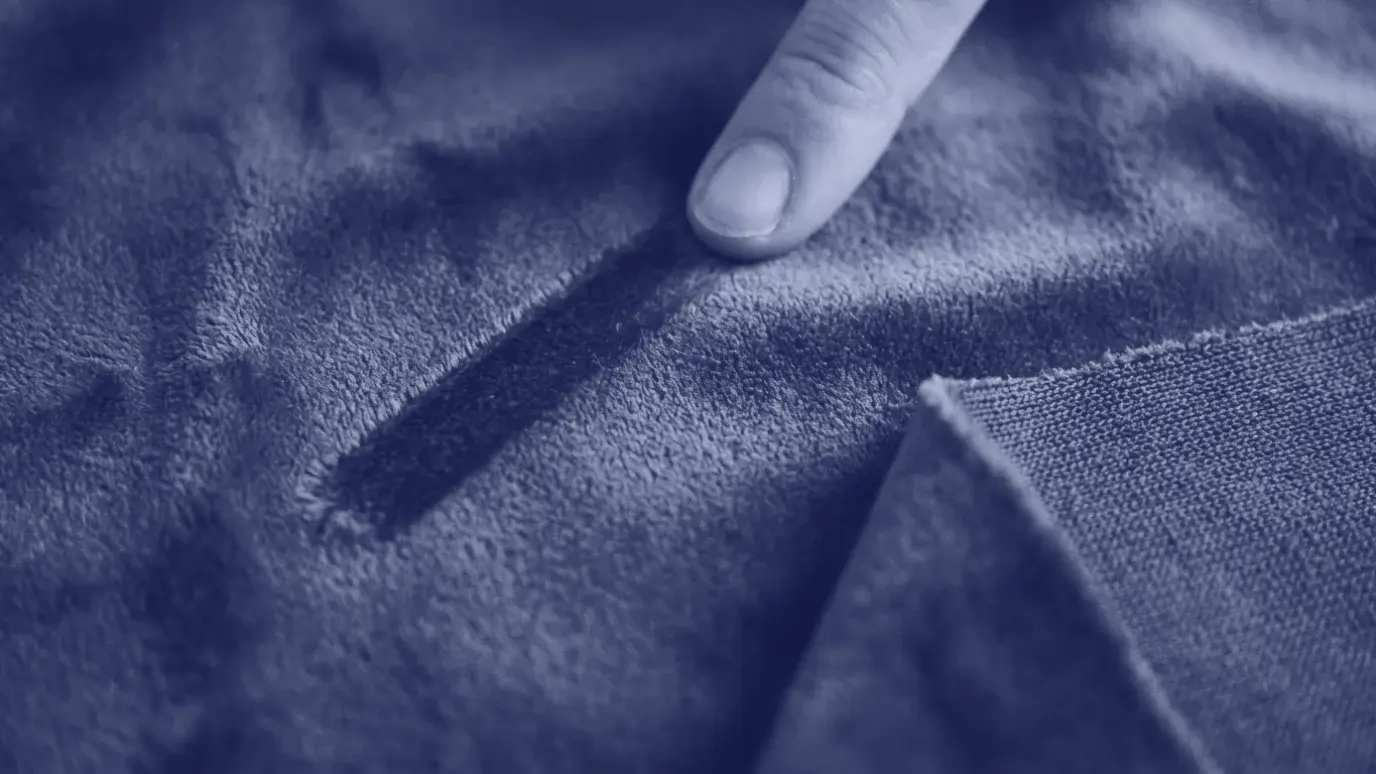
Velour is a velvet-like fabric with a surface of cut short pile, made by knitting; it is described as the knitted counterpart of woven velvet. In the traditional method it is knitted on a circular machine with two yarns and the pile loops are cut afterwards. Turkish suppliers call it velur.
- Published:
- Fact-checked by:
- Gizem Polat
Key facts
- Velour is a knitted fabric with a surface of cut short pile; it is described as the knitted counterpart of woven velvet.
- In the traditional method it is knitted on a single-bed circular machine with two yarns, one forming the ground and the other the pile loops; the tops of the loops are sheared.
- Cotton Incorporated defines knitted velour as a sheared terry-looped knit fabric.
- The TDK Turkish dictionary treats velur as a synonym of velvet (kadife), but woven velvet and knitted velour are different structures, and knitted velour stretches more.
- Velour (cut-pile) terry is a woven towel whose loops are cut after weaving; it is not the same as knitted velour fabric.
Properties
- Fiber content
- According to guide pages, mostly cotton or polyester; stretch types with elastane also exist (Contrado; Sewport; TextileGlossary)
- Structure
- Weft knit with a pile (plush) structure: two yarns are fed together, one forming the ground and the other the pile loops; the tops of the loops are cut by shearing (MEB, 2013; US 4537048; CottonWorks)
- Weight range
- No reliable weight range source was found. Weight depends on yarn, machine setting and pile height; pile height varies with the height of the pile sinkers (MEB, 2013)
- Stretch
- More stretchy than woven velvet because the ground is knitted (Heddels; Contrado); stretch depends on fiber and elastane content
- Uses
- Sweatpants, pajamas, slippers, leggings, robes (Contrado); stretch velour for sports and dance wear and costumes, polyester velour for upholstery and home décor (TextileGlossary)
- Care
- Care instructions depend on fiber content and finishing; follow the label. Dimensional change after washing is measured by ISO 5077, using ISO 6330 washing and drying procedures.
Velour is a velvet-like knitted fabric with a surface of cut short pile; it is described as the knitted counterpart of woven velvet (Heddels). In the traditional method it is knitted on a single-bed circular machine: of two yarns, one forms the ground and the other the pile loops on the surface, and the tops of the loops are cut afterwards (MEB, 2013; US 4537048). The TDK (Turkish Language Association) dictionary gives velur as the equivalent of kadife (velvet), but in structure velour is knitted and velvet is woven.
What does velour mean?
The TDK entry for velur only points to kadife (from French velours), and the definition of kadife ends with “velur”. The modules of the Turkish Ministry of National Education (MEB) list the pile fabrics knitted on single-bed circular machines as “plush, velvet, terry” and mention velvet among knitted fabrics (MEB, 2011; 2013). In other words, in Turkish the words velur, kadife and pelüş (plush) overlap.
English sources draw the distinction more clearly. Heddels defines velour as generally a thick, short, cut-pile knit or woven fabric and sets it apart from velvet by its being knitted: velour is lighter and stretchier. In this glossary, “velour” is used to mean knitted velvet (the Turkish velur).
How is velour made?
In pile knitting, two separate yarns are fed: the first forms the ground and the second forms the pile loops; special pile sinkers draw the pile yarn into long loops on the surface. Pile height depends on the height of the sinkers. One face of the fabric looks like single jersey and the other is dominated by the pile (MEB, 2013).
The pile loops in fabric knitted this way are not cut. To obtain velour, the tops of the long loops are sheared, leaving two cut pile ends from each loop. Brushing can replace shearing, or be applied after shearing to raise the pile fibers (US 4537048, 1985, background section). Cotton Incorporated likewise defines knitted velour as a sheared terry-looped (pile) knit fabric (CottonWorks). If the loops are not cut, the surface stays looped; the MEB module counts terry fabric among the same pile knits.
Fabrics confused with velour
| Name | Structure | Difference from velour |
|---|---|---|
| Velvet (kadife) | Woven; the pile is formed by warp yarns and cut to one height (CottonWorks) | Woven; knitted velour is lighter and stretchier (Heddels; Contrado) |
| Velour (cut-pile) terry | Woven terry towel; the loops are cut on one face after weaving (MÖVE) | Woven; see the terry cloth entry |
| Knitted terry (looped) | In pile knits the loops are not cut (MEB, 2013; US 4537048) | In velour the pile loops are cut |
| Plush | Soft, glossy fabric resembling velvet, with long fur on one side (TDK) | Plush has a longer pile (TDK); velour usually has a short cut pile (Heddels) |
Fiber, weight and uses
Guide pages say velour is mostly made of cotton or polyester (Contrado; Sewport). TextileGlossary says velour was first made of silk and later of cotton, rayon and polyester, and that stretch types with elastane also exist.
No reliable source for a velour weight range was found; weight varies with yarn, machine setting and pile height. To find the weight of a sample, use the fabric GSM calculator.
Contrado says velour is used in comfortable garments such as sweatpants, pajamas, slippers, leggings and robes. TextileGlossary mentions cotton velour in clothing, loungewear and baby products, stretch velour in sports and dance wear and costumes, and polyester velour in upholstery, home décor and automotive uses.
What to specify when sourcing velour
- Name the structure: “knitted velour”, “woven velvet” or “velour terry (towel)”. The three are different productions.
- Ask for the composition as a percentage: if stretch is needed, also write the elastane ratio.
- Ask for the weight and the pile height together: ask whether the weight was measured greige or finished. To convert between kilograms and meters, use the meter-kg calculator.
- Ask about velour's post-wash dimensional change: ISO 5077 and ISO 6330 should be named in the report. The shrinkage calculator helps with the cutting allowance.
Frequently asked questions
Is velour the same as velvet?
Not in structure. Velvet is a warp-pile weave whose pile is cut to one height (CottonWorks); velour is knitted and, because its ground is knitted, stretchier (Heddels; Contrado). In Turkish the two names are often used interchangeably, and TDK gives velur as the equivalent of velvet. When ordering, state the structure by saying “knitted velour” or “woven velvet”.
Is velour breathable?
Velour is a structure name, not a fiber; the result depends on fiber, weight and structure. EU Regulation 1007/2011 on textile fibre names (Annex IX) uses agreed moisture regains of 8.5% for cotton and 1.5% for polyester; cotton velour absorbs moisture better. Suganthi et al. (2024) report that lower weight, lower thickness and an open structure increase water-vapor permeability. No published measurement was found for how the pile layer affects permeability; for your own fabric, ask for air permeability (EN ISO 9237) and water-vapor resistance (EN ISO 11092) values. Details are in breathable fabrics.
Is a velour towel the same as velour fabric?
No. A velour (cut-pile) towel is woven; its loops are cut on one face after weaving, and cut loops absorb less liquid (MÖVE). Knitted velour is made by knitting and is used in comfortable garments such as sweatpants and pajamas (Contrado).
Sources (17)
- TDK Güncel Türkçe Sözlük (Turkish Language Association dictionary), entries “velur” (velour), “kadife” (velvet) and “pelüş” (plush) (accessed October 11, 2026)
- Republic of Türkiye Ministry of National Education (2013). Tekstil Teknolojisi: Tek Plaka Yuvarlak Örme Makinelerinde Üretim 3 (Textile Technology: Production on Single-Bed Circular Knitting Machines 3; Turkish), pp. 11-12 (pile / plush stitches)
- Republic of Türkiye Ministry of National Education (2011). Tekstil Teknolojisi: Temel Örme (542TGD387) (Textile Technology: Basic Knitting; Turkish), p. 28
- US 4537048 A: Pile loop forming and cutting elements for circular knitting machines (Monatex SA and Monarch Knitting Machinery Corp.; published August 27, 1985; background section)
- CottonWorks (Cotton Incorporated): Learning Hub, Mechanical Finishing (knitted velour; accessed October 11, 2026)
- CottonWorks (Cotton Incorporated): Textile Encyclopedia, Velvet (accessed October 11, 2026)
- Heddels: Velour, Dictionary (accessed October 11, 2026)
- Contrado Blog, Stefanie: Velour vs Velvet (June 3, 2019, updated March 3, 2022; accessed October 11, 2026)
- Sewport: What is Velour Fabric: Properties, How its Made and Where (accessed October 11, 2026)
- TextileGlossary.com: Velour (undated; accessed October 11, 2026)
- MÖVE (towel manufacturer): Velour terry towelling, a velvety-soft pile (manufacturer blog page; accessed October 11, 2026)
- Suganthi S., Pachiayappan K. M., Krithika S. M. U., Prakash C. (2024). Thermal comfort properties of natural and manmade cellulosic fabrics. Indian Journal of Fibre & Textile Research, 49, 403-407
- Regulation (EU) No 1007/2011 on textile fibre names and related labelling, Annex IX (agreed moisture regains), consolidated text of 15 February 2018
- EN ISO 9237:1995 Textiles: Determination of permeability of fabrics to air (EVS-EN ISO 9237:2000 record)
- EN ISO 11092:2026 Textiles: Physiological effects: Measurement of thermal and water-vapour resistance under steady-state conditions (EVS record; valid from June 15, 2026)
- ISO 6330:2021 Textiles: Domestic washing and drying procedures for textile testing
- ISO 5077:2007 Textiles: Determination of dimensional change in washing and drying (confirmed in 2022)
Author and fact-checking
Written by
Fabrics and Fibers Editor
Elif Karaca is Tekstil Rehberi's fabrics and fibers editor. She writes guides and glossary entries on knitted, woven and nonwoven fabrics, fiber properties and choosing the right fabric for each product, and bases values such as GSM, width, shrinkage and color fastness on standards and mill technical data sheets.
Content by Elif KaracaFact-checked by: Gizem Polat
This content was prepared by the Tekstil Rehberi editorial team. Before publication, our verification editor checked its figures, dates and sources against primary sources.
Spotted an error? Email us at [email protected] How we work →
Articles on this topic
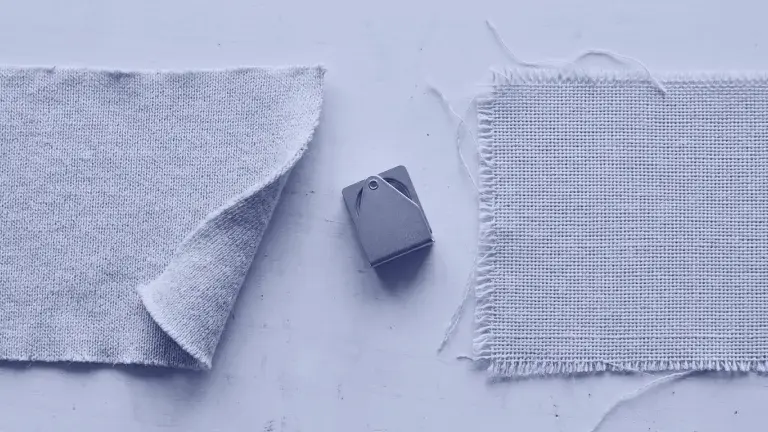
Knit vs Woven Fabric: How to Tell Them Apart
How knit and woven fabrics differ, five checks to tell them apart, the cases that mislead, how to choose by product, and what changes in production, testing and customs classification.
How to Source Fabric from Turkey: Find, Verify, Compare and Order
What Turkish fabric mills make and who they sell to, where to find them, what to plan for on MOQ and lead time, which tests to request, how EU, UK and US duty rules differ and how to verify a supplier.
T-Shirt Fabric Types: A Buyer’s Guide to Jersey, Piqué, Interlock and Rib
How single jersey, piqué, interlock and rib behave in a T-shirt, how to write the fabric spec for your supplier, and what Turkish terms such as süprem and penye mean.