What is 2x2 Rib Knit?
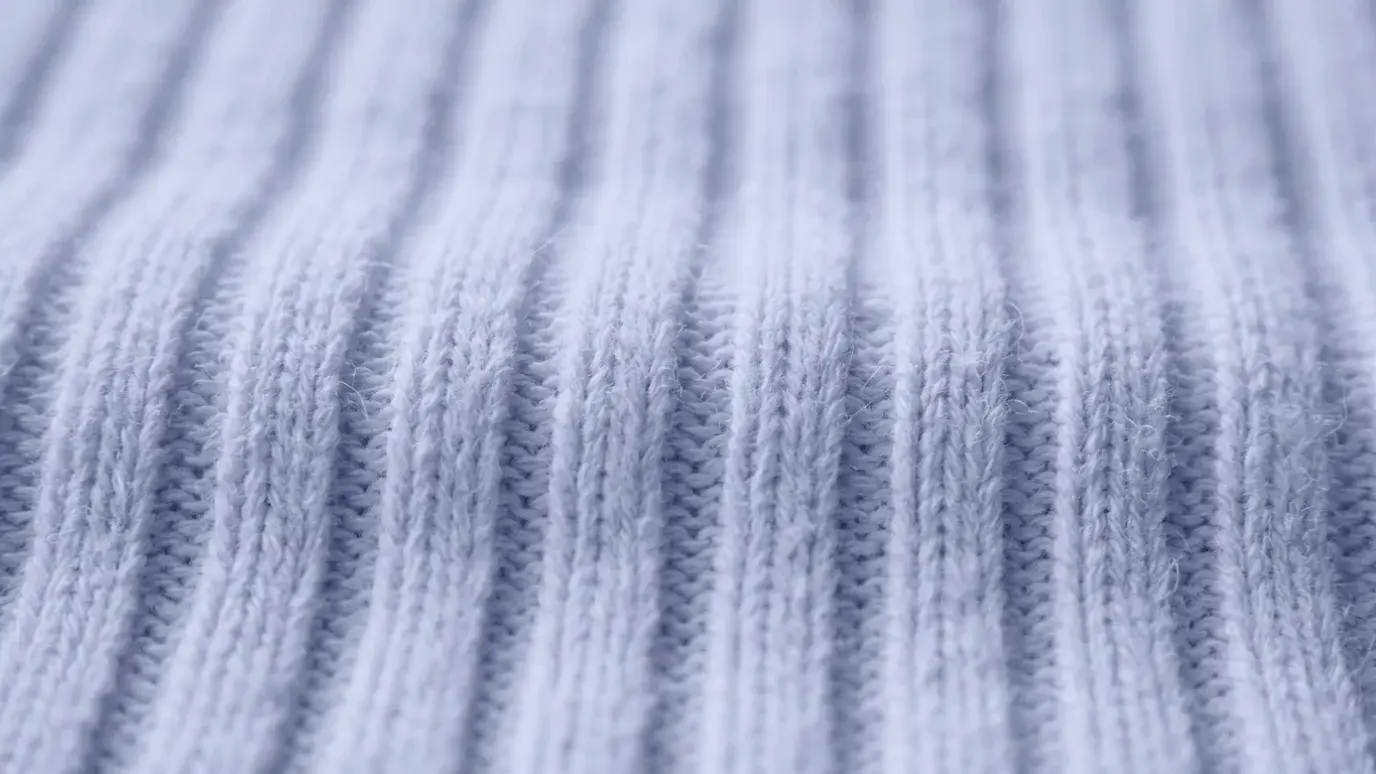
2x2 rib knit is a stretchy, wide-ribbed knitted fabric made on a double-bed machine, with two knit and two purl wales alternating across the width. In the Turkish market 2x2 rib is called kaşkorse, while 1x1 rib is called ribana.
- Published:
- Fact-checked by:
- Gizem Polat
Key facts
- 2x2 rib is a knit in which two knit and two purl wales alternate; Turkish suppliers call it kaşkorse and 1x1 rib ribana.
- Kaşkorse is not a synonym of ribana but its wider-ribbed sibling.
- Rib knits can stretch up to 140% crosswise relative to the relaxed state; stretch decreases as wales of the same type get wider.
- The Turkish Language Association (TDK) dictionary defines kaşkorse only as a garment: a thin women’s undershirt.
- One manufacturer quotes about 180–300 g/m² for kaşkorse; there is no standard range.
Properties
- Fiber content
- Cotton and elastane (manufacturer claim); the fiber ratio varies by fabric
- Structure
- Double-bed circular knit (cylinder and dial, “çift plaka”, double plate, in Turkish trade usage); 2x2 rib: two knit and two purl wales alternate; in a balanced structure both faces look the same
- Weight range
- No standard range. One raw knitted-fabric manufacturer quotes about 180–300 g/m² (5.3–8.8 oz/yd²), and ranges differ by source; no independent measured example was found
- Stretch
- In rib knits, crosswise stretch can reach 140% relative to the relaxed state; lengthwise stretch is close to plain knit. Stretch decreases as the number of adjacent wales of the same type increases
- Uses
- Bodysuits and dresses (manufacturer claim); rib knits in general are used in dresses, sweaters, collars, cuffs and waistbands
- Care
- Care instructions depend on fiber content and finishing. Dimensional change after washing is measured by ISO 5077, using ISO 6330 washing and drying procedures.
2x2 rib knit is a knitted fabric in which two knit and two purl wales alternate across the width; it is knitted on a double-bed machine (Dönmez, 2008). Turkish suppliers call it kaşkorse. It belongs to the same family as 1x1 rib, which the Turkish market calls ribana, but it is not a synonym: kaşkorse has wider ribs. The same word also appears in the Turkish Language Association (TDK) dictionary as the name of a garment.
What does kaşkorse mean?
The word has two separate meanings:
- Fabric (trade usage): 2x2 rib knit. Dönmez (2008) separates the most-used rib knits in the market into 1x1 rib, known as “ribana”, and 2x2 rib, known as “kaşkorse”. Karcem describes kaşkorse as a “wide-ribbed, elastic ribana variant” (our translation from the Turkish).
- Garment (TDK): “a thin women’s undershirt worn next to the skin” (our translation). TDK says the word comes from the French cache-corset; the dictionary gives no fabric meaning.
This entry covers the fabric.
2x2 rib knit structure
Rib knits are written as m×n, where m is the number of needles working in the front bed and n the number in the back bed in one knitting repeat. In a balanced structure where m = n, both faces look the same and the edge does not curl (Dönmez, 2008). CottonWorks describes 2x2 rib as two knit stitches on the cylinder alternating with two on the dial. At rest only knit stitches are visible on both faces; when the fabric is stretched crosswise, the purl stitches appear (Dönmez, 2008). Because of the rib structure the fabric narrows crosswise when it leaves the machine (Çeken, 2008, cited in Dönmez, 2008).
Stretch and thickness
Lengthwise stretch of rib knits is about the same as plain knit; crosswise, stretch of up to 140% relative to the relaxed state can occur (Dönmez, 2008). CottonWorks says rib stretches crosswise to twice that of single jersey. As the number of adjacent stitches of the same type increases, for example from 2x1 to 3x3 and 6x3 rib, stretch decreases (Dönmez, 2008). According to NPTEL, 3x3 rib is thicker than 2x2 rib because wide wale strips curl more. No directly measured stretch comparison between 1x1 and 2x2 rib was found in the sources; ask the supplier for stretch and recovery as measured values.
2x2 rib (kaşkorse) vs 1x1 rib (ribana)
| Ribana (1x1 rib) | Kaşkorse (2x2 rib) | |
|---|---|---|
| Structure | 1x1 rib: one knit and one purl wale | 2x2 rib: two knit and two purl wales |
| Manufacturer description (Karcem) | “Ideal for collars, cuffs and close-fitting garments with its elastic, ribbed structure” | “Wide-ribbed, elastic ribana variant; versatile use including bodysuits and accessories” |
| Manufacturer weight claim (Karcem) | 180–260 g/m² | 180–300 g/m² |
| Typical use (Karcem) | Cuffs, collars, gathers | Bodysuits, dresses |
The Karcem descriptions are our translation from the Turkish. For ribana see the rib knit entry. The weight claims belong to a single manufacturer; there is no standard range. If a supplier quotes ounces, multiply oz/yd² by about 33.9 to get g/m².
Uses
Karcem lists kaşkorse for bodysuits and dresses. CottonWorks lists ribs in general as structures used in dresses and sweaters and in collar, wrist and waistband trims. For a comparison of fabric groups see the fabric types guide.
What to specify when sourcing 2x2 rib
- Write the structure as well: kaşkorse is a market name; put “2x2 rib” in the order too.
- Look at recovery: recovery after stretching matters as much as the stretch itself (Cingü, 2022). Ask for the permanent elongation value and the elastane content.
- Ask for measurements with their condition: because rib narrows when it leaves the machine, have the state (greige, finished or relaxed) in which width and weight were measured written down.
- Ask for post-wash size on 2x2 rib: width and length change to ISO 5077, from a sample washed and dried with ISO 6330 procedures.
Frequently asked questions
Are kaşkorse and ribana the same? In trade usage, no: ribana is 1x1 rib and kaşkorse is 2x2 rib (Dönmez, 2008). Both belong to the rib family.
Does kaşkorse stretch? Yes. In rib knits crosswise stretch can reach 140% relative to the relaxed state (Dönmez, 2008); the stretch varies with wale width.
Sources (8)
- Dönmez, E. T. (2008). Yuvarlak örme kumaşlarda kumaş gramajına etki eden faktörler üzerine bir araştırma (A study on the factors affecting fabric weight in circular knitted fabrics; in Turkish). Dokuz Eylül University Graduate School of Natural and Applied Sciences, master’s thesis (pp. 11, 14-15: rib knit)
- CottonWorks (Cotton Incorporated): Single Knits and Double Knits (accessed October 9, 2026)
- NPTEL, Knitting Technology, Module 2 FAQ
- TDK Güncel Türkçe Sözlük (Turkish Language Association dictionary), entry “kaşkorse” (accessed October 9, 2026)
- Karcem Tekstil (raw knitted fabric manufacturer): Örme Kumaş: Çeşitleri, Gramaj Tablosu ve Üretimi (knitted fabric: types, weight table and production; Turkish; last updated September 26, 2026; accessed October 9, 2026)
- Cingü, N. (2022). Elastanlı örme kumaşların kalıcı uzama ve konfor özelliklerinin incelenmesi (Investigation of permanent elongation and comfort properties of elastane knitted fabrics; in Turkish). Bursa Uludağ University Graduate School of Natural and Applied Sciences, master’s thesis
- ISO 6330:2021 Textiles: Domestic washing and drying procedures for textile testing
- ISO 5077:2007 Textiles: Determination of dimensional change in washing and drying (confirmed in 2022)
Author and fact-checking
Written by
Fabrics and Fibers Editor
Elif Karaca is Tekstil Rehberi's fabrics and fibers editor. She writes guides and glossary entries on knitted, woven and nonwoven fabrics, fiber properties and choosing the right fabric for each product, and bases values such as GSM, width, shrinkage and color fastness on standards and mill technical data sheets.
Content by Elif KaracaFact-checked by: Gizem Polat
This content was prepared by the Tekstil Rehberi editorial team. Before publication, our verification editor checked its figures, dates and sources against primary sources.
Spotted an error? Email us at [email protected] How we work →
Articles on this topic

T-Shirt Fabric Types: A Buyer’s Guide to Jersey, Piqué, Interlock and Rib
How single jersey, piqué, interlock and rib behave in a T-shirt, how to write the fabric spec for your supplier, and what Turkish terms such as süprem and penye mean.