What is Scuba Knit?
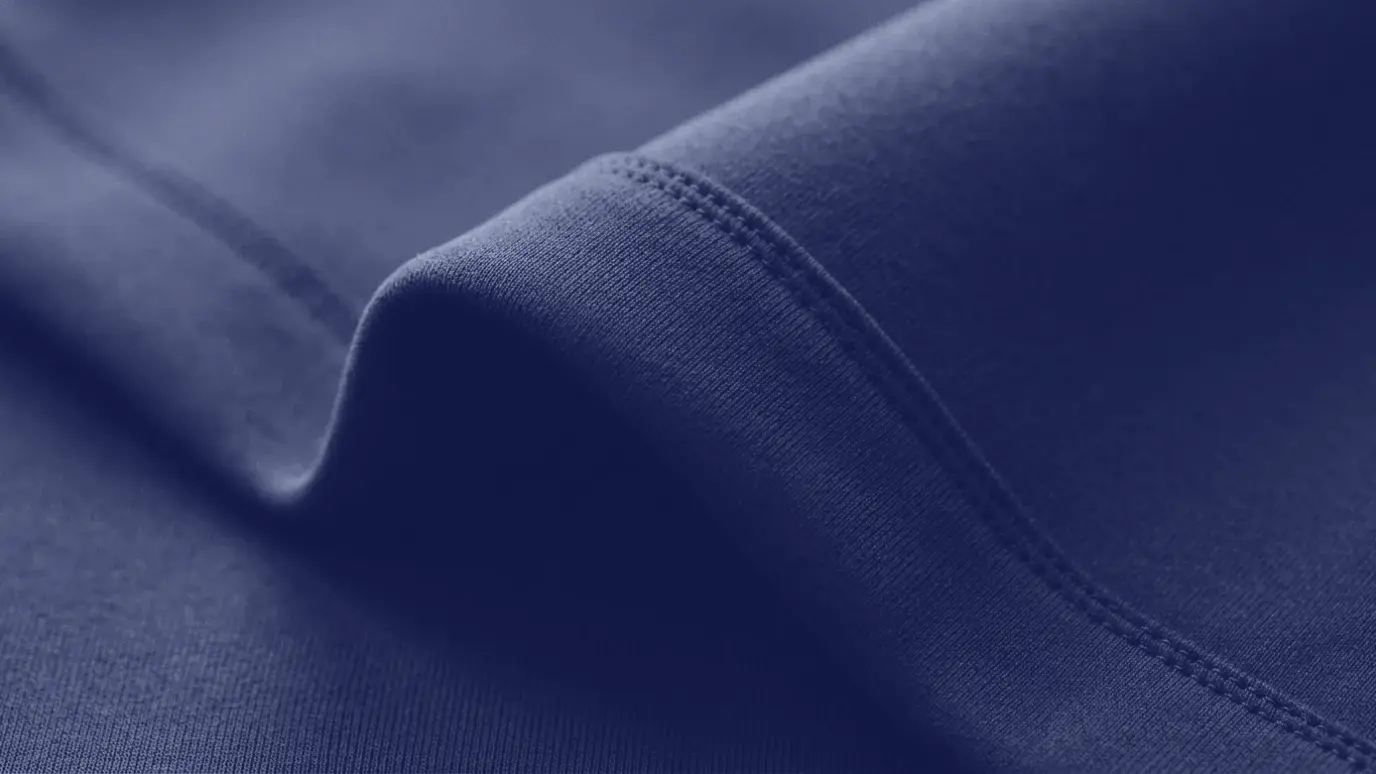
Scuba fabric (scuba knit) is a smooth-faced, full-bodied double-knit fabric, usually made from polyester and elastane and knitted in one piece on a double-bed machine. It is not the same as neoprene, a bonded fabric–foam–fabric laminate. Turkish suppliers also call it dalgıç kumaş.
- Published:
- Updated:
- Fact-checked by:
- Gizem Polat
Key facts
- Scuba is a double-faced knit made in one piece on a double-bed machine; Turkish suppliers also call it dalgıç kumaş.
- Manufacturers describe it as polyester-dominant, with roughly 5–10% elastane.
- It is knitted in one piece with no foam inside; bonded fabric–foam–fabric material is called neoprene.
- Manufacturer weight claims run from about 200 to 400 g/m² depending on end use; there is no standard range.
- The name scuba is often confused with ponte and scuba crepe.
Properties
- Fiber content
- Polyester-dominant with elastane; manufacturer claims of roughly 90–95% polyester and 5–10% elastane (for example 92% polyester, 8% elastane). Nylon-elastane, viscose and cotton blends are also mentioned
- Structure
- Double-bed knit; double-faced, knitted in one piece; no foam core; smooth face
- Weight range
- No standard range. Manufacturer claims mostly fall between 200 and 400 g/m² (5.9–11.8 oz/yd²); one manufacturer gives bands of 200–250 g/m² for leggings and bodysuits and 250–350 g/m² for structured dresses and blazers. One supplier mentions 170–220 g/m² for sportswear and leggings, together with elastane single jersey (claims differ by source)
- Stretch
- Depends on elastane content and structure; one manufacturer finds scuba springier than ponte and says it stretches in four directions (manufacturer claim, no measured value)
- Uses
- Dresses, skirts, leggings, bodysuits, blazers and jackets; sportswear
- Care
- Care instructions depend on fiber content and finishing; follow the label. One manufacturer recommends machine washing at 30 °C with a low spin speed (Sasteks). Dimensional change after washing is measured by ISO 5077, using ISO 6330 washing and drying procedures.
Scuba fabric (scuba knit) is a smooth-faced, full-bodied double-knit fabric, usually made from polyester and elastane and knitted in one piece on a double-bed machine. It has no foam core; a bonded fabric–foam–fabric material is called neoprene (Fersan). Scuba is a trade name, not a standard term (Topade). No standard or academic definition could be found, so the information below rests on manufacturer statements. In Turkey it is also known as dalgıç kumaş (“diver’s fabric”).
Scuba fabric structure
One manufacturer describes scuba as an elastane double-faced fabric knitted on double-bed machines, with a typical elastane share of 5–10% on a polyester base (Fersan). Another gives a composition of 92% polyester and 8% elastane for its products (Sasteks; written there as likra, the Turkish trade word for elastane). A supplier page describes scuba as a smooth, tight, full-bodied double knit with good recovery, says polyester-elastane is the common base, and adds that nylon-elastane and viscose or cotton blends exist too (Topade).
Double-bed knits are generally made by bonding two fabrics during knitting; they are heavier, more stable and curl less than single-bed knits (CottonWorks). The face of scuba is smooth and flat (Fersan; Sasteks).
Fabrics scuba is confused with
Fersan notes that the name scuba is confused with three fabrics:
| Name | What it means | How it differs from scuba |
|---|---|---|
| Neoprene (laminated) | Bonded fabric–foam–fabric material (Fersan) | Has a foam core and bonding; scuba is knitted in one piece and has no foam |
| Ponte (Ponte di Roma, double-layer interlock) | An interlock variation with a slight horizontal rib look, thicker and more stable than interlock (CottonWorks) | Ponte is more stable and stretches in two directions; scuba has a flat face, is springier and stretches in four directions (Fersan) |
| Scuba crepe | Pebbled face, generally lighter (Fersan) | Face texture and weight |
The term is therefore ambiguous: the background section of a patent application describes scuba fabrics as a foam plastic layer, usually neoprene, combined with at least one standard outer fabric layer (US 2016/0083877 A1). State the structure explicitly when ordering.
Scuba fabric weight (GSM)
There is no standard weight range for scuba. Manufacturer claims:
| Source | Note | Weight (g/m²) |
|---|---|---|
| Fersan, October 3, 2026 | Scuba range card; 200–250 leggings and bodysuits, 250–350 structured dresses, skirts and blazers, 350–400 outerwear | 200–400 |
| Sasteks, undated | 92% polyester, 8% elastane; ±5% | 240–260 |
| Altunkaya, June 30, 2026 | Sportswear and leggings (mentioned together with elastane single jersey) | 170–220 |
Imperial weights convert at about 33.9 g/m² per oz/yd².
Uses
Sasteks lists evening dresses, leggings, jackets, flared trousers, fine-yarn bikinis and modest swimwear. Fersan mentions leggings, bodysuits, structured dresses, skirts, blazers and outerwear; Topade gives structured dresses and skirts, jackets and leggings as examples. To see scuba next to other fabric groups, take a look at the fabric types guide.
What to specify when sourcing scuba fabric
- State the structure: one-piece double-faced scuba, laminated neoprene, ponte or scuba crepe.
- Ask for the composition as a percentage: the polyester and elastane ratio. The name scuba alone does not describe the composition.
- State the condition in which weight and width were measured: greige or finished, open width or tubular.
- Have recovery measured: Fersan writes that recovery is confirmed by measurement after repeated washing; ask for values before and after washing.
- Have shrinkage measured on scuba: the change value from ISO 5077 is calculated after washing and drying to ISO 6330.
Frequently asked questions
Does scuba fabric make you sweat? One manufacturer states that scuba has no moisture-wicking property and may cause sweating (Sasteks). Sweating is not determined by a fabric name alone: air permeability is measured by EN ISO 9237 and thermal and water-vapor resistance by EN ISO 11092, and the two describe different things.
Is scuba the same as neoprene? No. Neoprene is a bonded material with a foam core; scuba is knitted in one piece (Fersan).
Is there a difference between dalgıç kumaş and scuba? One manufacturer states that they are two names for the same fabric (Fersan).
Sources (10)
- Fersan Tekstil (polyester knitted fabric manufacturer): Scuba (Dalgıç) Kumaş Üreticisi (scuba (diver’s fabric) manufacturer; Turkish; updated October 3, 2026; accessed October 9, 2026)
- Sasteks Örme: Scuba Kumaş (Scuba fabric; Turkish; undated; accessed October 9, 2026)
- Topade Textile (knitted fabric manufacturer, China): What Is Scuba Knit Fabric? Structure, GSM, Stretch and Uses (accessed October 9, 2026)
- CottonWorks (Cotton Incorporated): Single Knits and Double Knits (accessed October 9, 2026)
- US 2016/0083877 A1: Woven fabric having the aspect of a scuba fabric, and method for producing the same (Sanko Tekstil İşletmeleri; published March 24, 2016; Background section)
- Altunkaya Tekstil: Kumaş GSM (Gramaj) Nedir? (What is fabric GSM (weight)?; Turkish; June 30, 2026; accessed October 9, 2026)
- EN ISO 9237:1995 Textiles: Determination of permeability of fabrics to air (EVS-EN ISO 9237:2000 record)
- EN ISO 11092:2026 Textiles: Physiological effects: Measurement of thermal and water-vapour resistance under steady-state conditions (EVS record; valid from June 15, 2026)
- ISO 6330:2021 Textiles: Domestic washing and drying procedures for textile testing
- ISO 5077:2007 Textiles: Determination of dimensional change in washing and drying (confirmed in 2022)
Author and fact-checking
Written by
Fabrics and Fibers Editor
Elif Karaca is Tekstil Rehberi's fabrics and fibers editor. She writes guides and glossary entries on knitted, woven and nonwoven fabrics, fiber properties and choosing the right fabric for each product, and bases values such as GSM, width, shrinkage and color fastness on standards and mill technical data sheets.
Content by Elif KaracaFact-checked by: Gizem Polat
This content was prepared by the Tekstil Rehberi editorial team. Before publication, our verification editor checked its figures, dates and sources against primary sources.
Spotted an error? Email us at [email protected] How we work →