What is Cardigan Stitch (Selanik)?
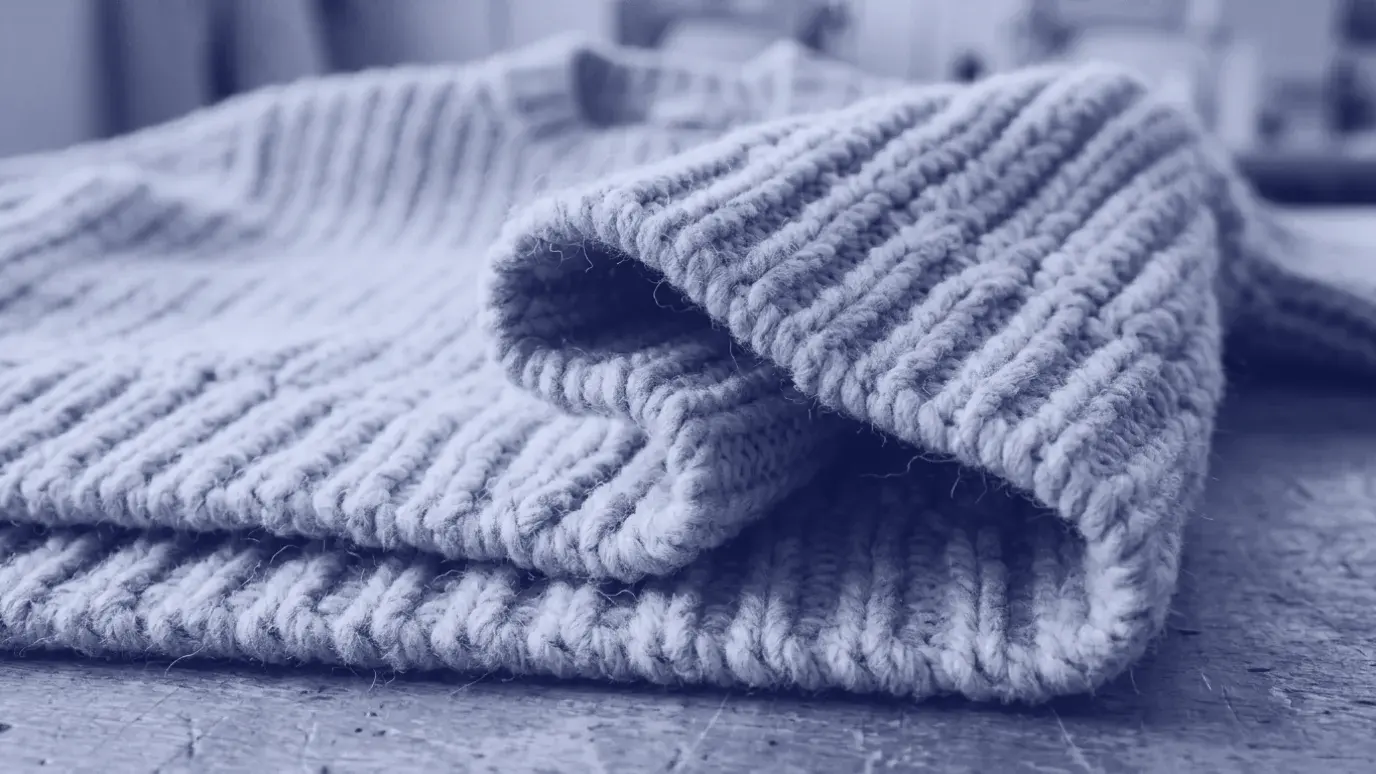
Cardigan stitch (Turkish: selanik) is a thick, full-looking weft-knit structure in which tuck stitches and knit loops are made alternately on a double-bed machine. It is used in cardigans, sweaters, jackets and other winter products.
- Published:
- Fact-checked by:
- Gizem Polat
Key facts
- Selanik is a knit structure in which tuck stitches and knit loops alternate on a double-bed machine; academic literature calls it cardigan (stitch or structure).
- The TDK Turkish dictionary defines selanik as a kind of knit pattern used in scarves, cardigans and the like.
- In one study of acrylic-yarn samples, cardigan-family structures weighed 363–416 g/m² and measured 4.0–4.7 mm thick; no generally accepted weight range exists.
- In the same study, the thermal resistance of selanik was about 1.6 times that of 1x1 rib, which makes it a thick, warm structure.
- Selanik is a structure name, not a fiber or a brand; composition and weight vary from seller to seller.
Properties
- Fiber content
- A structure name with no fiber requirement. In the academic study, 100% acrylic (Nm 14/2); supplier and course pages mention 100% cotton, cotton-acrylic, polyester and wool blends (Altunkaya; Vefa Kumaş; Tekstil Dershanesi)
- Structure
- Weft knit; tuck stitches and knit loops are made alternately on two needle beds. Half cardigan (yarım selanik): 4 tucks and 12 loops per repeat; cardigan (selanik): 8 tucks and 8 loops (Cüreklibatır Encan and Marmaralı, 2023)
- Weight range
- No generally accepted range was found. Measured example: acrylic yarn (Nm 14/2), 10-gauge V-bed machine, cardigan-family structures at 363–416 g/m² (10.7–12.3 oz/yd²). Producer claims: 100% cotton at 290–300 g/m² (8.6–8.8 oz/yd²) (Altunkaya); 400+ g/m² (11.8+ oz/yd²) for thick winter outerwear (selanik and French terry are mentioned together)
- Stretch
- Tucks reduce lengthwise stretch and increase bending rigidity; the lowest bending rigidity was measured in the tuck-free 1x1 rib (Cüreklibatır Encan and Marmaralı, 2023)
- Uses
- Cardigans, sweaters, jackets, tunics and winter outerwear; sports tops; baby and children’s winter clothing (TDK; Altunkaya; Vefa Kumaş; Tekstil Dershanesi)
- Care
- Care instructions depend on fiber content and finishing; follow the label. One course page mentions a shrinkage risk in high-temperature washing. Dimensional change after washing is measured by ISO 5077, using ISO 6330 washing and drying procedures.
Cardigan stitch (Turkish: selanik) is a thick, full-looking weft-knit structure in which tuck stitches and knit loops are made alternately on a double-bed machine. In the academic literature the Turkish term corresponds to “cardigan” (Cüreklibatır Encan and Marmaralı, 2023); this entry says “cardigan stitch” so that it is not confused with the garment. The TDK (Turkish Language Association) dictionary defines selanik as “a kind of knit pattern used in scarves, cardigans, etc.” (our translation). Selanik is a structure name, not a fiber or a brand; the composition and weight on product pages vary from seller to seller.
What does selanik mean?
“Selanik” names both the knit structure and the fabric knitted in it. The Basic Knitting module of the Turkish Ministry of National Education (MEB) counts selanik among the circular knitted fabrics produced on double-bed rib machines (MEB, 2011). An academic study compares five structures: 1x1 rib, half selanik, selanik and their “double-tuck” derivatives (Cüreklibatır Encan and Marmaralı, 2023). Turkish course pages also call it “full selanik” (tam selanik; Tekstil Dershanesi).
Trade use of the name is flexible. One producer describes selanik as a densely knitted fabric known for its transversely embossed ribbed texture and makes it in 100% cotton at 290–300 g/m² (Altunkaya Tekstil). Another supplier presents it as a thick, full-handed knit, mostly cotton-acrylic (Vefa Kumaş). Writing only “selanik” in an order is therefore not enough: also write the structure, the composition and the weight.
Cardigan stitch structure
A tuck forms when a needle that already holds a loop takes a second loop and holds it behind the old loop. Tucks leave gaps in the fabric, increase thickness and reduce lengthwise stretch (Cüreklibatır Encan and Marmaralı, 2023). The structures are distinguished by the tuck ratio in the repeat:
| Structure | Tucks and loops per repeat | Lengthwise loop share |
|---|---|---|
| 1x1 rib (for comparison) | No tucks, loops only | 100% |
| Half selanik | 4 tucks, 12 loops | 75% |
| Selanik | 8 tucks, 8 loops | 50% |
In “double-tuck” types the tucks are knitted in succession on the same needle. According to a course page, both faces of full selanik look the same, while the two faces of half selanik look different (Tekstil Dershanesi).
Measured properties
Cüreklibatır Encan and Marmaralı (2023) knitted five structures with the same yarn and machine setting: 100% acrylic, Nm 14/2 yarn, on a 10-gauge (10 needles per inch) V-bed machine. The results are limited to acrylic yarn and a single study; they do not carry over directly to cotton or polyester selanik.
| Structure | Weight (g/m²) | Thickness (mm) | Thermal resistance (m²K/W) | Relative water-vapor permeability (%) |
|---|---|---|---|---|
| 1x1 rib | 483 | 3.59 | 0.0806 | 30.87 |
| Half selanik | 394 | 4.03 | 0.0999 | 26.77 |
| Double-tuck half selanik | 413 | 4.03 | 0.1036 | 29.83 |
| Selanik | 363 | 4.62 | 0.1264 | 22.43 |
| Double-tuck selanik | 416 | 4.68 | 0.1342 | 22.50 |
Three findings stand out:
- Weight does not tell thickness. The 1x1 rib was the heaviest fabric (483 g/m², 14.2 oz/yd²) but the thinnest (3.59 mm); selanik was lighter at 363 g/m² (10.7 oz/yd²) and thicker at 4.62 mm.
- A thick structure holds heat. The thermal resistance of selanik was about 1.6 times that of 1x1 rib, and its water-vapor permeability was lower.
- Pilling varies. Half selanik and double-tuck half selanik received the best grade (4–5) and selanik the lowest (3); the method is TS EN ISO 12945-1.
Fabrics confused with selanik
- Rib knit (1x1 rib): made of loops only. In the same study it was heavier but thinner than selanik and showed higher water-vapor permeability. See rib knit.
- Interlock: the MEB module places interlock in a separate machine group, double-bed interlock machines, and mentions selanik among rib machines (MEB, 2011). See interlock.
- 2x2 rib (kaşkorse): MEB mentions selanik and kaşkorse in the same sentence as separate fabrics. See 2x2 rib knit.
What to specify when sourcing selanik
- Do not rely on the name alone: state the structure (selanik or half selanik, double-tuck or not), the fiber (as a percentage) and the weight together.
- Ask for the weight with its condition: greige or finished. To calculate g/m² from a sample, use the fabric GSM calculator; to convert between kilograms and meters, use the meter-kg calculator.
- Ask for the pilling result: TS EN ISO 12945-1. In the study, selanik received the lowest grade.
- Put selanik shrinkage in the report: the ISO 5077 result should come from ISO 6330 washing and drying procedures. One course page mentions a shrinkage risk in high-temperature washing (Tekstil Dershanesi).
- Ask for measurements behind comfort claims: EN ISO 9237 for air permeability, EN ISO 11092 for thermal and water-vapor resistance.
For a broader overview, see the knitted fabric entry and the knitted fabric manufacturers and suppliers in Turkey category.
Frequently asked questions
Is selanik breathable?
Selanik is a thick structure that holds heat; because of its weight, a course page considers it unsuitable for summer products (Tekstil Dershanesi). In a study with acrylic yarn, the thermal resistance of selanik was 0.1264 m²K/W against 0.0806 m²K/W for 1x1 rib, and the relative water-vapor permeability was 22.43% against 30.87% (Cüreklibatır Encan and Marmaralı, 2023). If the fiber changes, the result changes too; ask for the values of your own fabric. For measurement methods, see breathable fabrics.
Is selanik knitted or woven?
Knitted. TDK defines it as a knit pattern, and the MEB module counts it among the knitted fabrics produced on double-bed rib machines.
What is the difference between half selanik and selanik?
Half selanik has 4 tucks and 12 loops per repeat, selanik 8 tucks and 8 loops. In the study, selanik was thicker (4.62 mm against 4.03 mm) and had a higher thermal resistance (0.1264 against 0.0999 m²K/W); the highest bending rigidity was measured in half selanik.
Sources (12)
- Cüreklibatır Encan, B. and Marmaralı, A. (2023). Selanik ve Türevi Yapılarda Askının Kumaş Özelliklerine Etkisi (Effect of Tuck Loops on Fabric Properties of Cardigan Derivative Structures). Dokuz Eylül Üniversitesi Mühendislik Fakültesi Fen ve Mühendislik Dergisi, 25(73), 149-158. DOI: 10.21205/deufmd.2023257312
- TDK Güncel Türkçe Sözlük (Turkish Language Association dictionary), entry “selanik” (accessed October 11, 2026)
- Republic of Türkiye Ministry of National Education (2011). Tekstil Teknolojisi: Temel Örme (542TGD387) (Textile Technology: Basic Knitting; Turkish), p. 28
- Altunkaya Tekstil: Selanik Kumaş (Selanik fabric; Turkish; undated; accessed October 11, 2026)
- Altunkaya Tekstil: Kumaş GSM (Gramaj) Nedir? (What is fabric GSM (weight)?; Turkish; June 30, 2026; accessed October 11, 2026)
- Vefa Kumaş: Selanik Kumaş (Selanik fabric; Turkish; undated; accessed October 11, 2026)
- Tekstil Dershanesi: Selanik Kumaş Nedir? (What is selanik fabric?; Turkish; undated; accessed October 11, 2026)
- Tekstil Dershanesi: Örme Kumaş Çeşitleri, Selanik Örgü (Knitted fabric types, selanik stitch; Turkish; undated; accessed October 11, 2026)
- EN ISO 9237:1995 Textiles: Determination of permeability of fabrics to air (EVS-EN ISO 9237:2000 record)
- EN ISO 11092:2026 Textiles: Physiological effects: Measurement of thermal and water-vapour resistance under steady-state conditions (EVS record; valid from June 15, 2026)
- ISO 6330:2021 Textiles: Domestic washing and drying procedures for textile testing
- ISO 5077:2007 Textiles: Determination of dimensional change in washing and drying (confirmed in 2022)
Author and fact-checking
Written by
Fabrics and Fibers Editor
Elif Karaca is Tekstil Rehberi's fabrics and fibers editor. She writes guides and glossary entries on knitted, woven and nonwoven fabrics, fiber properties and choosing the right fabric for each product, and bases values such as GSM, width, shrinkage and color fastness on standards and mill technical data sheets.
Content by Elif KaracaFact-checked by: Gizem Polat
This content was prepared by the Tekstil Rehberi editorial team. Before publication, our verification editor checked its figures, dates and sources against primary sources.
Spotted an error? Email us at [email protected] How we work →
Articles on this topic
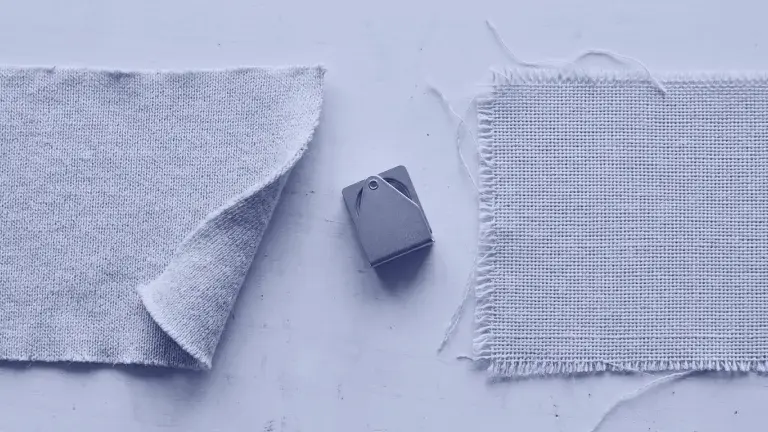
Knit vs Woven Fabric: How to Tell Them Apart
How knit and woven fabrics differ, five checks to tell them apart, the cases that mislead, how to choose by product, and what changes in production, testing and customs classification.
How to Source Fabric from Turkey: Find, Verify, Compare and Order
What Turkish fabric mills make and who they sell to, where to find them, what to plan for on MOQ and lead time, which tests to request, how EU, UK and US duty rules differ and how to verify a supplier.
T-Shirt Fabric Types: A Buyer’s Guide to Jersey, Piqué, Interlock and Rib
How single jersey, piqué, interlock and rib behave in a T-shirt, how to write the fabric spec for your supplier, and what Turkish terms such as süprem and penye mean.