What is Polar Fleece?
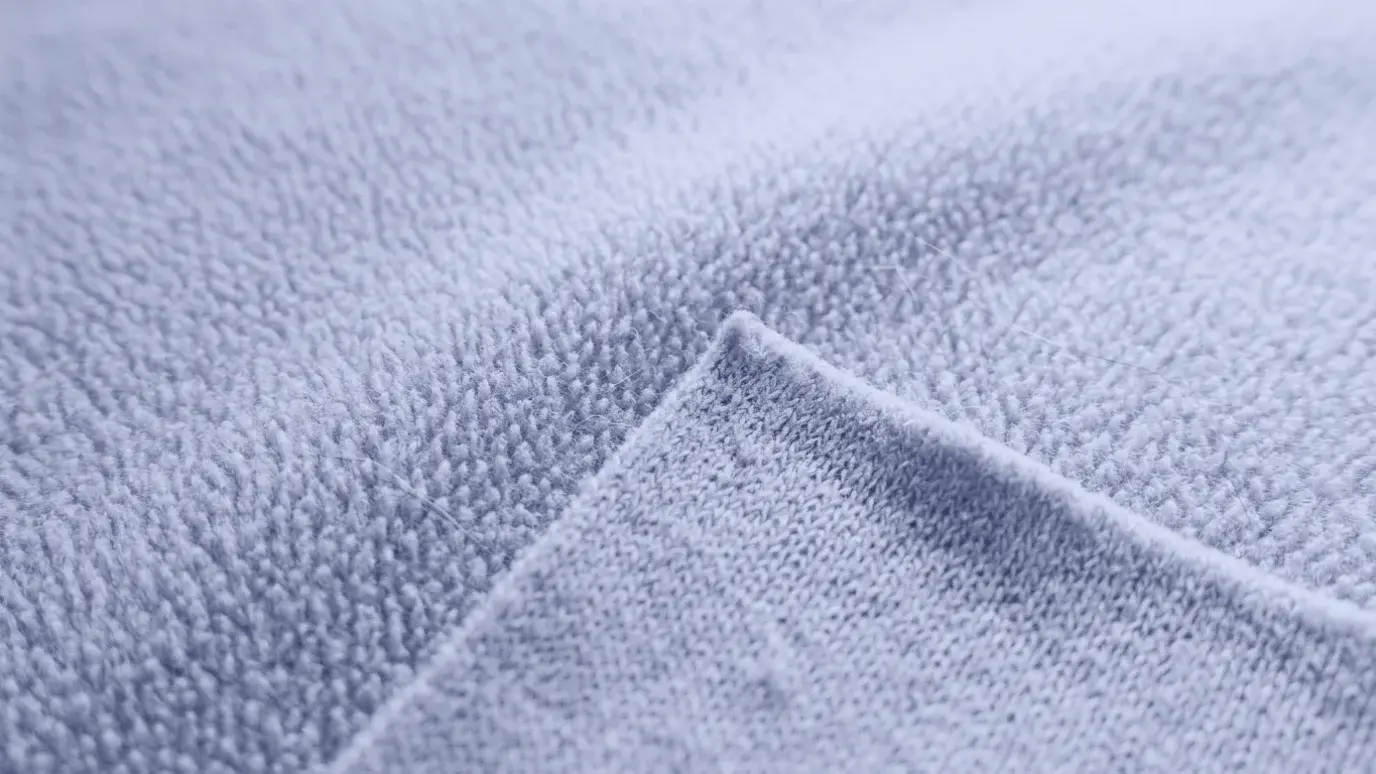
Polar fleece is a soft, fluffy knitted fabric whose surface is brushed to raise a pile, made mostly from polyester. The pile traps heat in air pockets, so the fabric is light yet warm; it is used for mid-layers, jackets and similar winter garments. Turkish suppliers call it polar.
- Published:
- Fact-checked by:
- Gizem Polat
Key facts
- Polar fleece is a synthetic knitted fabric whose surface is brushed to raise a pile; the raw material is mostly polyester.
- The Turkish Language Association (TDK) dictionary says the Turkish word polar takes its name from the company Polartec.
- Fleece is the general name for brushed knits and can be cotton, cotton-polyester or fully synthetic; polar is the polyester-based member of this family.
- There is no standard weight range; one measured 100% polyester polar sample weighed 222 g/m².
- Polyester polar can shed microplastic fibers in washing and drying; one studied sample shed 1.4 mg of fiber per gram of fabric in the first wash.
- Pilling is measured with the ISO 12945 series; state the method and the acceptance grade in the specification.
Properties
- Fiber content
- Mostly polyester (PET); versions made from recycled polyester exist
- Structure
- Knitted base; the surface is brushed (napped) to form a pile layer, which is then sheared. One polyester polar sample studied was knitted from three types of multifilament yarn (face, tie-in and loop yarn)
- Weight range
- No standard range. Manufacturers use light-to-heavy classes (Polartec: Micro, 100, 200, 300). One measured 100% polyester polar sample weighed 222.4 g/m² (6.6 oz/yd²) and was 1.92 mm thick
- Stretch
- May stretch because of the knitted base; stretch varies with structure, yarn and finishing
- Uses
- Mid-layers, jackets and performance garments; in Turkish, a top made from the fabric is also called “polar”
- Care
- Follow the care label. Polyester polar can shed microplastic fibers in washing and drying; shedding was highest in the first washes of the sample studied. Dimensional change is measured by ISO 5077, using ISO 6330 procedures
Polar fleece is a soft, fluffy knitted fabric whose surface is brushed to raise a pile, made mostly from polyester. The Turkish Language Association (TDK) dictionary describes polar as a light, bulky and soft fabric whose raw material is petroleum and petroleum by-products, and says the name comes from the company name Polartec. It is used for mid-layers, jackets and similar winter garments. Turkish suppliers call it polar.
Polar fleece structure
The base of polar fleece is a knitted fabric. Polartec describes fleece as a knitted material converted into a soft, fuzzy pile structure, and says the raised pile traps body heat in its air pockets. The 100% polyester sample studied by Novotná et al. (2025), described in the paper as “single jersey fleece”, had a loop yarn forming the filler layer in addition to the face and tie-in yarns; the fabric was knitted from three types of multifilament yarn. The paper does not state the finishing steps (brushing, shearing) of the sample.
In fleece production the pile is obtained by brushing (napping): the fabric passes through rotating brushes, the loops are split to form a fluffy layer, and spiral blades then shear the surface to even out the thickness (Hossain et al., 2021).
Polartec says most of its fleece range is made from post-consumer recycled water-bottle polyester, and its corporate timeline dates the birth of synthetic fleece to 1981 and the first fleece with recycled content to 1993. The same timeline gives 1991 as the founding of the Polartec brand and mentions the “Polarfleece” name under 1986. These are manufacturer claims; ask for a certificate and a test report for any recycled-content claim.
Polar fleece, fleece and brushed three-thread fleece
These three names are often confused. Fleece is the general name for brushed (napped) knitted fabrics and can be made of cotton, a cotton-polyester blend or entirely synthetic fibers (CottonWorks). Polar is the synthetic, fluffy member of this family: TDK gives its raw material as petroleum and petroleum by-products, and Polartec says most of its fleece is made of polyester. “Three-thread” describes the structure, not the fiber: it is knitted with a face, a tie-in and a fleece (loop) yarn (Hossain et al., 2021). According to CottonWorks, three-end fleece is the most stable and fullest fleece structure because it uses three yarns instead of two.
| Name | What it describes | Fiber |
|---|---|---|
| Fleece | Family of brushed knitted fabrics | Cotton, cotton-polyester or fully synthetic (CottonWorks) |
| Polar | Polyester-based, fluffy and soft fabric within the fleece family | Petroleum and its by-products; the sample studied was 100% polyester (TDK; Novotná et al., 2025) |
| Brushed three-thread | Three-yarn structure (face, tie-in and fleece yarn) with a brushed face | Composition varies; a polyester-cotton blend in one study (Hossain et al., 2021) |
The boundaries are not sharp: the polyester polar studied also had a three-yarn structure. In a quotation, do not write only “polar”; state the fiber ratio, the structure and the weight separately.
Weight and thickness
There is no standard weight range for polar fleece. Polartec offers its fleece series in four weights from light to heavy, Micro, 100, 200 and 300; the page does not give g/m² values for these classes. A measured example:
| Property | Value (single sample) |
|---|---|
| Fiber | 100% polyester multifilament |
| Weight | 222.4 g/m² |
| Thickness | 1.92 mm |
| Density | 11.5 wales/cm, 14.0 courses/cm |
Source: Novotná et al., 2025. This is a single sample; polar weight varies with structure and yarn. Mass per unit area can be measured on a small specimen by EN 12127, a standard that applies to woven and knitted fabrics. One ounce per square yard is about 33.9 g/m².
Pilling and microfiber shedding
Pilling. The formation of pills on a brushed surface is a property that needs to be measured. In the ISO 12945 series, Part 1 is the pilling box method and Part 2 the modified Martindale method. In a study of a polyester-cotton blend three-thread fleece, using the ISO 12945-1:2000 method and a five-point scale (1 worst, 5 no pilling), the untreated fabric scored grade 1; when singeing and heat setting were applied together the grade rose to 4 (Hossain et al., 2021). The result is specific to that fabric, but it shows that finishing can change pilling markedly.
Microfiber shedding. Polyester polar can release microplastic fibers in washing and drying. The 100% polyester polar sample released on average 1.4 mg of fiber per gram of fabric in the first wash and 0.83 mg in the first drying; the release was high in the first three to five wash-and-dry cycles, then fell and leveled off. The authors state that a significant share of the released fibers is already present in the fabric as production residue; they recommend pre-washing at the factory and fiber filters in washing machines (Novotná et al., 2025).
Uses
Polartec states that fleece is used in jackets, mid-layers and performance garments, suits outdoor activities, and is preferred by fashion brands for its soft handle and look. In Turkish the word “polar” is also used for a top made from this fabric (TDK).
What to specify when sourcing polar fleece
- Write the fiber, structure and weight next to the name: “polar” alone does not give the composition; write something like “100% polyester polar, … g/m²”.
- Define the pilling method and the acceptance grade: state which part of ISO 12945 is used and the expected grade in the specification.
- Have any recycled-content claim documented: for recycled polyester, ask for a certificate (for example GRS) and a test report.
- Ask about fleece's dimensional change: the method is ISO 5077, and ISO 6330 is the basis for the washing and drying conditions.
- If microfiber shedding matters to you, discuss measures such as pre-washing with the supplier (Novotná et al., 2025).
If you are looking for a supplier, see the polar fleece category.
Frequently asked questions
Are polar and fleece the same thing?
Not exactly. Fleece is the general name for brushed knitted fabrics and can be cotton or a blend (CottonWorks). Polar is the petroleum-based (TDK), mostly polyester, synthetic and fluffy fabric within this family.
What fiber is polar fleece made of?
According to TDK, its raw material is petroleum and petroleum by-products; the polar sample studied was 100% polyester (Novotná et al., 2025). Polartec says most of its fleece is made from recycled bottle polyester.
Does polar fleece pill?
Pilling can occur on brushed fabrics and changes markedly with finishing: in a study on a polyester-cotton blend three-thread fleece the untreated fabric scored grade 1, and fabric with singeing and heat setting scored grade 4 (Hossain et al., 2021). Write the acceptance grade into the specification according to ISO 12945.
Does polar fleece release microplastics in the wash?
It can. The polyester polar sample studied released on average 1.4 mg of fiber per gram of fabric in the first wash; the release was highest in the first washes and dryings. The authors recommend pre-washing at the factory and a washing machine filter (Novotná et al., 2025).
Sources (11)
- TDK Güncel Türkçe Sözlük (Turkish Language Association dictionary), entry “polar” (accessed October 9, 2026)
- Polartec, The Original Synthetic Fleece Fabric: Polar Fleece (accessed October 9, 2026)
- Polartec, About Us (corporate timeline; accessed October 9, 2026)
- Novotná, J., Tunák, M., Militký, J., Kremenáková, D., Wiener, J., Nováková, J., Ševců, A. (2025). Release of Microplastic Fibers from Polyester Knit Fleece during Abrasion, Washing, and Drying. ACS Omega, 10(14), 14241-14249. DOI: 10.1021/acsomega.5c00258
- Hossain, M. S., Islam, M. M., Dey, S. C., Hasan, N. (2021). An approach to improve the pilling resistance properties of three thread polyester cotton blended fleece fabric. Heliyon, 7(4), e06921
- CottonWorks (Cotton Incorporated): Single Knits and Double Knits (fleece and French terry section; accessed October 9, 2026)
- ISO 12945-1:2020 Textiles: Determination of fabric propensity to surface pilling, fuzzing or matting, Part 1: Pilling box method (EVS-EN ISO 12945-1:2020 record)
- ISO 12945-2:2020 Textiles: Determination of fabric propensity to surface pilling, fuzzing or matting, Part 2: Modified Martindale method (BS EN ISO 12945-2:2020 record)
- EN 12127:1997 Textiles. Fabrics. Determination of mass per unit area using small samples (BS EN 12127:1998 record; applies to woven and knitted fabrics)
- ISO 6330:2021 Textiles: Domestic washing and drying procedures for textile testing
- ISO 5077:2007 Textiles: Determination of dimensional change in washing and drying (confirmed in 2022)
Author and fact-checking
Written by
Fabrics and Fibers Editor
Elif Karaca is Tekstil Rehberi's fabrics and fibers editor. She writes guides and glossary entries on knitted, woven and nonwoven fabrics, fiber properties and choosing the right fabric for each product, and bases values such as GSM, width, shrinkage and color fastness on standards and mill technical data sheets.
Content by Elif KaracaFact-checked by: Gizem Polat
This content was prepared by the Tekstil Rehberi editorial team. Before publication, our verification editor checked its figures, dates and sources against primary sources.
Spotted an error? Email us at [email protected] How we work →