
Lining Fabric Manufacturers and Suppliers in Turkey
Polyester, acetate and cupro lining fabric suppliers in Turkey for jackets, coats, skirts and pants. Compare them on perspiration and rubbing fastness, shrinkage match and color card.
For buyers
Looking for a supplier in this category?
No companies are listed on this page yet. You do not have to wait for the list: describe what you need and request quotes.
Request a quote and let suitable suppliers reach you
Tell us the product, quantity and delivery location. You confirm your request with the link we e-mail you; requests are screened for spam, and our team reviews your first request. It is then sent to up to 20 companies working in this field and stays open for quotes in their company panel for 30 days. You compare the quotes you receive on one page.
- Free, no account needed.
- You decide whether companies see your contact details.
- We e-mail you when a new quote arrives.
Read before you choose a supplier
-
Dyeing, Printing and Finishing
Denim Wash Types and Techniques: Stone, Enzyme, Ozone, Laser
11 min read
Get your company listed on this page. If you manufacture or provide services in this field, create your free profile; companies are listed after our team has reviewed them.
List your company for freeKey facts
- Lining covers the inside of a garment and is chosen separately from the outer fabric; interlining is the intermediate layer that supports areas such as the collar, cuff or front.
- The lining's shrinkage must match the outer fabric; a mismatched material shrinks differently in washing and can distort the shape of the garment.
- Because lining touches the skin and underwear, perspiration fastness (ISO 105-E04) and rubbing fastness (ISO 105-X12) matter; for washable garments, dimensional change is measured to ISO 5077.
- Polyester, acetate and cupro linings differ in handle, breathability and care; the breathable structure of acetate suits lining.
Guide to Lining Fabrics
Elif Karaca
Fabrics and Fibers Editor
- Last updated:
- Fact-checked by:
- Gizem Polat
Lining is the thin fabric that covers the inside of a garment and is chosen separately from the outer fabric. This page is for buyers looking for lining for jackets, coats, outerwear, skirts and pants who want to choose it together with the outer fabric and with its behavior against the skin in mind.
What does the lining fabric category cover?
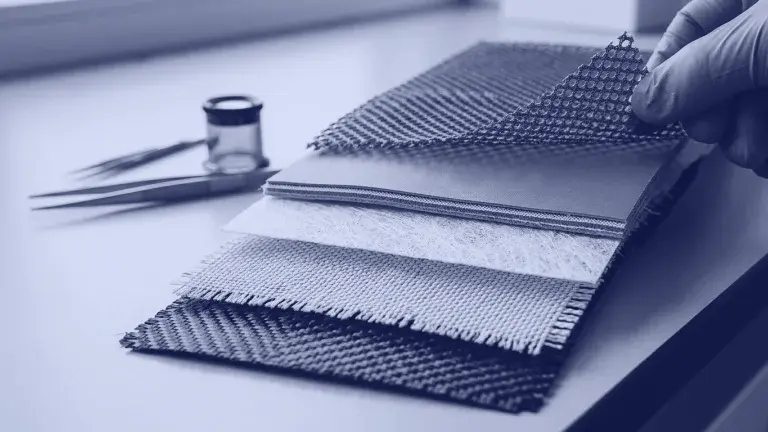
Woven fabrics used as garment lining belong here: taffeta and similar constructions made from fibers such as polyester, acetate and cupro (cuprammonium rayon). The breathable structure of acetate suits lining, and cupro is used in the linings of suit jackets. Piece-dyed taffeta is soft and often used for lining. Interlining is not lining; interlining has its own category. For the products lining goes into, see suits and blazers and outerwear; for the overall picture of fabrics, see the fabrics page.
In a lining quote, ask about shrinkage match and fastness
- Match with the outer fabric. The lining's shrinkage must match the outer fabric; a mismatched material shrinks differently in washing and can distort the shape of the garment. Check the ironing temperature against the outer fabric's care instructions too. The process is covered in the garment manufacturing process guide.
- Fiber and composition. Have the fiber percentage and care instructions written down. Polyester, acetate and cupro linings differ in handle, breathability and care.
- Fastness and dimensional stability. Lining is in contact with skin and underwear, so check perspiration and rubbing fastness. Compare dimensional change after washing or dry cleaning with that of the outer fabric.
- Weave and handle. Taffeta, twill and satin weaves differ in slipperiness, sound and sewing behavior. Try them on the garment.
- Color. Ask about the ready color card and the colors available from stock. If a color specific to your outer fabric is needed, the minimum quantity and the time for dyeing vary.
- MOQ, lead time, samples. Lining is often bought as a separate item from the main fabric. Once the lead time of the main fabric is known, tie the lining shipment to it.
In lining, fiber, weave and weight drive the price
Fiber type, weave, weight and density, dyeing and finishing, and lot size set the price. Lining may look like a small item on its own, but a wrong choice shows up in the whole garment as shrinkage, slippage or staining.
Where are lining fabric firms in Turkey?
TOBB, the Union of Chambers and Commodity Exchanges of Turkey, has no product code for lining fabric; under the code for woven fabrics of synthetic and artificial filament yarn (13.20.31), which covers polyester, acetate and cupro linings, 257 of the 366 firms with a valid capacity report (a document recording a plant's production capacity) are in Bursa (October 2026; TOBB). Under the artificial filament subcode (13.20.31.70: acetate, cupro, viscose filament), most of the 37 firms are also in Bursa (TOBB). The codes are not specific to lining, so use the province filter for current addresses and ask whether the firm makes lining fabric.
Sew lining and outer fabric together and have the sample washed
Sew the lining and the outer fabric together on the same sample and have it washed or dry-cleaned. Approve color matching in daylight. Calculate the order quantity from the lining consumption per garment plus a waste allowance.
Sources (6)
- EN ISO 105-E04:2013 Textiles - Tests for colour fastness - Part E04: Colour fastness to perspiration (EVS record)
- EN ISO 105-X12:2016 Textiles - Tests for colour fastness - Part X12: Colour fastness to rubbing (EVS record)
- EN ISO 5077:2008 Textiles - Determination of dimensional change in washing and drying (EVS record)
- Turkish Ministry of National Education (MEB), MEGEP, Garment Production Technology: Cutting (Kesim; 542TGD003; in Turkish), Ankara 2011
- TOBB Industry Database, capacity reports by province, product code 13.20.31 (accessed October 11, 2026)
- TOBB Industry Database, capacity reports by province, product code 13.20.31.70 (accessed October 11, 2026)
Frequently asked questions
How do I choose a lining fabric to match the outer fabric?
Three criteria decide: the lining's shrinkage in washing or dry cleaning must match the outer fabric, it must withstand the same care instructions as the garment (washing, dry cleaning, ironing), and the colors must match. Choose from a sample sewn and washed together with the outer fabric, not from the swatch card alone.
Which tests should I ask for on lining fabric?
A lining touches the skin and underwear, so perspiration fastness (ISO 105-E04) and rubbing fastness (ISO 105-X12) matter. If the garment will be washed, ask for dimensional change (ISO 5077); if it will be dry-cleaned, ask separately for a test method suited to that. Request the report for the lot you will buy.
Is interlining the same as lining?
No. Interlining (tela in Turkish) is an intermediate layer that supports areas such as the collar, cuff or front, while lining covers the inside of the garment. Look at interlining companies for interlining and at the companies on this page for lining.
How should I plan minimum order and lead time for lining?
Stock colors on the ready color card are treated separately from a color dyed specially for the outer fabric; the minimum quantity and time vary for custom dyeing. Because lining is often bought as a separate item from the main fabric, tie its shipment to the main fabric's lead time and get the minimum quantity in writing.
Where are lining fabric companies in Turkey?
The TOBB Industry Database has no product code specific to lining. Under the code for woven fabrics of synthetic and artificial filament yarn (13.20.31), which covers polyester, acetate and cupro linings, 257 of the 366 firms with a valid capacity report are in Bursa (October 2026). Because the code is not specific to lining, ask whether the firm makes lining fabric.