
Upholstery Fabric Manufacturers and Suppliers in Turkey
Turkish manufacturers and suppliers of upholstery fabric for sofas, chairs and other furniture. Compare them on abrasion and flammability reports and color-lot consistency, then request quotes directly.
For buyers
Looking for a supplier in this category?
No companies are listed on this page yet. You do not have to wait for the list: describe what you need and request quotes.
Request a quote and let suitable suppliers reach you
Tell us the product, quantity and delivery location. You confirm your request with the link we e-mail you; requests are screened for spam, and our team reviews your first request. It is then sent to up to 20 companies working in this field and stays open for quotes in their company panel for 30 days. You compare the quotes you receive on one page.
- Free, no account needed.
- You decide whether companies see your contact details.
- We e-mail you when a new quote arrives.
Read before you choose a supplier
-
Dyeing, Printing and Finishing
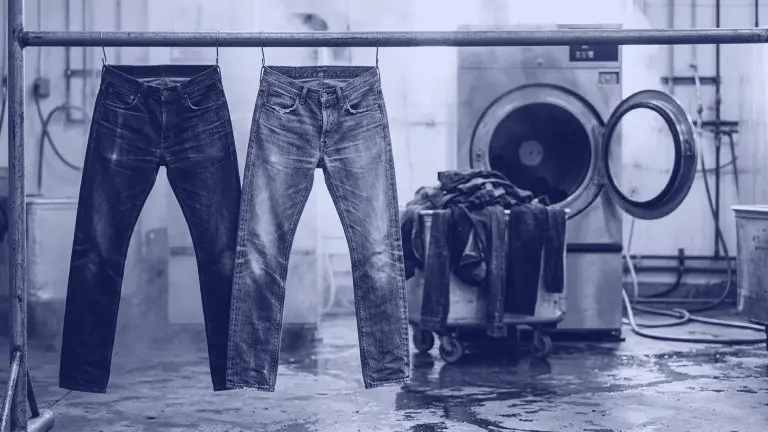
Denim Wash Types and Techniques: Stone, Enzyme, Ozone, Laser
11 min read
Get your company listed on this page. If you manufacture or provide services in this field, create your free profile; companies are listed after our team has reviewed them.
List your company for freeKey facts
- Upholstery fabric means woven fabric for sofas, couches, chairs, headboards and similar furniture; car-seat fabric is under automotive textiles and window fabric under curtains.
- EN 1021-1 (cigarette) and EN 1021-2 (match-flame equivalent) assess the ignitability of upholstered furniture; they test the fabric together with the filling, not on its own (EVS records).
- There is no single universal Martindale threshold; heavy-use settings such as offices and hotels call for a markedly higher number of cycles than the home.
Guide to Upholstery Fabrics
Ayşe Kaya
Home Textiles Editor
- Last updated:
- Fact-checked by:
- Gizem Polat
Buyers of upholstery fabric are mostly furniture manufacturers, upholsterers and contract (project) contractors. A fabric has to do more than look good: it must withstand years of sitting, rubbing and sunlight. Compare quotes on measured performance, not on appearance.
Sofa, chair and headboard fabrics: what the category covers
Woven fabrics for sofas, couches, chairs, headboards and similar furniture covering belong here: velvet fabric, chenille, jacquard, linen-look and suede-look weaves. Car-seat fabrics are under automotive textiles, and window fabrics under curtains. The same suppliers may also sell coated materials such as faux leather; check the company profile for scope. For general fabric options, see our fabric types guide.
Performance criteria for upholstery fabric
Ask which test method was used for each property below, and the date of the report:
- Abrasion (Martindale): how many rubs (cycles) the fabric withstands. Choose the cycle count by how heavily the furniture will be used.
- Pilling: the tendency to form small fiber balls on the surface.
- Light and rubbing fastness: fading in sunlight, and color transfer in dry and wet rubbing.
- Seam slippage and tear strength: whether yarns slide open at the seam, and resistance to tearing.
- Flammability: contract and project work usually calls for furniture fire tests. EN 1021-1 (cigarette) and EN 1021-2 (match-flame equivalent), widely used in Europe, test the fabric together with the filling, not on its own, so ask which filling combination the report was made with.
- Back coating: is the back coated with latex or a similar material? A coating affects dimensional stability and how easily the yarns unravel.
Dye lots, patterns and minimum quantities
A common problem in furniture production appears not on the first lot but on a repeat order: a color difference. For the same job, get in writing that the fabric comes from a single dye lot, and the tolerance between the swatch card (kartela) color and the production color. On patterned fabrics the pattern repeat affects matching waste, so allow for it in your cutting plan. Fabric is usually sold by the meter or by the roll; for a custom color or pattern the minimum order quantity (MOQ) rises compared with stock items.
Upholstery fabric pricing comes down to fiber, weave structure and finishing
Fiber composition and yarn, weave structure (plain, jacquard, pile), weight (GSM), performance finishes (stain-resistant, water-repellent, flame-retardant), back coating and the number of colors make up the price. A heavy, dense fabric is not always more durable; ask suppliers to explain a price difference through test results, not through GSM.
Province filter and proximity
For upholstery the province filter is mainly a logistics tool: swatch cards and samples, color matching and delivery of a repeat lot move faster when the supplier is near the workshop that cuts and sews the fabric, or near your shipping point. Treat proximity as a selection criterion only after you have compared the performance reports.
As for where production is concentrated, the Industry Database of the Union of Chambers and Commodity Exchanges of Turkey (TOBB) has no product code covering all upholstery fabrics. For woven velvet and chenille fabrics (code 13.20.41), which fall within this category, 67 of the 84 firms with a valid capacity report are in Istanbul (October 2026). The code also includes velvet for clothing, and other upholstery weaves such as jacquard are filed under other codes by fiber type, so do not read the figure as the distribution of all upholstery fabric. For other woven, knitted and technical fabric suppliers, see the fabrics page.
Sources (6)
- EN 1021-1:2014 Furniture - Assessment of the ignitability of upholstered furniture - Part 1: Ignition source smouldering cigarette (EVS record)
- EN 1021-2:2014 Furniture - Assessment of the ignitability of upholstered furniture - Part 2: Ignition source match flame equivalent (EVS record)
- EN ISO 12947-2:2016 Textiles - Determination of the abrasion resistance of fabrics by the Martindale method - Part 2: Determination of specimen breakdown (EVS record)
- EN ISO 105-X12:2016 Textiles - Tests for colour fastness - Part X12: Colour fastness to rubbing (EVS record)
- OEKO-TEX, STANDARD 100 by OEKO-TEX (accessed October 11, 2026)
- TOBB Industry Database, capacity reports by province, product code 13.20.41 (accessed October 11, 2026)
Frequently asked questions
What Martindale rating should upholstery fabric have?
There is no single universal threshold: guidance from different organizations recommends different minimums for domestic and contract use. What they share is that heavy-use settings such as offices, hotels and public spaces call for a markedly higher number of rubs (cycles) than the home. If your specification names a value, use it, and check that the test report was prepared with the same method.
Can curtain fabric be used as upholstery fabric?
Generally not. Curtain fabric is designed for drape and light transmission, while upholstery fabric is designed to resist rubbing and strain at the seams. A curtain fabric may look like an upholstery fabric yet fall short on abrasion and seam slippage values, so ask the manufacturer for the relevant test results before using it this way.
What does stain-resistant or water-repellent mean?
These properties are usually given to the fabric by a finish applied afterwards, and they can weaken with use and washing. Ask which method the finish was tested by, whether the effect lasts after washing or cleaning, and for chemical safety certificates such as OEKO-TEX.
What is the MOQ for upholstery fabric from a Turkish supplier?
There is no single figure. Fabric is usually sold by the meter or by the roll, and the minimum order quantity (MOQ) rises for a custom color or pattern compared with a stock item. Ask for the MOQ per color and design, and have it confirmed in writing whether the whole order can come from a single dye lot.