
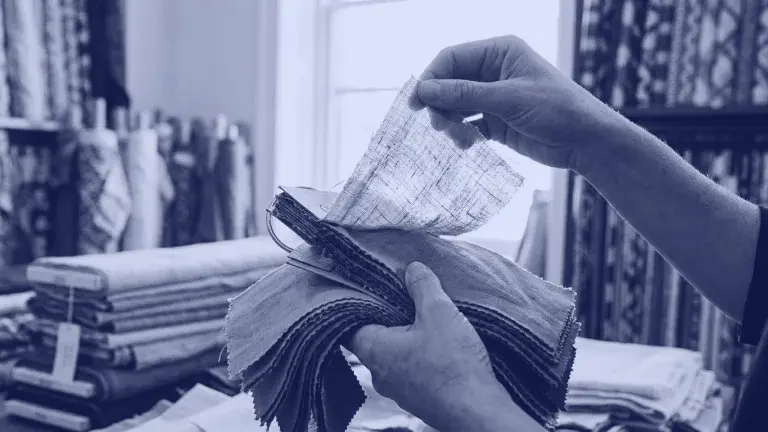
Deadstock and Stocklot Fabric Suppliers in Turkey
Companies in Turkey that buy and sell deadstock and stocklot fabric: factory surplus, canceled orders and end-of-season lots. Ask about remaining quantity, lot consistency, fabric specification and defects.
For buyers
Looking for a supplier in this category?
No companies are listed on this page yet. You do not have to wait for the list: describe what you need and request quotes.
Request a quote and let suitable suppliers reach you
Tell us the product, quantity and delivery location. You confirm your request with the link we e-mail you; requests are screened for spam, and our team reviews your first request. It is then sent to up to 20 companies working in this field and stays open for quotes in their company panel for 30 days. You compare the quotes you receive on one page.
- Free, no account needed.
- You decide whether companies see your contact details.
- We e-mail you when a new quote arrives.
Read before you choose a supplier
-
Dyeing, Printing and Finishing
Denim Wash Types and Techniques: Stone, Enzyme, Ozone, Laser
11 min read

Terms to know in this field
Get your company listed on this page. If you manufacture or provide services in this field, create your free profile; companies are listed after our team has reviewed them.
List your company for freeKey facts
- Deadstock fabric is ready fabric left from canceled orders, end-of-season leftovers, overproduced lots and roll ends, and it generally cannot be reordered.
- Because deadstock cannot usually be reordered, calculate your total need with a waste allowance and have it confirmed in writing that all of it comes from a single lot.
- One kilogram of fabric gives 1,000 ÷ (GSM × open width in meters) meters: about 3.09 m for 180 GSM fabric with a 1.80 m open width.
- ASTM D5430 defines methods for visual inspection and grading of fabric; they are used for roll or shipment acceptance when buyer and seller agree.
- An OEKO-TEX STANDARD 100 certificate covers only the products listed on it; if it does not cover the lot, do not use the related claim on your product.
Guide to Deadstock and Surplus Fabrics
Elif Karaca
Fabrics and Fibers Editor
- Last updated:
- Fact-checked by:
- Gizem Polat
Deadstock fabric, also called stocklot fabric, is fabric that was produced but did not go to an order, or was left over: canceled orders, end-of-season leftovers, overproduced lots and roll ends. This page is for buyers who want to find ready, limited quantities of fabric quickly, but who allow for the fact that they may not be able to find the same fabric again, and for companies that want to sell their surplus fabric.
What does the deadstock fabric category cover?
Ready fabric lots that cannot be reordered belong here, regardless of fiber and construction: knitted or woven, printed or plain-dyed. For companies that can produce the fabric again, see the sub-categories on the fabrics page. Finished garment stock is not fabric; for that there is the wholesale clothing category.
With deadstock fabric, ask about remaining quantity, lot and specification
- Total quantity and lot. How many rolls (top in Turkish) and how many meters are left, and are they all from the same lot? You should be able to cover your order, including a waste allowance, from a single lot. Work out the need with the method in how many meters of fabric a garment needs.
- Fabric specification. Composition, GSM, open width, finishing state (greige, dyed, printed) and anti-shrink treatment should be given in writing. If information is missing, have the fabric measured yourself.
- Unit of sale. Prices per kilogram, per meter or per roll make comparison harder. How the conversion between kilograms and meters changes with GSM is explained in the fabric weight (GSM) guide by garment type.
- Quality and defects. Ask to inspect and grade the rolls. ASTM D5430 defines methods for visual inspection and grading of fabric; these methods are used for roll or shipment acceptance when buyer and seller agree. Write the acceptable defect level into the order.
- Documents and testing. An old test report may not cover today's lot. If needed, have your own sample tested at one of the textile testing laboratories.
- Print and brand rights. For printed or logo fabric, ask whether the design belongs to someone else, and get the right of use in writing.
- MOQ, lead time, samples. Because the fabric is ready, there is no production time to wait for; still, get the dispatch date in writing. Ask the seller's minimum (roll, meters or kilograms) at the start. Ask for the sample to be cut from the roll you will buy.
Quantity left, how current the design is and defects set the deadstock price
Remaining quantity, the fiber and construction of the fabric, how current the color and design are, defect level, whether it is sold by the cut or wholesale, and shipping terms set the price. Also ask whether there is a price difference between buying the whole lot and buying part of it.
Require documents behind environmental claims on deadstock fabric
Using deadstock fabric can be an environmental advantage, but claims such as “recycled” or “organic” require documents. For example, GRS 5.0 requires at least 20% recycled content for certification and at least 50% for a product-specific GRS label. For which document proves what, see the textile certifications guide.
If you want to sell your surplus fabric
If a canceled order, an end-of-season leftover or a roll end is left on your hands, answering buyers' questions above in advance makes the sale easier. Before offering the fabric, prepare:
- Specification: composition, GSM, open width and finishing state (greige, dyed, printed).
- Quantity and lot: the total meters or kilograms left, and whether the fabric comes from a single lot.
- Defects: the type and location of any defects, and a sample the buyer can see.
- Selling terms: price per kilogram, meter or roll, and whether you sell the lot whole or in parts.
- Design rights: for printed or logo fabric, who owns the design and whether its sale is permitted.
Companies that take offcuts and textile waste are listed under textile recycling.
Sources (4)
- OEKO-TEX, STANDARD 100 by OEKO-TEX (accessed October 11, 2026)
- Global Standard gGmbH, Global Organic Textile Standard (GOTS; accessed October 11, 2026)
- Textile Exchange, Global Recycled Standard (GRS) Version 5.0, July 2026
- ASTM D5430-26, Standard Test Methods for Visually Inspecting and Grading Fabrics (ASTM record)
Related calculator
Frequently asked questions
Can I reorder deadstock fabric?
Generally no. Once the remaining quantity runs out, you may not find the same fabric and the same shade again. Calculate your total need with a waste allowance and have it confirmed in writing that all of it will be supplied from a single lot.
Does deadstock fabric come with a certificate?
It may, but the certificate must cover that lot. An OEKO-TEX STANDARD 100 certificate covers only the products listed on it, and a GOTS label requires every company in the chain to be certified. If the certificate does not cover the lot, do not use the related claim on your product.
Is deadstock fabric priced per kilogram or per meter?
It varies by seller. To convert a kilogram price to meters, find the meters in one kilogram: 1,000 ÷ (GSM × open width in meters). For example, one kilogram of 180 GSM fabric with a 1.80 m open width gives about 3.09 m.