
Garment Production
How to Calculate Fabric Consumption for Garments: Formula, Examples and Waste Allowances
18 min read
Searches companies, categories, products, listings, guides and the glossary.
Browse sectors
Contract Workshops and Services
Contract cutting rooms in Turkey that do marker making, spreading, cutting and laser cutting of fabric. Compare companies that also number, apply interlining to and bundle the cut pieces.
For buyers
No companies are listed on this page yet. You do not have to wait for the list: describe what you need and request quotes.
Tell us the product, quantity and delivery location. You confirm your request with the link we e-mail you; requests are screened for spam, and our team reviews your first request. It is then sent to up to 20 companies working in this field and stays open for quotes in their company panel for 30 days. You compare the quotes you receive on one page.
Garment Production
Dyeing, Printing and Finishing

Get your company listed on this page. If you manufacture or provide services in this field, create your free profile; companies are listed after our team has reviewed them.
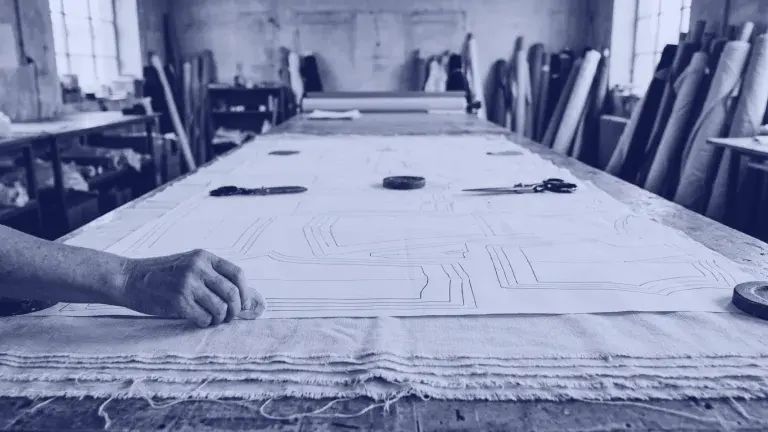
List your company for freeContract fabric cutting means spreading fabric according to the marker (pastal in Turkish) and separating it into pattern pieces. This category covers cutting rooms (kesimhane) and contract cutting workshops that cut fabric for garment manufacturing; it does not cover wood panel cutting for furniture. Workshops that cut fabric and appliqués with lasers are also listed here. Workshops that also sew and add cutting to their quote are under CMT sewing; here you find companies that offer cutting as a separate service. Companies that sell cutting machines are under fabric cutting machines. Companies that prepare the pattern are under pattern making. The rest of the chain is listed under contract workshops and services.
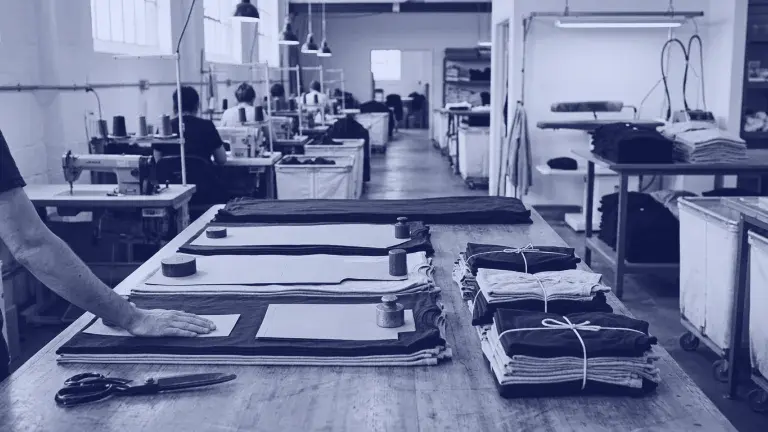
The term "contract cutting" can describe different scopes. The vocational modules of Turkey's Ministry of National Education (MEB) set out the cutting room job as a chain: fabric receiving inspection, relaxing, marker and spreading, cutting, numbering, applying interlining, piece inspection, sorting and bundling. Mistakes in cutting are expensive: the MEB cutting module stresses that wrongly cut fabric may not be reusable. So have the quote list which steps are included in the price.
The fabric type and number of plies, the number of pieces in the style, pattern matching, who prepares the marker, whether numbering, interlining and sorting are included, and lot size set the price. Have the quote say whether the price is per garment, per piece, per ply or per meter; two quotes in different units cannot be compared directly.
Fabric and bundles of cut pieces travel between the cutting room and the sewing workshop. Hand over fabric against a count and a signed record, and have leftovers and wastage written on the same record. After cutting, have the pieces checked against the sample before they go to sewing. The place of cutting in the production flow is explained in the garment manufacturing process; to estimate the fabric that will go into the marker in advance, use our fabric consumption calculation.
The approved pattern, the quantity split by size and color, a roll list (roll number, meters or kg, width), marker instructions (direction, pattern matching, interlining positions) and any relaxing request. Compare the incoming fabric lot with the fabric on the approved sample and report any difference in writing.
According to the module on final operations in the cutting room from Turkey's Ministry of National Education (MEB), numbering is needed when there is a color difference between fabric rolls or between the start and end of a roll, and so that pieces do not get mixed up in intermediate processes such as printing and embroidery. The ticket carries the order, size and color numbers and the running number of the piece.
There is no single rule; it must be written in the quote and the contract. Settle in advance who prepares the marker, what the estimated consumption is, whom any excess is charged to and how leftover fabric will be returned, and record the fabric going in and coming out in a signed count record.
The fabric type and number of plies, the number of pieces in the style, the need for pattern matching, who prepares the marker, whether numbering, interlining and sorting are included, and lot size set the price. The price may be quoted per garment, per piece, per ply or per meter; two quotes in different units cannot be compared directly.
The lead time depends on the date the fabric reaches the cutting room, who prepares the marker and when, relaxing for knit and elastane fabric, extra jobs such as pattern matching, and the cutting room's daily capacity, so no general number of days can be given. For relaxing, the cutting module of Turkey's Ministry of National Education (MEB) teaches opening circular-knit fabric from the roll and spreading it at least 24 hours before cutting. Ask for separate dates for cutting, numbering and dispatch to the sewing room.