
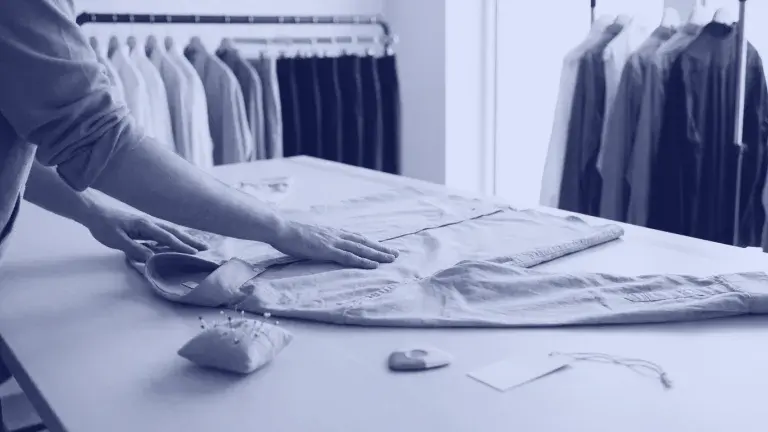
Contract Workshops and Services
Embroidery Services in Turkey
Machine embroidery workshops in Turkey that stitch logos, names and appliqué on T-shirts, polos, workwear and caps. Compare them on digitized file, sample and capacity before you order.
For buyers
Looking for a supplier in this category?
No companies are listed on this page yet. You do not have to wait for the list: describe what you need and request quotes.
Request a quote and let suitable suppliers reach you
Tell us the product, quantity and delivery location. You confirm your request with the link we e-mail you; requests are screened for spam, and our team reviews your first request. It is then sent to up to 20 companies working in this field and stays open for quotes in their company panel for 30 days. You compare the quotes you receive on one page.
- Free, no account needed.
- You decide whether companies see your contact details.
- We e-mail you when a new quote arrives.
Read before you choose a supplier
-
Dyeing, Printing and Finishing
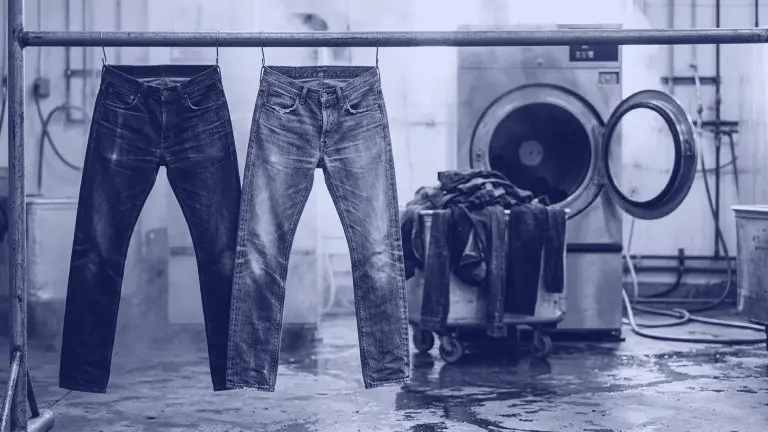
Denim Wash Types and Techniques: Stone, Enzyme, Ozone, Laser
11 min read

Export and Trade
A.TR Certificate: How It Is Issued, How Long It Is Valid and How to Verify It
13 min read
Get your company listed on this page. If you manufacture or provide services in this field, create your free profile; companies are listed after our team has reviewed them.
List your company for freeKey facts
- Machine embroidery starts with converting the design into a stitch file the machine can read (digitizing, called punch in the Turkish trade); the result depends largely on that file.
- Machine embroidery generally uses viscose (rayon) or polyester thread; have the thread type and the reference on the thread color card written in the quote.
- A backing placed under the fabric helps embroidery hold without puckering or rippling, especially on knit and stretchy fabrics.
- Embroidery is worked in thread and is separate from printing; jobs that use ink or film belong to textile printing companies.
- Embroidery price depends on stitch density and size, number of thread colors, quantity, fabric and backing; the calculation method can differ from company to company.
Guide to Embroidery
Deniz Koç
Dyeing, Printing and Finishing Editor
- Last updated:
- Fact-checked by:
- Gizem Polat
Machine embroidery applies corporate logos, brand marks, names and appliqué to cut parts or finished products; this category covers the workshops that do it. Embroidery is worked in thread and is separate from printing; for jobs that use ink or film, see textile printing companies. Companies that sell embroidery thread are in the sewing thread category. Sewing, cutting and other production stages are on the contract workshops and services page.
The embroidery file and the sample
Machine embroidery starts with converting the design, using embroidery software, into a stitch file the machine can read (digitizing; the Turkish trade calls this punch). The quality of the result depends largely on this file, so settle at the start who will prepare it and whether its charge appears as a separate line in the quote. Before production, ask for a sample embroidered on your own fabric and approve the size, position and thread colors on it.
Embroidery thread, backing, wash resistance and quality criteria
- Thread: machine embroidery generally uses viscose (rayon) or polyester thread. Ask which will be used and which reference on the thread color card is chosen for each color.
- Backing: the backing placed under the fabric (a stabilizer, called tela in Turkish) helps the embroidery hold without puckering or rippling, especially on knit and stretchy fabric. Ask which backing is used.
- Wash durability: wash the embroidered sample according to the product's care instructions to check that the thread color does not bleed into the ground and that the embroidery keeps its shape.
- Quality criteria: write puckering or rippling in the fabric, thread breaks and skipped stitches, cleanliness of the reverse side and consistency of position from piece to piece into the acceptance criteria.
- Capacity and lead time: how many machines and heads are running, what is the weekly capacity, and how does lead time change in peak season? If the profile has fields for minimum order and sampling time, look at those too.
Embroidery firms with capacity reports are mostly in Istanbul, Denizli and Bursa
In the Industry Database of the Union of Chambers and Commodity Exchanges of Turkey (TOBB), 81 of the 238 firms with a valid capacity report for embroidery in the piece, in strips or in motifs (product code 13.99.12) are in Istanbul, 61 in Denizli and 31 in Bursa (October 2026). This counts firms that make embroidery as a product; workshops without a capacity report are not included, so do not read the figure as the total number of embroidery workshops. Use the province filter to find workshops near you.
How embroidery pricing works
The stitch density and size of the embroidery, the number of thread colors, quantity, and the fabric and backing needed set the price. The calculation method can differ from company to company: stitch count, embroidery area or machine time may be reflected in the price in different ways. To compare quotes, ask every company to price the same design, size and quantity.
Preparing your design for embroidery
- Send the logo as the clearest file you have, with its real size and position on the product; the stitch file is prepared for that size.
- Very small letters and fine lines are limited in embroidery; ask the company whether the design suits embroidery before the sample.
- If the same logo will be used at different sizes or on different fabrics, find out whether the file needs separate adjustment for each.
Sources (5)
- Wikipedia, Embroidery (secondary source; accessed October 11, 2026)
- Wikipedia, Machine embroidery (secondary source; accessed October 11, 2026)
- Madeira USA, Machine Embroidery For Beginners (manufacturer education page; accessed October 11, 2026)
- Madeira USA, E-ZEE Guide: Backing & Topping, Choosing The Best Backings For Your Machine Embroidery Project (manufacturer guide)
- TOBB Industry Database, capacity reports by province, product code 13.99.12 (accessed October 11, 2026)
Frequently asked questions
Should I choose embroidery or printing?
Because it is worked in thread, embroidery gives a textured surface and stands out on clear shapes such as logos and names. For photographs, gradients and large, solid areas, printing is generally more suitable. Decide on the design, fabric and quantity by looking at samples of both methods.
Who owns the embroidery file, and is a new fee charged on every order?
Settle this in writing at the quote stage; do not assume. Whether file preparation is included in the quote, whether the file will be handed to you or stay with the workshop, and whether a repeat order is charged again for the same file differ from company to company.
Can any fabric be embroidered?
Most woven and knitted fabrics can be, but on very thin, slippery, very stretchy or hairy fabrics the result depends on the backing and the stitch settings. For this reason, ask for a sample embroidered on your own fabric before bulk production.
What do minimum order and price depend on in embroidery?
There is no single minimum order or price; it varies by company. Stitch density and size, the number of thread colors, quantity, fabric and backing needs set the price, and the pricing method can differ from one company to another. To compare quotes, ask every company to price the same design, size and quantity, and ask separately whether preparing the embroidery file is included. Also check the minimum order on the company profile.
What does the lead time of an embroidery order depend on?
No single lead time can be given. It depends on preparing the embroidery file, sample approval, quantity and the workshop's machine and head capacity, and it can change in peak periods. Ask for the production time after sample approval in writing in the quote. If you ship goods to the workshop and back, add the round-trip transit time to the lead time.