What is Garment Marker?
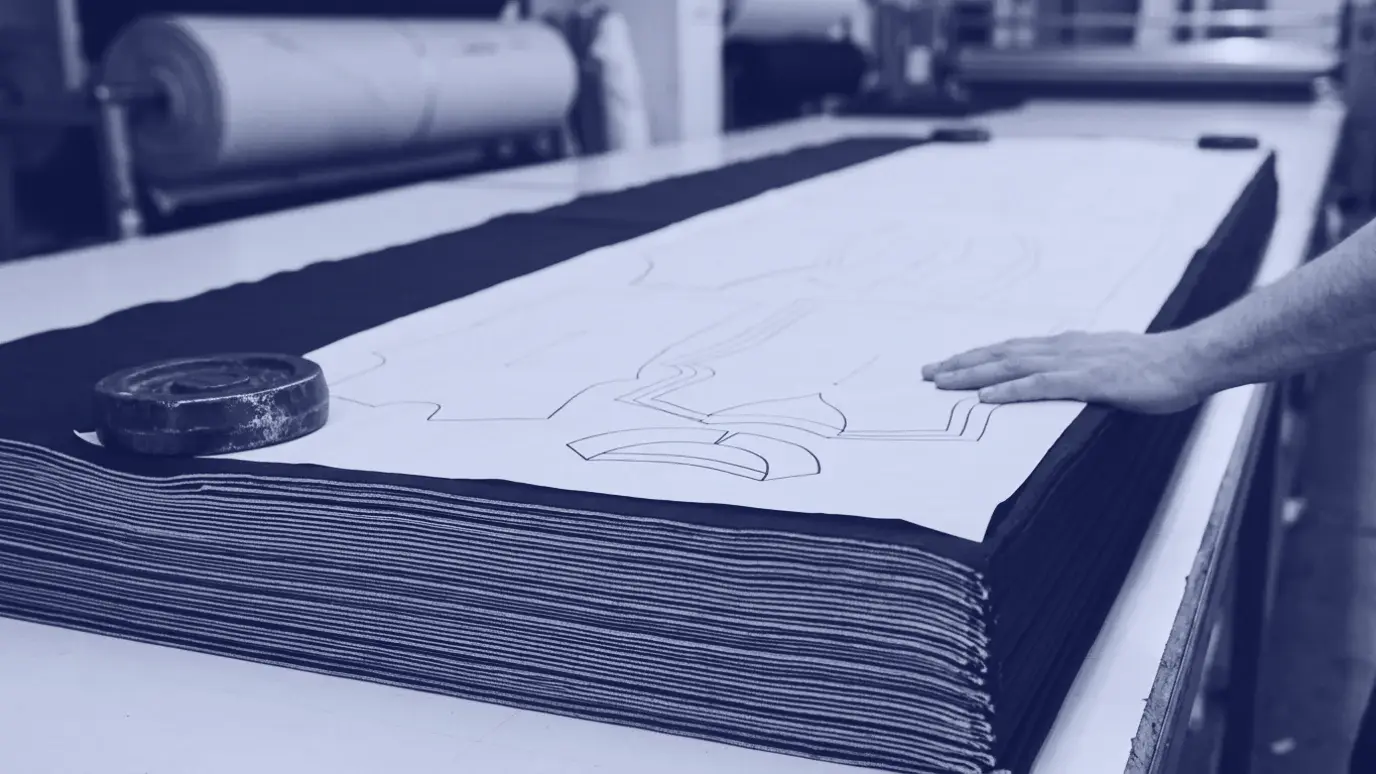
A garment marker is the layout plan that shows how the pattern pieces of a model are arranged on the fabric before cutting, so that they fit the fabric width with as little gap as possible. Turkish factories call it pastal, a word that also names the fabric plies spread on the cutting table, which English calls the lay.
- Published:
- Fact-checked by:
- Gizem Polat
Key facts
- A garment marker is the plan that shows how a model’s pattern pieces are placed on the fabric before cutting; in Turkish it is pastal (pastal planı).
- In Turkish, pastal also names the fabric plies spread on the cutting table (MEB, Spreading); in English the plan is the marker and the spread plies are the lay.
- Marker efficiency is the area of the pattern pieces divided by the marker area (length × width); as it falls, more fabric is used for the same product (Sarkar, 2013).
- MEB’s spreading module defines pastal atmak as laying fabric ply by ply on the cutting table in line with the cutting order; drawing the marker is a separate job.
- Markers are classified by number of sizes (single, two, multi-size), by direction (one-way, two-way) and by preparation (manual, computer).
- Patterned fabric takes a one-way marker (MEB, Spreading); fabric with no direction or pattern constraint can be laid out more economically by turning pieces (MEB, Cutting).
A garment marker is the layout plan that shows how the pattern pieces of a model are arranged on the fabric; the aim is to fit the pieces within the fabric width with as little gap as possible and so reduce waste. Turkish factories call it pastal. The same word also names the fabric plies spread on the cutting table for cutting: in English the plan is the marker and the spread plies are the lay.
What does pastal mean? Marker, lay and spreading
In the cutting room pastal has two meanings, and the context shows which one is meant. The spreading module of the Turkish Ministry of National Education (MEB) uses “cutting layout plan (pastal planı)” and also calls the spread fabric plies “pastal” (pp. 6 and 16).
| Turkish use | Meaning | English term |
|---|---|---|
| Pastal planı (also pastal resmi) | The plan showing how the pattern pieces are arranged on the fabric, drawn on paper or on screen | marker (marker plan) |
| Pastal (spread plies) | A stack of fabric laid ply by ply on the cutting table, prepared before cutting | lay |
A peer-reviewed article with Turkish and English abstracts pairs pastal planı with “marker plan” and pastal verimliliği with “marker efficiency” (Pamuk and Yıldız, 2016). Matching lay to the spread plies is Tekstil Rehberi’s pairing of Sarkar’s (2017) definition with MEB usage; laying the plies is spreading (Sarkar, 2011).
What does a marker show?
A marker shows how the pattern pieces of one model are placed for a given size distribution and fabric width; preparing it means finding the most efficient placement (Sarkar, 2013). The pattern maker (modelist) standard of the Vocational Qualifications Authority (MYK) asks for the marker to follow the fabric’s pile, pattern and shrinkage, its width and the size distribution, at the efficiency cutting needs (MYK, Modelist, H.1).
Marker width is the fabric width minus edge allowances; marker length is limited by the cutting table (Dutta, 2025; Zhezhova et al., 2019). The marker must match the order’s size distribution, which is checked before cutting (MEB, Final Operations in the Cutting Room). For companies that draw markers, see pattern making and grading services.
Types of markers in the garment industry
Markers are classified by several criteria:
- Number of sizes: a single-size marker holds one size, a two-size marker two, a multi-size marker more than two. In one study, multi-size markers gave higher fabric utilization and reduced the number of plies needed (Zhezhova et al., 2019).
- Direction: in a one-way marker all pieces face the same direction; in a two-way marker pieces can be turned and nested into each other (MEB, Cutting; Đinh et al., 2025).
- Preparation: markers are made manually or by computer; a computer marker can be plotted on paper and placed on top of the spread plies (NZQA, Unit Standard 2846; Sarkar, 2011).
Marker efficiency: definition and a worked example
Marker efficiency is the total area of the pattern pieces in the marker divided by the marker area (length × width), written as a percentage (Sarkar, 2013). As it falls, more fabric is used for the same product.
Example (hypothetical, not a norm): a marker 1.50 m wide and 6.00 m long has an area of 9.00 m². If the pieces take up 7.20 m², efficiency is 80%. This ratio leaves out end loss and end bits; the measure that includes them is called fabric utilization (Sarkar, 2013).
Efficiency is an input to the fabric consumption calculation (fabric width for wovens, fabric weight for knits), so ask which fabric width and efficiency assumption a quote’s per-piece consumption rests on. The target varies by model, fabric width and direction constraint. To run the numbers, use the fabric consumption calculator.
What does “pastal atmak” mean? From marker to cut
According to the MEB spreading module, pastal atmak is laying the fabric ply by ply on the cutting table in line with the cutting order, taking care of pattern, nap and pile direction (p. 16). So it means spreading, not drawing the marker. The cutting room works in this order (MEB, Spreading; Final Operations in the Cutting Room):
- The marker is prepared; depending on the factory, a pattern maker or a CAD operator draws it (MYK lists this among the pattern maker’s duties).
- The fabric is spread to the marker (pastal atmak) by the spreader (pastalcı).
- The spread plies are cut along the marker lines by the cutter (kesimci).
- The cut plies are numbered (metolama), checked and sorted for sewing.
For the whole flow, see the garment manufacturing process; for services, fabric cutting services and fabric cutting machine suppliers.
Markers on patterned and directional fabric
According to the MEB spreading module, patterned fabric takes a one-way marker because pattern direction matters (p. 14). On velvet and other pile fabrics, pieces are placed so that the pile faces the same way; on plaid and striped fabrics, so that the patterns follow each other (MEB, Cutting). Fabric with no direction or pattern constraint is easier and more economical to lay out. In a men’s shirt study, a one-way marker measured lower efficiency than a two-way one (Đinh et al., 2025). Fabric consumption can therefore increase on velvet, plaid and jacquard with a pattern direction.
Frequently asked questions
What is a marker in garment manufacturing?
The plan showing how a model’s pattern pieces are arranged on the fabric before cutting; Turkish factories call it pastal (pastal planı).
What is the difference between a marker and a lay?
The marker is the layout plan; the lay is the stack of fabric plies spread on the cutting table. The marker, printed on paper by a plotter, can be placed on top of the spread plies for cutting (Sarkar, 2011).
What does pastal atmak mean?
Spreading: laying the fabric ply by ply on the cutting table to the cutting order (MEB, Spreading). The spreader (pastalcı) does it; drawing the marker is a separate job.
Sources (12)
- T.C. Millî Eğitim Bakanlığı (Turkish Ministry of National Education), MEGEP, Giyim Üretim Teknolojisi: Serim (Garment Production Technology: Spreading; 542TGD177; in Turkish), Ankara 2006 (pp. 6, 14, 16–17 and 21; accessed October 16, 2026)
- T.C. Millî Eğitim Bakanlığı (Turkish Ministry of National Education), Giyim Üretim Teknolojisi: Kesim (Garment Production Technology: Cutting; 542TGD003; in Turkish), Ankara 2011 (section 1.8, pp. 19–23; Ankara University OpenCourseWare copy; accessed October 16, 2026)
- T.C. Millî Eğitim Bakanlığı (Turkish Ministry of National Education), MEGEP, Giyim Üretim Teknolojisi: Kesimhanede Son İşlemler (Garment Production Technology: Final Operations in the Cutting Room; 542TGD180; in Turkish), Ankara 2008 (pp. 27–28 and 30; accessed October 16, 2026)
- Sarkar, P. (May 28, 2013). What is Marker, Marker Making, Marker Efficiency and How to Calculate Marker Efficiency? Online Clothing Study (industry education site; accessed October 16, 2026)
- Sarkar, P. (January 17, 2017). What is Lay in Apparel Cutting Room? Online Clothing Study (accessed October 16, 2026)
- Sarkar, P. (January 5, 2011). Cutting Room Processes – An Overview of Garment Production. Online Clothing Study (accessed October 16, 2026)
- Dutta, A. (May 30, 2025). Mathematical Interpretations and Parameters of Marker Planning in Apparel Production: An In-Depth Analysis. Online Clothing Study (accessed October 16, 2026)
- Zhezhova, S. et al. (2019). The Influence of the Type and Width of the Cut Marker on the Utilization of Textile Materials. Advanced Technologies, 8(2), 99–104 (doi:10.5937/savteh1902099Z; accessed October 16, 2026)
- Mesleki Yeterlilik Kurumu (Vocational Qualifications Authority, MYK), Modelist (Seviye 4) Ulusal Meslek Standardı (Pattern Maker (Level 4) National Occupational Standard; 10UMS0055-4 rev. 01; in Turkish), Official Gazette, June 22, 2017, no. 30104 (Mükerrer), Annex-1 (Official Gazette p. 18, task H.1 “Pastal yerleşim planını hazırlamak,” preparing the marker layout plan; accessed October 16, 2026)
- Pamuk, O., Yıldız, E. Z. (2016). Pastal planı verimliliğini etkileyen faktörler ile ilgili bir çalışma (A study about parameters affecting the marker plan efficiency). Tekstil ve Konfeksiyon, 26(4), 430–435 (Turkish article with English abstract; accessed October 16, 2026)
- Đinh Mai Hương et al. (2025). Research to Determine the Correlation of Fabric Consumption of Men's Shirts Between Methods of Marker Making in the Garment Industry. Tạp chí Khoa học & Công nghệ, 61(1) (abstract record; accessed October 16, 2026)
- New Zealand Qualifications Authority, Unit Standard 2846 (version 5, June 19, 2009): Demonstrate knowledge of industrial apparel cutting and sewing (performance criterion 1.3; accessed October 16, 2026)
Author and fact-checking
Written by
Garment Production Editor
Hakan Şahin is Tekstil Rehberi's garment production editor. He writes guides on production from the pattern room to shipment, patterns and marker making, quality control (AQL), sampling and costing, and compares process steps and quality criteria with the relevant standards and industry sources.
Content by Hakan ŞahinFact-checked by: Gizem Polat
This content was prepared by the Tekstil Rehberi editorial team. Before publication, our verification editor checked its figures, dates and sources against primary sources.
Spotted an error? Email us at [email protected] How we work →
Articles on this topic

Types of Garment Samples: Proto, Fit, Size Set and PP Sample
The types of garment samples in the order they are made: proto, fit, size set and PP. What each sample is for, who sews and approves it, how many rounds to plan and how to put approval in writing.
How to Calculate Fabric Consumption for Garments: Formula, Examples and Waste Allowances
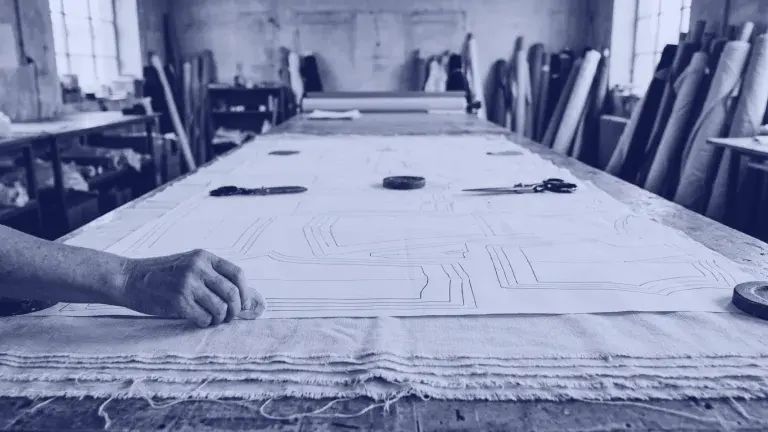
How much fabric a garment needs depends on pattern area, fabric width and marker efficiency. The formula, T-shirt and shirt worked examples, shrinkage and waste allowances, and what to write into a CMT order.
Garment Manufacturing Process: Steps from Tech Pack to Shipment
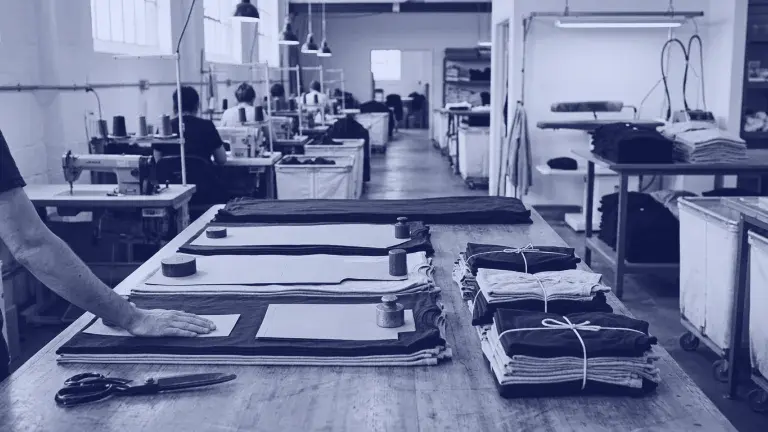
The garment manufacturing process stage by stage: tech pack, pattern, sampling, cutting, sewing, pressing, packing and shipment, with each stage's output, control point and who does what at a contract factory.