
Dyeing, Printing and Finishing
Denim Wash Types and Techniques: Stone, Enzyme, Ozone, Laser
11 min read
Searches companies, categories, products, listings, guides and the glossary.
Browse sectors
Contract Workshops and Services
Garment and denim washing facilities in Turkey for sewn products: enzyme, stone wash, bleach, laser and ozone finishes. Get quotes against an approved wash sample and compare them.
For buyers
No companies are listed on this page yet. You do not have to wait for the list: describe what you need and request quotes.
Tell us the product, quantity and delivery location. You confirm your request with the link we e-mail you; requests are screened for spam, and our team reviews your first request. It is then sent to up to 20 companies working in this field and stays open for quotes in their company panel for 30 days. You compare the quotes you receive on one page.
Dyeing, Printing and Finishing
Export and Trade

Get your company listed on this page. If you manufacture or provide services in this field, create your free profile; companies are listed after our team has reviewed them.
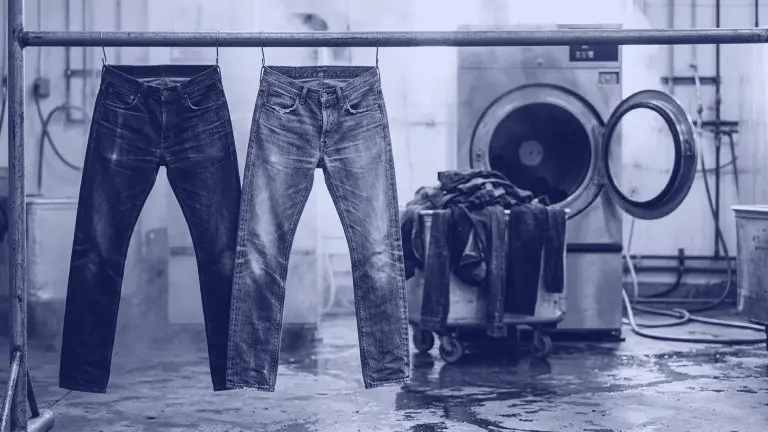
List your company for freeGarment and denim washing is the washing and finishing carried out on sewn products; this category covers facilities that apply effects such as stone wash, enzyme and bleach on jeans, softening washes on knit garments, and relatively new methods such as laser and ozone. If the fabric is dyed or finished before it is sewn, what you are looking for is in the dyeing and finishing category. Industrial laundries that wash hotel or hospital linen are not covered by this page. For the detail of the effects, see our article on denim washing techniques; for jeans manufacturers, see denim apparel. Companies that sell denim washing, laser and ozone machines are in the dyeing and finishing machines category.
If your product is OEKO-TEX STANDARD 100 certified, note this: according to the text of the standard (edition 01.2026, section 5.10), a certified product automatically loses the right to be referred to as certified if it is professionally subjected to a physical or chemical treatment such as washing. Ask the certification body whether the washing is within the scope of your certificate; there is more detail in the textile certifications guide.
The type of wash and the number of steps, product weight (a pair of jeans and a T-shirt are not the same), lot size, effects that need handwork (distressing, whiskering), chemicals, water and energy use, and the number of sample washes set the cost. Ask for the facility's smallest wash lot and how it prices orders below that quantity; compare quotes on the same wash sample and quantity.
In the Industry Database of the Union of Chambers and Commodity Exchanges of Turkey (TOBB), 157 of the 247 firms with a valid capacity report for garment finishing services (product code 13.30.19.95) are in Istanbul, 20 in Malatya and 17 in İzmir (October 2026). There appears to be no separate code for washing, so this is the closest code; do not read the figure as washing facilities only. Facilities without a capacity report are not counted either.
Product washing in this category is applied to the sewn garment. Washing and pre-treatment at the fabric stage are done in dye houses and finishing plants. When you request a quote, state clearly which stage you mean.
Depending on the fabric and the type of wash, there can be shrinkage or stretch. Have the measurements checked after washing and write the accepted measurement tolerance into the tech pack.
You can ask for documents on chemical and environmental management, for example OEKO-TEX STeP or ZDHC MRSL conformance. Look at which facility, which product and which level the document covers, and at its validity date. If your buyer requires a specific document, check their specification first.
There is no single minimum lot or price; it varies by facility. Cost depends on the wash type and number of steps, garment weight, lot size, effects that need handwork, chemical, water and energy use, and the number of sample washes. Ask the facility for its smallest wash lot and how it prices orders below that, and compare quotes on the same wash sample and quantity.
No single lead time can be given. It depends on the number of steps in the effect, whether it needs handwork, lot size, the facility's daily washing and drying capacity, and how many trials it takes to match the approved sample. If garments have to go to another facility for laser or ozone, timing and damage liability change; ask about this in writing in the quote.