
Contract Workshops and Services
Garment Sampling Services in Turkey
Garment sampling workshops in Turkey that sew proto, fit, size set and pre-production samples. Compare sample lead time, fees and revision terms across companies.
For buyers
Looking for a supplier in this category?
No companies are listed on this page yet. You do not have to wait for the list: describe what you need and request quotes.
Request a quote and let suitable suppliers reach you
Tell us the product, quantity and delivery location. You confirm your request with the link we e-mail you; requests are screened for spam, and our team reviews your first request. It is then sent to up to 20 companies working in this field and stays open for quotes in their company panel for 30 days. You compare the quotes you receive on one page.
- Free, no account needed.
- You decide whether companies see your contact details.
- We e-mail you when a new quote arrives.
Read before you choose a supplier
-
Contract Manufacturing
Contract Garment Manufacturing: CMT vs Full Package and How to Work With a Factory
19 min read
Dyeing, Printing and Finishing
Denim Wash Types and Techniques: Stone, Enzyme, Ozone, Laser
11 min read
Terms to know in this field
Get your company listed on this page. If you manufacture or provide services in this field, create your free profile; companies are listed after our team has reviewed them.
List your company for freeKey facts
- In apparel, sampling means making sample garments from a pattern and tech pack; testing fabric or products in a laboratory is a separate category.
- According to Sarkar (2011), the sample sequence is proto, fit, sales sample, size set and pre-production (PP); the sample taken from production and the shipment sample come later.
- The PP sample is sewn on the real production line, with real fabric and trims, by line operators; bulk production does not start until the buyer or buying office approves it (Sarkar, 2011).
- One guide counts twelve sample types (Uphance, 2024); the names and the number of samples vary by buyer.
Guide to Garment Sampling
Hakan Şahin
Garment Production Editor
- Last updated:
- Fact-checked by:
- Gizem Polat
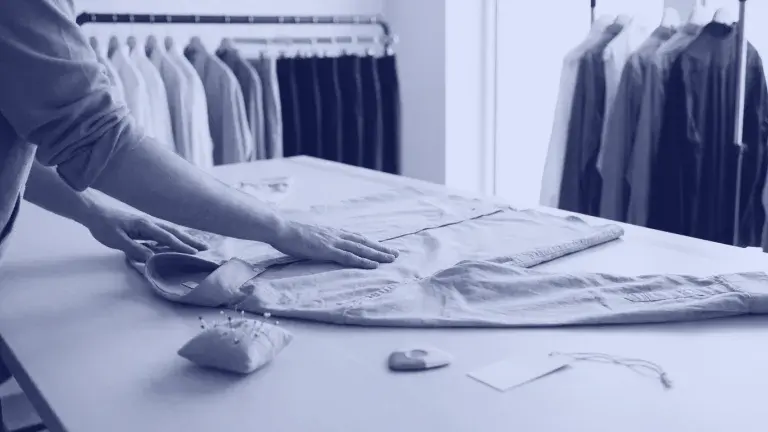
In apparel, sampling means making sample garments: sewing the first products of a style from a pattern and tech pack. It is not statistical or soil sampling. This category covers sample workshops and contract workshops that have a sample line. Companies that test fabric or products in a laboratory are under textile testing laboratories. The sample is where a design first becomes a product and fit is tested; the approved sample is the gate into bulk production. For companies that prepare the pattern, see pattern making; for workshops that do bulk sewing, see CMT sewing. The steps after the sample are also grouped under contract workshops and services.
Which sample, for what?
The sequence described in industry training sources (Sarkar, 2011) is: the proto sample, which shows the structure of the design; the fit sample, which tests fit on real measurements; the sales sample, prepared for the sales team; the size set, which checks consistency between sizes; and the pre-production (PP) approval sample. After production starts come the sample taken from production and the shipment sample. Names and numbers vary by buyer. Decide which types, and how many of each, before requesting quotes; our sampling process guide has the detail.
Ask the sample room who sews, which fabric is used and how long it takes
- Who sews it? A sample-room tailor or the production line? The PP sample is expected to be sewn on the real line, with real materials, by line operators (Sarkar, 2011). If samples and bulk are made in different places, have the PP sewn at the bulk workshop.
- Fabric and trims: Is the sample made in the real fabric or a similar one? A similar fabric can change fit and measurements. Who brings the materials, and when? Sampling time often depends on when the materials arrive.
- Lead time: Ask for a written time for every sample type and every revision round.
- Fee: Is the sample charged, is the fee deducted if you place an order, and are revisions charged?
- Feedback: Do you give comments as numbered items with photos, and is approval in writing?
- Confidentiality: Is it in writing that your style and pattern stay private?
Sample price depends on type, style difficulty and revision rounds
Sample type, style difficulty, who supplies the fabric and trims, quantity and sizes, urgent lead time and revision rounds set the price. Because a sample price reflects the workload set aside for a single piece, do not compare it with the per-unit price of bulk production.
Keep the approved sample and do not change the style after approval
Keep one copy of the approved sample and leave one with the workshop; it is the reference in price and quality disputes. Do not change the style after approval; if you do, renegotiate price and time. A 2015 SOMO fact sheet lists last-minute changes made without adjusting price and lead time among the reasons that push a manufacturer into hidden subcontracting. Sample rounds travel back and forth, so add courier or travel time to your lead time.
Sources (3)
- Sarkar, P. (March 4, 2011). Sampling Stages in Apparel Manufacturing, Online Clothing Study (industry education site; accessed October 11, 2026)
- Uphance (July 31, 2024). The Types of Garment Samples in Apparel Production (accessed October 11, 2026)
- SOMO, Hidden subcontracting in the garment industry: Zooming in on the role of buying companies (Fact Sheet, September 2015)
Frequently asked questions
How many rounds of samples will I need?
There is no fixed number; it depends on the style, the buyer and the approval process. One guide counts twelve sample types (Uphance, 2024), and not every buyer asks for all of them. Before you request quotes, decide which types you want, how many rounds of each and how many pieces per round, and have the price and time of an extra round written down.
Why is the PP sample important?
The pre-production (PP) sample is the last approval gate before bulk production. According to Sarkar (2011), it is sewn on the real production line, with the real fabric and trims, by line operators, and bulk production does not start until the buyer or buying office approves it. The approved PP sample is also the reference when you later inspect production.
What should I give a workshop for sample sewing?
The tech pack and size chart, the approved pattern (or a request for the pattern to be made as well), the real fabric and trims or the closest equivalents if they cannot be found, and label and packing information. Stitch types and detail photos reduce the workshop's guesswork.
What determines the price of garment sampling?
The price depends on the sample type, the difficulty of the style, who brings the fabric and trims, the quantity and number of sizes, an urgent lead time and the number of revision rounds. Because a sample price reflects the workload set aside for a single piece, do not compare it with the per-unit price of bulk production. At the quote stage, ask whether the sample is charged, whether its fee is deducted if you place an order, and whether revisions are charged separately.
How long does garment sampling take?
Sampling time depends on the sample type and the difficulty of the style, and most often on when the materials reach the workshop; no number of days applies to every case. Settle from the start who will bring the fabric and trims and on what date, and ask for a written time for each sample type and each revision round. Each round travels to you and comes back with your comments, so include courier or travel time.