What is Cotton?
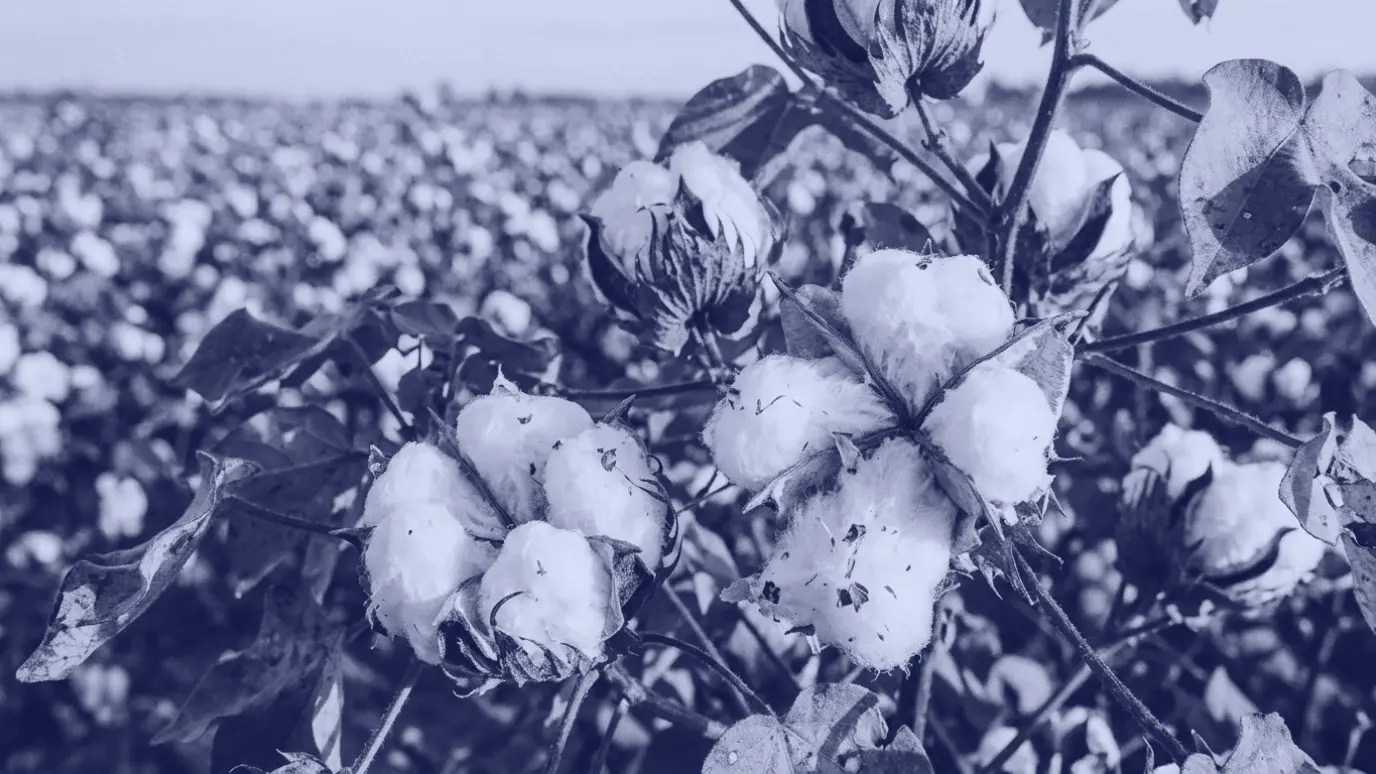
Cotton is a cellulose-based natural plant fiber that surrounds the seeds of the cotton plant (Gossypium). It is a short-staple fiber, used in clothing and home textiles, pure or blended with fibers such as polyester. In Turkish it is called pamuk.
- Published:
- Updated:
- Fact-checked by:
- Gizem Polat
Key facts
- Cotton is a cellulose-based natural fiber that surrounds the seeds of the cotton plant (Gossypium) and is a short-staple fiber.
- ICAC estimated world cotton production at 25.9 million metric tons in 2024/25; China is the largest producer.
- About 90% of world cotton is Upland (Gossypium hirsutum); extra-long-staple Pima fiber is 1 3/8 in (about 3.5 cm) and above.
- Cotton fabrics, especially knits, tend to shrink in washing, so shrinkage-resistance finishing and measured dimensional change are needed.
- Turkey produced 2.2 million metric tons of seed cotton in 2024/25, equivalent to 830 thousand metric tons of lint cotton.
Properties
- Fiber content
- Cellulose-based natural plant fiber; used pure or blended with fibers such as polyester
- Structure
- Short-staple fiber: most fibers are shorter than 3.8 cm (1.5 in), and it is made into yarn by spinning. Upland is about 2.5–3.2 cm (1–1¼ in); extra-long-staple Pima about 3.5 cm (1⅜ in) and above
- Origin
- Cotton plant (Gossypium); seed cotton is separated from the seed by ginning. About 90% of world cotton is Upland (Gossypium hirsutum)
- Uses
- Clothing and home textiles: T-shirts and underwear (knits such as single jersey), towels
- Care
- Tends to shrink in washing, especially in knits; shrinkage-resistance finishing and measurement of dimensional change after washing are needed
Cotton is a cellulose-based natural plant fiber that surrounds the seeds of the cotton plant (Gossypium). The EU textile fiber names regulation, which underlies labeling, likewise defines cotton as the fiber obtained from the bolls of the cotton plant (Gossypium) (Regulation 1007/2011, Annex I). Cotton is used in clothing and in home textiles, pure or blended with fibers such as polyester. In Turkish it is called pamuk.
How cotton fiber is obtained
Harvested cotton is called seed cotton (Turkish: kütlü pamuk) because the fibers are still attached to the seed. Ginning plants dry and clean the seed cotton, separate the fiber from the seed, clean the fiber and bale it (CottonWorks). The fiber separated from the seed is traded as lint cotton. In Turkey, the 2.2 million metric tons of seed cotton produced on 467 thousand hectares in the 2024/25 season corresponded to 830 thousand metric tons of lint cotton (TEPGE, July 2025).
Fiber properties and quality measures
Cotton is a short-staple fiber (6.35 cm / 2.5 in and below); most of the fibers are shorter than 3.8 cm (1.5 in). Short fibers are made into continuous yarn by spinning (Cotton Incorporated, Textile Yarns). CottonWorks describes fiber quality with these measures:
- Staple length: the average length of the longer half of the fibers; it affects yarn strength, evenness and spinning efficiency.
- Micronaire: a measure of fiber fineness and maturity. A low value means fine or immature fiber, a high value coarse or mature fiber. Micronaire says something about dyeing behavior; uneven micronaire can cause problems such as barre (crosswise bands) or streaks in the fabric.
- Strength: the force needed to break a bundle of fibers (g/tex); above 31 g/tex counts as very strong.
Main types
- Upland (Gossypium hirsutum): makes up about 90% of world cotton; fiber length is 1–1¼ in (about 2.5–3.2 cm) (CottonWorks).
- Pima, extra-long staple (ELS, Gossypium barbadense): fiber length is 1 3/8 in (about 3.5 cm) and above. “Egyptian cotton” is not always Pima; both types are grown in Egypt (CottonWorks).
Production and Turkey
According to the ICAC estimate reported by TEPGE, world cotton production rose 6.5% on the previous season to 25.9 million metric tons in 2024/25. In the same season 24.3% of production was in China, 19.8% in India and 12.2% in the United States.
In Turkey, 777 thousand metric tons of lint cotton were produced in the 2023/24 season and consumption was 1.81 million metric tons. In the same season 777 thousand metric tons of cotton were imported, and end-of-season stocks fell from 1.22 million metric tons to 655 thousand metric tons. In 2024 production, the largest shares were in Şanlıurfa (41.1%), Diyarbakır (17.3%) and Aydın (11.0%) (TEPGE, July 2025).
Behavior and care
Cotton is cellulose-based and hydrophilic: it absorbs moisture well, but is poor at transporting and releasing it (Cui et al., 2025). Pratt Institute describes cotton as a breathable, light and soft fiber. According to the same source, cotton that has not been pre-treated tends to shrink in washing, creases easily because of its cellulosic structure, and withstands high ironing temperatures.
Shrinkage is especially marked in knits: according to Cotton Incorporated, cotton fabrics tend towards dimensional instability, and knits are very sensitive to applied forces. When the fabric gets wet, fibers and yarns swell, the loops try to return to a round position and the fabric shortens (ISP 1009). Synthetic fibers do not show this swelling-shrinking behavior, while cellulosic fibers cannot be heat-set and so cannot be stabilized as easily as thermoplastic synthetics (ISP 1009). That is why shrinkage-resistance finishing (Turkish: çekmezlik) and measured dimensional change after washing are requested for cotton fabric. Cotton also biodegrades much faster than man-made fibers (CottonWorks).
Cotton, combed and carded: fiber or yarn?
Cotton is a fiber; combed (Turkish: penye) and carded (karde) are ways of preparing cotton yarn. Combed yarn is spun from cotton that has been through combing; carded yarn from cotton that has been through the carding machine but not combed (Cotton Incorporated, ISP 1006). For the effect of this distinction on T-shirt fabric choice, see the T-shirt fabric types guide. You can find raw cotton fiber suppliers in the Textile Fibers category and cotton yarn suppliers in the Cotton Yarn category.
Frequently asked questions
Is cotton the same as penye?
No. Cotton is a fiber type; penye says that the cotton yarn has been through combing. Although “penye” is also used in everyday Turkish as a fabric name, it describes a yarn process.
Why does cotton fabric shrink?
Wet cotton fibers and yarns swell; knit loops try to return to a round, low-energy shape and the fabric shortens (ISP 1009). Shrinkage-resistance finishing is applied to reduce this tendency.
Is organic cotton a separate fiber type?
No; “organic” describes how the cotton was grown and its certification status. For detail, see the organic cotton entry.
Sources (11)
- Regulation (EU) No 1007/2011 on textile fibre names and related labelling, Annex I (no. 5: cotton)
- CottonWorks (Cotton Incorporated): Cotton Fiber Growth, Harvesting & Ginning (accessed October 9, 2026)
- CottonWorks (Cotton Incorporated): Cotton Fiber Quality (accessed October 9, 2026)
- CottonWorks (Cotton Incorporated): Cotton Varieties Explained (accessed October 9, 2026)
- CottonWorks (Cotton Incorporated): Natural vs. Synthetic Fibers (accessed October 9, 2026)
- Cotton Incorporated, Textile Yarns (CottonWorks, “1970–2010: 40 Years of Progress” edition)
- Cotton Incorporated, A Guide to Improved Shrinkage Performance of Cotton Fabrics (ISP 1009), 2004
- Cotton Incorporated, Cotton Spun Yarns for Knit and Woven Fabrics (ISP 1006), 2003
- Pratt Institute Textile Research Lab: Cellulosic Fibers (accessed October 9, 2026)
- Cui, Y., Zhang, R. and Yu, J. (2025). Study on the Liquid Transport on the Twisted Profile Filament/Spun Combination Yarn in Knitted Fabric. Polymers, 17(15), 2065. DOI: 10.3390/polym17152065
- Turkish Ministry of Agriculture and Forestry, TEPGE: Tarım Ürünleri Piyasaları, Pamuk (Agricultural Product Markets, Cotton; in Turkish), July 2025 (sources: TÜİK, TOB, İTB, ICAC)
Author and fact-checking
Written by
Fabrics and Fibers Editor
Elif Karaca is Tekstil Rehberi's fabrics and fibers editor. She writes guides and glossary entries on knitted, woven and nonwoven fabrics, fiber properties and choosing the right fabric for each product, and bases values such as GSM, width, shrinkage and color fastness on standards and mill technical data sheets.
Content by Elif KaracaFact-checked by: Gizem Polat
This content was prepared by the Tekstil Rehberi editorial team. Before publication, our verification editor checked its figures, dates and sources against primary sources.
Spotted an error? Email us at [email protected] How we work →
Related calculator
Articles on this topic
Combed vs Carded vs Open-End Yarn: Differences and Uses by Product
Combed and carded yarn differ in fiber preparation; ring and open-end yarn differ in how they are spun. Property tables, product examples with sources and how to write yarn into a quote.

How to Judge Terry Towel Quality: GSM, Pile Yarn and Absorbency
Terry towel quality cannot be read from GSM alone. The criteria for pile yarn, pile height, absorbency and post-wash performance, with a checklist for buyers writing a spec.

Yarn Count Conversion: Ne, Nm, Tex and Denier Formulas and Tables
Conversion formulas and a table for Ne, Nm, tex and denier, how to calculate yarn count from a measurement, how to read plied counts such as 30/2, and the count mistakes that most often cause trouble in supplier orders.