-
Digital textile printing is a method in which a design is printed straight from a computer file onto fabric or a finished product with inkjet print heads, without preparing screens or cylinders. It has two main uses: industrial digital fabric printing on rolls of fabric and DTG printing on finished items.
-
DTF (direct to film) printing is a film-transfer method in which a design is first printed as a mirror image onto a special transfer film, adhesive powder is scattered over the wet ink and cured with heat, and the film is then transferred to the product with a heat press. The printing is done on the film, not the fabric, so the product needs no pretreatment.
-
DTG (direct to garment) printing is a digital method in which a design is printed straight onto a finished garment or product with an inkjet printer, while the item is held flat on a tray called a platen. It is the piece-printing branch of digital printing; Epson says it gives its best results on cotton.
-
Mercerization is a finishing treatment in which cotton, as fiber, yarn or fabric, is treated with a concentrated caustic soda solution, usually under tension. The fiber swells; the cotton takes up more dye and, if treated under tension, gains luster. In Turkish it is called merserizasyon.
-
Napping is a mechanical finishing process in which a fabric is run over rotating rollers covered with steel wire points, which raise the surface fibers into a fuzzy pile. It gives fleece, flannel and similar fabrics their soft, warm face or reverse. Turkish suppliers call it şardon.
-
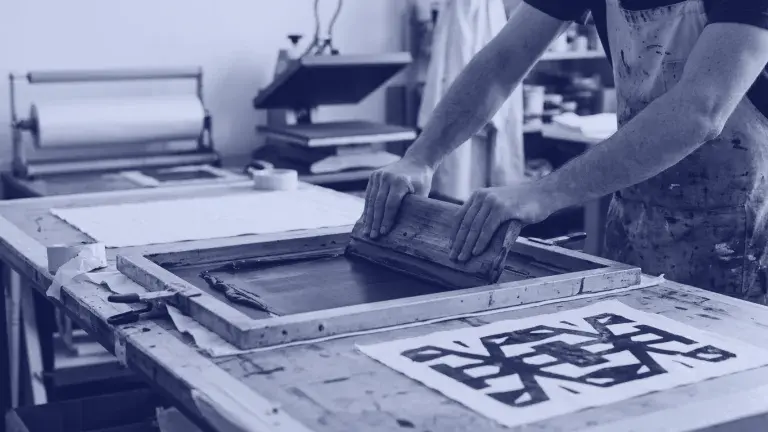
Screen printing is a printing method in which ink is pushed with a squeegee through a tightly stretched screen whose non-printing areas are blocked. In textiles it is also applied to finished products and cut pieces, and each color in the design needs its own screen. Turkish suppliers call it serigrafi.
-
Sublimation printing is a dye-transfer method in which a design is printed as a mirror image onto transfer paper with disperse-dye ink, and heat and pressure then turn the dye into vapor and drive it into polyester or other synthetic fibers. It does not give a direct result on natural fibers such as cotton.