What is Tech Pack?
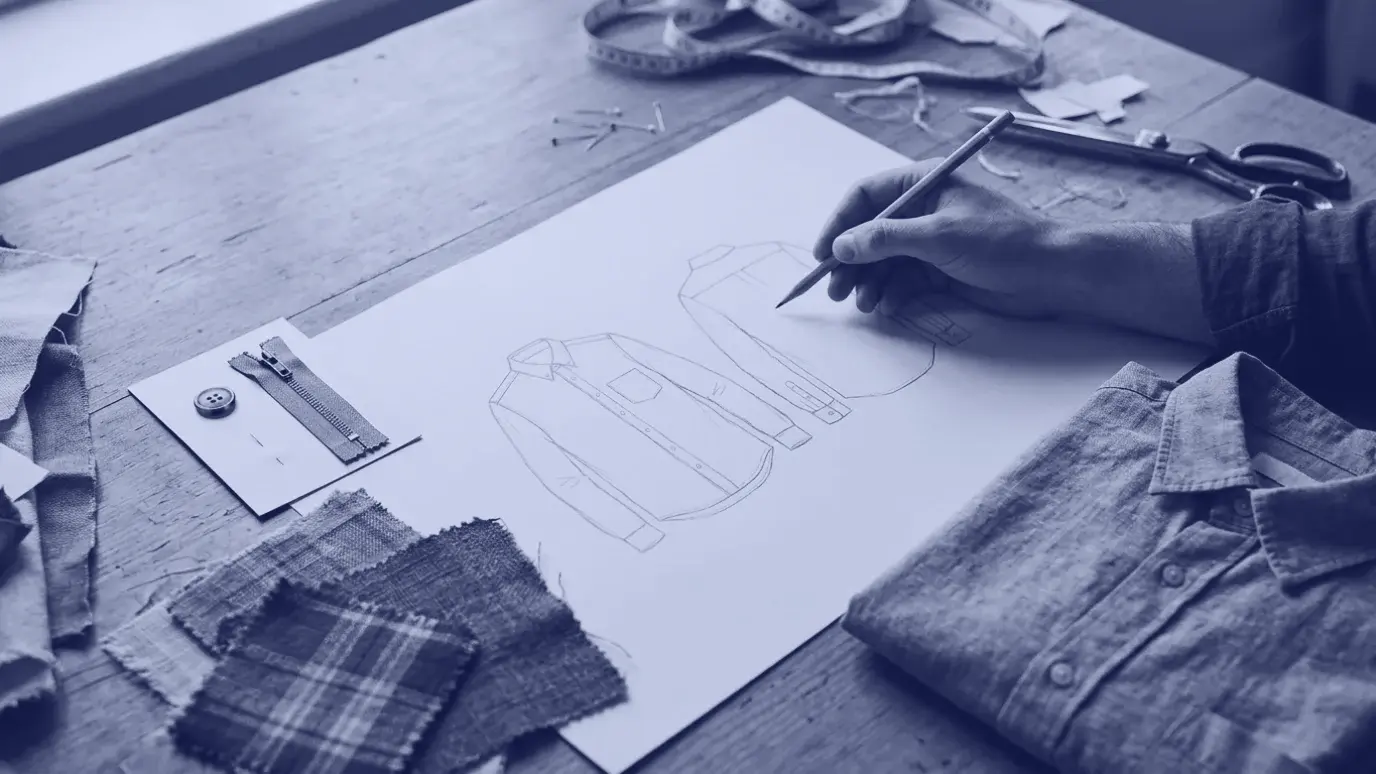
A tech pack (Turkish: teknik föy) is a written product definition that gathers the information a factory needs to make a garment: technical drawing, measurement chart, bill of materials, construction details, and label and packing information. The brand or designer prepares it; the manufacturer quotes, samples and produces from it.
- Published:
- Updated:
- Fact-checked by:
- Gizem Polat
Key facts
- A tech pack is a written product definition that gathers the drawing, measurements, materials and construction details a factory needs to make a garment.
- Turkish training modules from the Ministry of National Education call the same document a “model definition form” or “model sheet”; in the trade it is teknik föy or tech pack.
- According to the Ministry’s module, the form is prepared by the time of sample sewing at the latest, taking customer requests and quality criteria into account.
- A measurement chart and a bill of materials (BOM) are sections of a tech pack; a sewing plan is a separate document giving operation sequence, work tool and time.
- If points of measure, measurements for each size and tolerances are written in the tech pack, final inspection can be carried out against them.
A tech pack is a written and drawn definition of how a garment is to be made: the technical drawing, measurement chart, bill of materials, construction details and label and packing information are collected in one file. The brand or designer prepares it; the manufacturer quotes from it, makes samples and produces from it (Techpacker, July 30, 2026). In Turkey it is called teknik föy; föy comes from French feuille, and the Turkish Language Association (TDK) dictionary records it as “a document containing brief information.”
What a tech pack contains
The Turkish Ministry of National Education (MEB) cutting module presents the document as the output of model analysis and calls it a “model definition form” (model tanımlama formu); the example in its T-shirt module is titled “Model Sheet” (Model Föyü). According to the cutting module, the form contains the following (pp. 8–9):
| Section | What is written |
|---|---|
| Header | Product name, who prepared the model, date, season, form and sheet number |
| Technical drawing | Front and back views, with detail drawings if needed; dimensioned |
| Model description | All features that cannot be shown in the drawing |
| Parts list | Name, number and quantity of the parts; how many of each part are cut |
| Material samples | Samples of the main and auxiliary materials |
| Size breakdown | How many pieces are made in which size from which fabric |
| Measurement chart | The measurements to be used in preparing the model |
MEB notes that the measurement chart is not always filled in and should be for a customer order with special or different measurements. The tech pack lists of software vendors build on this core and differ from one another: Wave PLM (May 9, 2025) lists measurement and grading information, Pantone-coded colors, print and embroidery specifications (placement and size for embroidery), the bill of materials (BOM), labels and proto comments; Techpacker (July 30, 2026) lists the version number, construction and stitching notes, a cost sheet and the revision history. Agree in writing with the factory which sections are required.
Example: MEB’s T-shirt model sheet
The model sheet in MEB’s T-shirt module (section 1.1, p. 4) gives construction information next to a dimensioned drawing: rib at the neck and sleeve openings, 0.7 cm cover seam, 4-thread overlock, 7 mm seam allowance. The materials to be bought are piqué fabric, thread in the fabric color, 1x1 rib and a care label. The module’s quality table gives a tolerance for each point of measure (section 1.3, p. 5). The values below are a training example, not an industry standard:
| Point of measure | Tolerance |
|---|---|
| Seam allowance width (7 mm) | ±1 mm |
| Neck band width (25 mm) | ±1 mm |
| Shoulder width | ±2 mm |
| Sleeve length | ±5 mm |
| Chest width (half) | ±10 mm |
| Length (from shoulder) | ±10 mm |
When and what it is used for
- Before sampling: According to MEB, the form is prepared by the time of sample sewing at the latest, taking customer requests and quality criteria into account (Cutting, p. 8).
- Samples and patterns: According to Wave PLM, the proto sample is measured against the graded measurements in the tech pack, and if the measurements change, a new sample is made (May 9, 2025). Uphance writes that the measurement chart guides the preparation of fit samples (July 31, 2024); Wave PLM says measurement charts help pattern makers and the quality control team keep fit consistent (November 21, 2025).
- Quality control: QIMA asks for points of measure, standard measurements for each size and acceptable tolerances to be stated clearly in the product specification (July 28, 2022); at final inspection the pieces are compared against them. Which sampling plan (AQL) is used is written separately.
- Contract and version: Tekstil Rehberi’s model contract clause for contract manufacturing asks that products conform to the approved sample, the tech pack and the measurement tolerances, and the purchase order should state the tech pack version. Wave PLM (June 3, 2026) recommends recording who changed what, when and why in each version, and sending only approved versions to the factory; this is a software vendor’s recommendation, not a standard. For how the tech pack fits into CMT and full-package orders, see the contract manufacturing guide.
How a tech pack differs from related terms
| Term | What it is | Difference from a tech pack |
|---|---|---|
| Model sheet, model definition form | The name of the same document in MEB modules | The same family of documents; MEB’s examples are one-page forms, while commercial tech pack lists also count sections such as a version log or cost sheet |
| Measurement chart (spec sheet) | Points of measure and measurements; Wave PLM also lists construction notes and quality control points | A section of the tech pack |
| Bill of materials (BOM) | Fabric, trims, packaging and components, with supplier, quantity and material code (Wave PLM) | A section of the tech pack; according to Wave PLM, sourcing teams use it to calculate costs and plan budgets |
| Sewing plan (operations plan) | For each operation, the work tool and the estimated and actual time (MEB, T-shirt module, pp. 36–37) | The tech pack defines the product; the sewing plan describes the sequence of operations and time |
| Sample | The physical product made from the tech pack (proto, fit, pre-production) | The tech pack is the written recipe; the sample is that recipe turned into a product |
| Supplier data sheet | A specification document that a company publishes for a material it makes, such as yarn, interlining or transfer film; also called a technical data sheet | Describes a material, not a garment. In Turkish, teknik föy is also used for this, as in Tekstil Rehberi’s own material and supplier texts; this entry covers only the garment tech pack |
Preparing one
What the tech pack does not state, the factory fills in with its own assumption (Tekstil Rehberi note), so write down the seam allowance, stitch type, label placement and packing method too. Put the composition, weight and width in the fabric line: use the fabric GSM calculator for weight, the fabric consumption calculator for the fabric needed for an order, and the shrinkage calculator for the cut size from a target measurement. Studios that prepare tech packs can be found among fashion design studios, pattern makers working from them among pattern making and grading services, and sample sewers among sample making workshops. For the whole flow, see the garment manufacturing process guide, and for ownership of the tech pack and pattern when working with a private label manufacturer, see private label clothing manufacturers in Turkey.
Frequently asked questions
What is a tech pack called in Turkey?
Teknik föy is the Turkish name used for the tech pack. MEB’s training modules call the same document “model definition form” and “model sheet.” Because teknik föy is also used for a material supplier’s product data sheet, make clear from the start which document is meant.
Who prepares the tech pack?
According to Techpacker, it is usually prepared by the person responsible for turning a design into a product ready for production: a fashion designer, technical designer, product developer or, at small brands, the founder. The factory uses it to quote, make samples and produce.
Is a measurement chart (spec sheet) the same as a tech pack?
No. The measurement chart is a section of the tech pack: points of measure and measurements for each size. The tech pack also holds the drawing, materials, construction details, labels and packing information.
Sources (9)
- T.C. Millî Eğitim Bakanlığı (Turkish Ministry of National Education), MEGEP, Giyim Üretim Teknolojisi: Kesim (Garment Production Technology: Cutting; 542TGD003; in Turkish), Ankara 2011 (section 1.4 Model Analysis, pp. 8–10; Ankara University OpenCourseWare copy, accessed October 11, 2026)
- T.C. Millî Eğitim Bakanlığı (Turkish Ministry of National Education), MEGEP, Giyim Üretim Teknolojisi: Tişört Dikimi (Garment Production Technology: T-Shirt Sewing; 542TGD008; in Turkish), Ankara 2011 (sections 1.1 and 1.3, pp. 4–5; section 3.1, pp. 36–37; accessed October 11, 2026)
- TDK Güncel Türkçe Sözlük (Turkish Language Association dictionary), entry “föy” (accessed October 11, 2026)
- Wave PLM, Create Tech Pack: The Definitive Guide for Fashion Designers, May 9, 2025 (software vendor blog; accessed October 11, 2026)
- Wave PLM, Fashion Reports Explained: How Tech Packs, BOMs & Spec Sheets Power Your Production, November 21, 2025 (accessed October 11, 2026)
- Wave PLM, Tech Pack Version Control: How Apparel Brands Manage Revisions Without Chaos, June 3, 2026 (accessed October 11, 2026)
- Techpacker, What Is a Tech Pack?, July 30, 2026 (author: Saral Kochar; software vendor blog; accessed October 11, 2026)
- Uphance, The Types of Garment Samples in Apparel Production, July 31, 2024 (accessed October 11, 2026)
- QIMA, Quality Inspection Procedures Every Garment Brand Must Know About, July 28, 2022 (accessed October 11, 2026)
Author and fact-checking
Written by
Garment Production Editor
Hakan Şahin is Tekstil Rehberi's garment production editor. He writes guides on production from the pattern room to shipment, patterns and marker making, quality control (AQL), sampling and costing, and compares process steps and quality criteria with the relevant standards and industry sources.
Content by Hakan ŞahinFact-checked by: Gizem Polat
This content was prepared by the Tekstil Rehberi editorial team. Before publication, our verification editor checked its figures, dates and sources against primary sources.
Spotted an error? Email us at [email protected] How we work →
Articles on this topic
Types of Garment Samples: Proto, Fit, Size Set and PP Sample
The types of garment samples in the order they are made: proto, fit, size set and PP. What each sample is for, who sews and approves it, how many rounds to plan and how to put approval in writing.
Private Label Clothing Manufacturers in Turkey: MOQ & Models
How private label clothing works with Turkish factories: four production routes, why MOQ is never one number, who counts as the manufacturer when your label is on the product, and an eight-step process.
How to Calculate Fabric Consumption for Garments: Formula, Examples and Waste Allowances
How much fabric a garment needs depends on pattern area, fabric width and marker efficiency. The formula, T-shirt and shirt worked examples, shrinkage and waste allowances, and what to write into a CMT order.