What is DTG Printing?
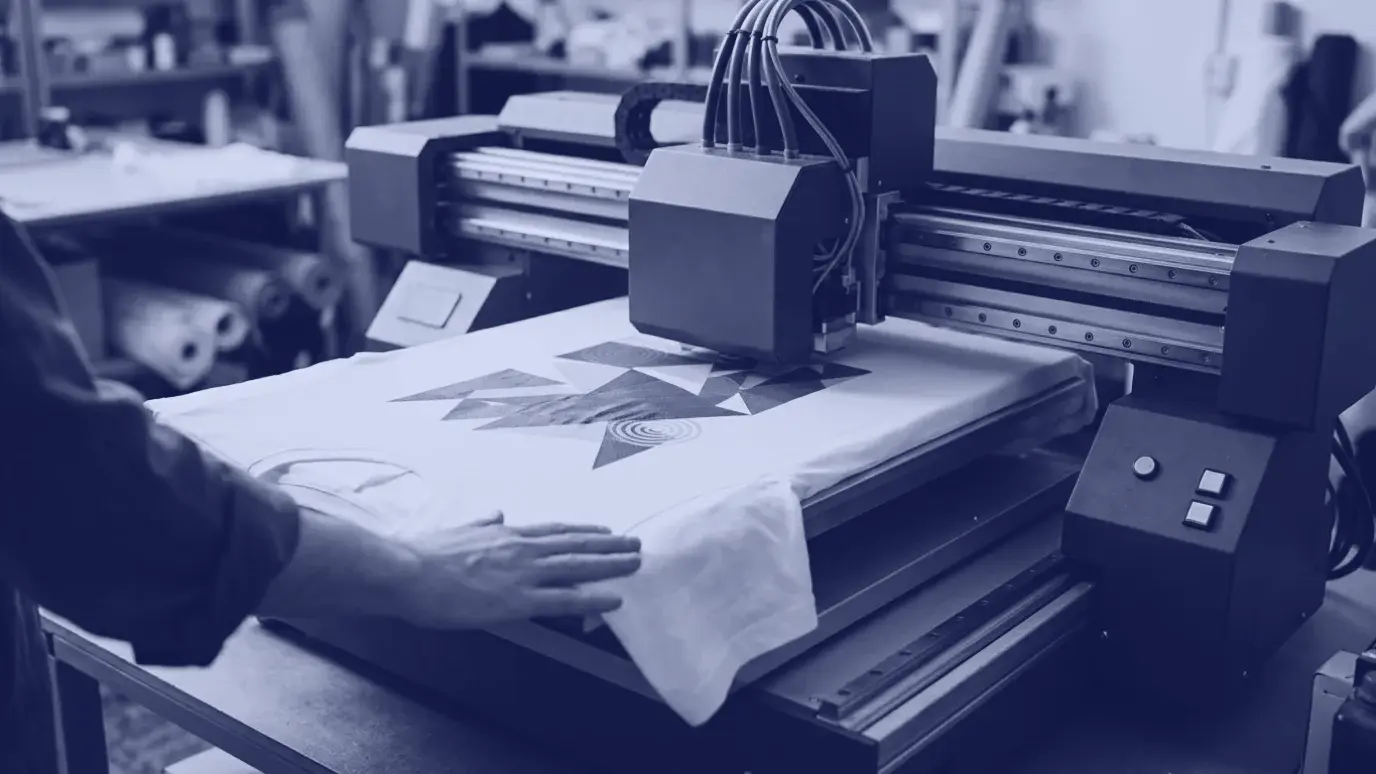
DTG (direct to garment) printing is a digital method in which a design is printed straight onto a finished garment or product with an inkjet printer, while the item is held flat on a tray called a platen. It is the piece-printing branch of digital printing; Epson says it gives its best results on cotton.
- Published:
- Fact-checked by:
- Gizem Polat
Key facts
- DTG prints a design directly onto a finished product held on a platen with an inkjet printer; it is the piece-printing branch of digital printing.
- Epson recommends cotton and cotton-polyester blends for DTG; white ink (on dark garments) and polyester need pretreatment before printing.
- The print is fixed by heat curing; temperature and time come from the ink and pretreatment maker’s instructions.
- With no screens or film, the number of colors does not add to set-up work; Epson says DTG can be used for single pieces and for batch production.
- Durability depends on garment quality, pretreatment and other factors, so no single number of washes can be given; have the print tested to ISO 105-C06.
DTG (direct to garment) printing is a digital printing method in which a design is printed straight onto a finished garment or product with an inkjet printer, while the item is held in position on a tray called a platen. Cotton Incorporated describes the technology as a digital inkjet printer combined with a platen, and notes that products such as socks, hats and shoes can be printed too (CottonWorks). Because no screen or film is needed, set-up is short; Epson says DTG can be used for single pieces and for batch production.
DTG is the finished-product branch of digital printing. It is not industrial digital fabric printing, which prints rolls of fabric.
How DTG printing is done
Epson describes a four-step flow:
- Design: The artwork is prepared in printing software.
- Pretreatment: If needed, a pretreatment liquid is applied to the product and allowed to dry completely before printing.
- Printing: The product is placed on the platen and the printer prints the design directly onto it. White ink is used on dark garments.
- Curing: The ink is fixed with heat; Epson mentions heat press and heat tunnel settings.
Temperature, time and pressure come from the ink and pretreatment manufacturer’s instructions, so this entry gives no numerical values.
DTG at a glance
| Topic | DTG |
|---|---|
| Fabric | Epson recommends cotton and cotton-polyester blends. The SureColor F2270 guide supports T-shirt fabrics with a cotton ratio of 50–100% or a polyester ratio of 50–100%, and recommends thick, high-density 100% cotton, or 100% polyester. For blended, elastane or nylon fabrics, confirm suitability from the machine and ink data sheets and with a sample print |
| Pretreatment | According to Epson, needed when printing white ink (dark garments) and on polyester; it offers a separate pretreatment liquid for polyester |
| Color and design | With no screens, the number of colors does not add to set-up work; photographic, multicolor designs are the method’s strong area (CottonWorks; Epson) |
| Feel | Epson calls DTG breathable and soft to the touch, and says it feels flatter than DTF |
| Quantity | Single pieces and small runs; the threshold varies by company and job |
| Product limits | Print area and product thickness depend on the machine. For example, Epson’s SureColor F2270 takes products up to 27 mm thick (the limit depends on the platen type) and up to 1.5 kg |
| Durability | Epson says the print does not crack or peel because it is applied directly (manufacturer’s statement) and that durability depends on garment quality, pretreatment and other factors. Cotton Incorporated notes that in digital printing the dye penetrates the fiber less and fastness can be a problem (a general note on digital printing) |
| Care | Epson suggests turning the printed T-shirt inside out, washing it in cold water and following the manufacturer’s care instructions |
DTG compared with DTF and other methods
| Method | Difference from DTG |
|---|---|
| DTF | Prints on film and transfers the design to the product with adhesive powder and a heat press. According to Epson, it needs no pretreatment, can be applied to almost any fabric and feels more raised than DTG; Epson recommends DTF for the best result on polyester |
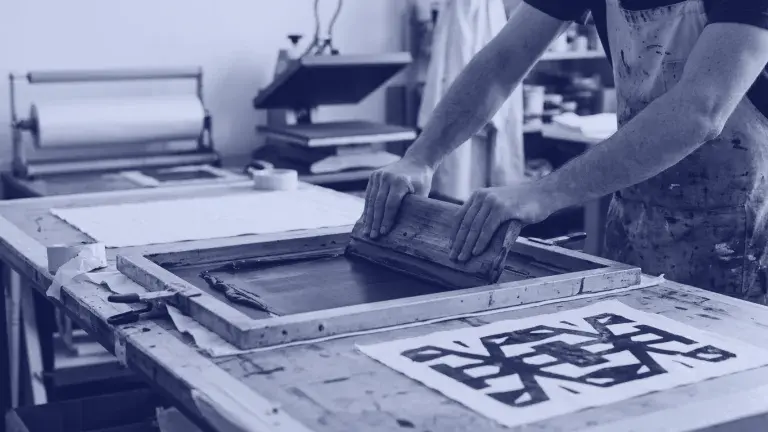
| Screen printing | A separate screen is prepared for each color; because the set-up is spread over the quantity, it stands out for few-color, repeat jobs. DTG has no screens |
| Sublimation | The disperse dye passes into the polyester fiber; it is not suitable for cotton and does not give color on dark backgrounds. DTG works on cotton |
| Industrial digital fabric printing | Prints rolls of fabric with the same inkjet principle; the ink class (reactive, acid, disperse, pigment) is chosen by fiber |
A short summary of the difference from DTF is in the DTF printing entry, and all the methods are compared in the textile printing methods guide.
What to specify when ordering
- Weigh quantity and number of colors together: For multicolor, photographic, low-quantity designs, DTG or DTF stands out; for few-color, repeat designs, screen printing can lower the unit cost as quantity grows. The threshold varies by company, so get at least two quotes against the same specification.
- State the fabric: Give the fiber ratio, weight and base color. If you do not know the weight, calculate it from a sample with the fabric GSM calculator; for choosing a T-shirt fabric, see T-shirt fabric types.
- Approve the sample before and after washing: ISO 105-C06 measures color change and staining in washing, and ISO 105-X12 measures rubbing fastness.
- Carry the care instructions onto the label: Epson suggests turning the item inside out and washing in cold water; agree the instructions for your product with the print supplier.
Print shops that do DTG can be found among textile printing services, printing ink suppliers among textile printing inks, and machines and service among textile printing machine suppliers.
Frequently asked questions
Does DTG printing wash off?
There is no one wash count that holds for every DTG print. Epson says durability depends on garment quality, pretreatment and other factors. Color change and staining are measured to ISO 105-C06 and rubbing fastness to ISO 105-X12; damage to the print layer, such as cracking or peeling, is not expressed by those ratings, so write a separate acceptance criterion.
What fabrics can be DTG printed?
Epson recommends cotton and cotton-polyester blends and says DTG gives its best result on cotton. Polyester can be printed if a special polyester pretreatment is applied, but for the best result on polyester Epson recommends DTF. Suitability varies with the machine and ink, so rely on a sample print.
What is the difference between DTG and DTF?
DTG prints directly on the product; DTF prints on film and transfers it with a heat press. According to Epson, DTG needs pretreatment with white ink and on polyester, DTF does not; DTG gives its best result on cotton, while DTF can be applied to almost any fabric and gives a more raised feel.
Is a DTG print breathable?
A printed fabric does not stop sweating either; the body cools down by perspiring. Epson calls DTG breathable and soft to the touch but gives no measured value, and no independent source measuring the effect of the printed area on air and water-vapor permeability was found. If this matters for your product, have a printed and an unprinted sample measured to EN ISO 9237 (air permeability) and EN ISO 11092 (water-vapor resistance). The fabric’s moisture management is set by fiber, structure and weight; see breathable fabrics for summer.
At what quantity does DTG make sense?
There is no single threshold. Because no screen or film set-up is needed, DTG can be used for a single piece and for small runs (Epson). As quantity grows, compare the unit cost with methods whose set-up is done once; the decision depends on quantity, number of colors, fabric and base color.
Sources (10)
- Epson: DTG & DTF Printers for Small Businesses (DTG and DTFilm process and FAQ page; accessed October 11, 2026)
- Epson Europe: DTG and DTF Printing (DTG and DTF comparison, durability FAQ; accessed October 11, 2026)
- Epson, SureColor F2270 User’s Guide: Overview of the Printing Process (DTG pretreatment step; accessed October 11, 2026)
- Epson, SureColor F2270 User’s Guide: Supported Media Specifications (DTG fabric, thickness and weight limits; accessed October 11, 2026)
- CottonWorks (Cotton Incorporated): Cotton Printing Types & Techniques (accessed October 11, 2026)
- Cotton Incorporated, CottonPicks: Printing Techniques, A Comparison of Cotton Printing Techniques (2018)
- EN ISO 105-C06:2010 Textiles: Tests for colour fastness, Part C06: Colour fastness to domestic and commercial laundering (EVS-EN ISO 105-C06:2010 record)
- EN ISO 105-X12:2016 Textiles: Tests for colour fastness, Part X12: Colour fastness to rubbing (EVS record)
- EN ISO 9237:1995 Textiles: Determination of permeability of fabrics to air (EVS-EN ISO 9237:2000 record)
- EN ISO 11092:2026 Textiles: Physiological effects: Measurement of thermal and water-vapour resistance under steady-state conditions (EVS record)
Author and fact-checking
Written by
Dyeing, Printing and Finishing Editor
Deniz Koç is Tekstil Rehberi's dyeing, printing and finishing editor. Deniz covers dyeing methods, digital, screen, transfer and sublimation printing, embroidery, garment washing and fabric finishes, and refers to the relevant test standards on topics such as color fastness and chemical compliance.
Content by Deniz KoçFact-checked by: Gizem Polat
This content was prepared by the Tekstil Rehberi editorial team. Before publication, our verification editor checked its figures, dates and sources against primary sources.
Spotted an error? Email us at [email protected] How we work →
Articles on this topic
Textile Printing Methods: Screen, Rotary, Digital, DTF and Sublimation
How screen, rotary, digital (DTG), DTF, heat transfer and sublimation printing compare, which fibres each suits, and how to brief a print supplier and set test criteria.