What is Mercerization (Mercerized Cotton)?
Mercerization is a finishing treatment in which cotton, as fiber, yarn or fabric, is treated with a concentrated caustic soda solution, usually under tension. The fiber swells; the cotton takes up more dye and, if treated under tension, gains luster. In Turkish it is called merserizasyon.
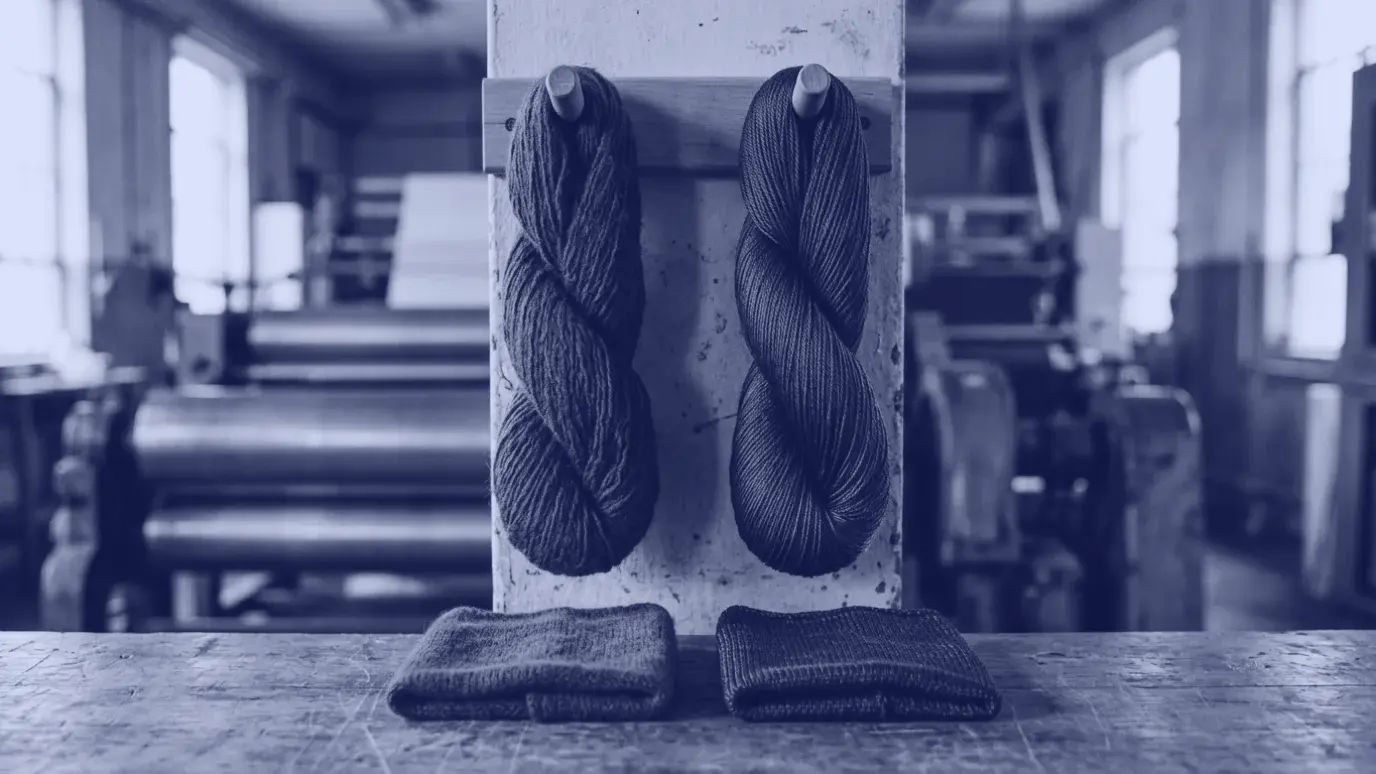
- Published:
- Updated:
- Fact-checked by:
- Gizem Polat
Key facts
- Mercerization is a finishing treatment in which cotton is treated with a concentrated caustic soda solution, usually under tension.
- According to Cotton Incorporated, the treatment swells the fiber and rounds its cross-section; cotton takes up more dye and, if treated under tension, becomes more lustrous.
- The name comes from John Mercer, who discovered the treatment in 1844; the method that gives cotton lasting luster was patented by H. A. Lowe in 1889.
- The EU fiber labeling regulation uses a conventional moisture regain of 8.5% for normal cotton and 10.5% for mercerized cotton when calculating fiber content.
- The presence of mercerization is tested with AATCC TM89; if the specification says “mercerized,” write the test method as well.
Mercerization is a finishing treatment in which cotton, as fiber, yarn or fabric, is treated with a concentrated caustic soda solution, usually under tension. According to Cotton Incorporated, the treatment swells the fiber; the cotton takes up more dye, the fabric becomes stronger and looks smoother, and the luster increases if the treatment is done under tension (CottonWorks). The name comes from John Mercer, who discovered the treatment in 1844.
In Turkish the treatment is called merserizasyon and the cotton merserize. The Turkish Language Association (TDK) dictionary defines merserize, borrowed from French mercerisé, as cotton yarn given luster by a chemical method; it has no entry for merserizasyon (accessed October 11, 2026).
How mercerization is done
CottonWorks describes preparation before dyeing as scouring, bleaching, mercerization and rinsing-neutralization, in that order. In mercerization the material is exposed to a concentrated caustic soda solution, generally under tension on a tenter (ram) frame. The concentration, temperature and contact time vary with the plant, the machine and the fabric and come from the mill’s recipe, so this entry gives no numerical values.
The history shows why tension matters. In Mercer’s method the cloth shrank by 20–25%, which Britannica gives as the main reason the method failed commercially. The method that gives cotton lasting luster was found and patented by H. A. Lowe in 1889, and it succeeded in practice when Thomas & Prevost re-patented Lowe’s invention in 1895. The same source explains that the luster appears when the cotton is held taut during the caustic soda treatment and the washing, so that it cannot shrink (Britannica, 11th ed., 1911).
What changes in the fiber
Caustic soda swells cellulosic fiber. The cross-section changes from a “kidney bean” shape to a rounder one, and the structure becomes far more open (amorphous) than crystalline (CottonWorks). The results:
| Property | Effect (CottonWorks) |
|---|---|
| Dye uptake | The fiber takes up more dye, which helps with fastness problems or with cotton that has a high share of immature fiber |
| Strength and surface | The fabric is stronger and looks smoother; neps (fiber knots) are reduced |
| Luster | The changed fiber shape reflects light more easily; luster increases if the treatment is done under tension |
On moisture, the EU textile fiber labeling regulation (1007/2011, Annex IX) uses conventional moisture regain values when calculating fiber content: 8.5% for normal cotton and 10.5% for mercerized cotton. This is a convention set for calculation, not a measurement result.
How to tell whether cotton is mercerized
If the specification says “mercerized,” you need a method that confirms it. AATCC TM89 is the test method for determining the presence of mercerization in dyed and undyed cotton yarns and fabrics; it is based on the barium activity number and shows to what extent the cotton has reacted with the mercerizing bath (AATCC). Write the method and the acceptance value into the purchase order.
Treatments often confused with mercerization
| Treatment | Difference from mercerization |
|---|---|
| Scouring and bleaching | Scouring cleans the cotton and increases absorbency, and bleaching gives an even white base (CottonWorks). Mercerization changes the shape and structure of the fiber |
| Singeing | Removes protruding fibers with a heated roller or flame and smooths the surface (CottonWorks) |
| Compaction | Compresses the fabric mechanically to reduce length shrinkage; CottonWorks covers it under mechanical finishing |
| Wrinkle-resistant finish | A chemical finish; according to CottonWorks, the most common wrinkle-resistance chemistry today is resin-based |
| Viscose production | In viscose production, cellulose pulp is steeped in caustic soda, and this step is also called mercerization (Zhang et al., 2018). It is a step in making the fiber, not a finish applied to the finished fabric |
What to specify when ordering
- Say what is to be mercerized: Yarn or fabric? The TDK entry defines the Turkish word for yarn, so confirm what a supplier means. Also state the test method and the acceptance value.
- Have shrinkage measured separately: Do not treat “mercerized” as a guarantee of dimensional stability. Ask for dimensional change after washing by ISO 5077, with washing to ISO 6330 procedures, and work out the cutting allowance with the shrinkage calculator.
- Tell the laboratory for fiber analysis: Because the EU regulation sets a separate moisture regain for mercerized cotton, tell the lab doing the fiber content test whether the sample is mercerized.
- Ask about the service: Mills that mercerize can be found among dye houses, and mercerized cotton yarn suppliers among cotton yarn companies. For finishing chemical suppliers, see the textile chemicals and dyes category.
Frequently asked questions
What is mercerized cotton?
Cotton that has been treated with concentrated caustic soda, so that its dye uptake and luster have increased. The TDK dictionary defines the Turkish term as cotton yarn given luster by a chemical method; in finishing literature the treatment is described for fiber, yarn and fabric (CottonWorks).
Why is cotton mercerized?
To increase dye uptake, to give the fabric luster and a smooth appearance, and to raise strength. CottonWorks notes that the greater dye uptake helps with fastness problems or with cotton that has a high share of immature fiber.
Is mercerized cotton breathable?
Mercerized fabric does not stop sweating; perspiration is how the body cools itself. No independent source measuring the effect of mercerization on moisture management was found. The only related datum is that the EU regulation takes a conventional moisture regain of 10.5% for mercerized cotton and 8.5% for normal cotton (Annex IX); this is a calculation convention, not a measurement. Ask for the fabric’s EN ISO 9237 air permeability and EN ISO 11092 water-vapor resistance. The effect of fiber, structure and weight is covered in breathable fabrics for summer.
Is mercerization the same as singeing?
No. Mercerization uses caustic soda to change the shape and structure of the fiber; singeing removes protruding surface fibers with a heated roller or flame (CottonWorks).
Sources (15)
- TDK Güncel Türkçe Sözlük (Turkish Language Association dictionary), entry “merserize”; searches for “merserizasyon” and “silket” returned no result (accessed October 11, 2026)
- CottonWorks (Cotton Incorporated), Learning Hub: Dyeing Preparation (scouring, bleaching and mercerization sections; accessed October 11, 2026)
- CottonWorks (Cotton Incorporated), Textile Encyclopedia: Mercerization (accessed October 11, 2026)
- CottonWorks (Cotton Incorporated), Textile Encyclopedia: Mercerized Cotton (Fabric) (accessed October 11, 2026)
- CottonWorks (Cotton Incorporated), Textile Encyclopedia: Singeing (accessed October 11, 2026)
- CottonWorks (Cotton Incorporated), Learning Hub: Mechanical Finishing (compaction section; accessed October 11, 2026)
- CottonWorks (Cotton Incorporated), Learning Hub: Chemical Finishing (wrinkle resistance section; accessed October 11, 2026)
- Knecht, E. (1911). Mercerizing. Encyclopaedia Britannica, 11th ed., Vol. 18 (Wikisource transcription; accessed October 11, 2026)
- AATCC TM89-2025, Mercerization in Cotton (AATCC store record; accessed October 11, 2026)
- Regulation (EU) No 1007/2011 on textile fibre names and related labelling, Annex IX (conventional moisture regain), consolidated text of 15.02.2018
- Zhang, S. et al. (2018). Regenerated cellulose by the Lyocell process, a brief review of the process and properties. BioResources, 13(2), 4577-4592 (p. 4578: mercerization step in the viscose process)
- ISO 6330:2021 Textiles: Domestic washing and drying procedures for textile testing
- ISO 5077:2007 Textiles: Determination of dimensional change in washing and drying (confirmed in 2022)
- EN ISO 9237:1995 Textiles: Determination of permeability of fabrics to air (EVS-EN ISO 9237:2000 record)
- EN ISO 11092:2026 Textiles: Physiological effects: Measurement of thermal and water-vapour resistance under steady-state conditions (EVS record)
Author and fact-checking
Written by
Dyeing, Printing and Finishing Editor
Deniz Koç is Tekstil Rehberi's dyeing, printing and finishing editor. Deniz covers dyeing methods, digital, screen, transfer and sublimation printing, embroidery, garment washing and fabric finishes, and refers to the relevant test standards on topics such as color fastness and chemical compliance.
Content by Deniz KoçFact-checked by: Gizem Polat
This content was prepared by the Tekstil Rehberi editorial team. Before publication, our verification editor checked its figures, dates and sources against primary sources.
Spotted an error? Email us at [email protected] How we work →
Articles on this topic
Denizli Towel and Bathrobe Industry: How Turkey's Home Textile Hub Works
Why Denizli leads Turkey's towel and bathrobe production, how the chain runs from yarn to sewing, how to read the 2025 numbers and what to ask a supplier.
Combed vs Carded vs Open-End Yarn: Differences and Uses by Product
Combed and carded yarn differ in fiber preparation; ring and open-end yarn differ in how they are spun. Property tables, product examples with sources and how to write yarn into a quote.

How to Judge Terry Towel Quality: GSM, Pile Yarn and Absorbency
Terry towel quality cannot be read from GSM alone. The criteria for pile yarn, pile height, absorbency and post-wash performance, with a checklist for buyers writing a spec.