How to Choose a CMT Workshop in Turkey: 10 Criteria
How to choose a CMT workshop in Turkey: ten criteria, the documents to request, a visit checklist, a scorecard for comparing quotes and low-risk first-order steps.

- Published:
- Updated:
- Fact-checked by:
- Gizem Polat
Key facts
- A CMT workshop is chosen by weighing ten criteria together, from legal identity to commercial terms; no single criterion is enough.
- Identity, premises, working conditions and subcontracting transparency are pass-or-fail; ask for the license, tax and social security records and check them at the production address.
- Get written quotes from at least three workshops on the same tech pack, quantity and scope, and compare the candidates with a weighted scorecard.
- A headcount that does not match production volume is a red flag (SOMO, 2015); also ask in writing which operations are done outside the workshop.
- Test a new workshop with a paid sample and a small trial lot before you place a large order.
To choose a CMT (cut, make, trim) workshop in Turkey, fix your scope and tech pack first, build a long list, and screen it against ten criteria: legal and tax identity, premises and license, working conditions, product experience, machinery, capacity and lead time, quality control, sampling and communication, subcontracting transparency, and commercial terms. Ask the workshops that remain for written quotes on the same scope, at least three, and place a large order only after a paid sample and a small trial lot.
This guide is for brands, importers and sourcing teams that already plan to produce in Turkey. Turkish workshops call this work "fason", the local word for contract manufacturing, and you will see it on quotes and listings. For city clusters, MOQ ranges and duty rules, read clothing manufacturers in Turkey; this guide goes deeper on the workshop itself. As of 9 October 2026 we found no official register that lists all contract workshops or shows the quality of any one of them, so the assessment rests on several pieces of evidence taken together. Legal and document information here is general and does not replace legal, financial or tax advice; confirm Turkish requirements with a local lawyer or accountant.
How to find a CMT workshop in Turkey
Before you start searching, put these five items in writing. They make it easier to find workshops and to compare quotes later:
- Scope: Sewing only, or cutting as well? Who supplies the fabric and trims? For the models, see contract garment manufacturing.
- Product and fabric: Knit or woven; the type of fabric and how it behaves.
- Quantity and breakdown: Total quantity, number of styles, size and color split.
- Delivery date: The delivery date and the date the fabric reaches the workshop, written separately.
- Quality expectations: Measurement tolerance, inspection method (AQL) and defect classes.
You can build the long list from the channels below. The table is Tekstil Rehberi's recommendation; no sourced data shows which channel gives better results. The rule is the same for all of them: a channel shows you a workshop, and only the criteria verify it.
| Channel | What it gives you | Watch out for |
|---|---|---|
| Company directories (CMT sewing, cutting, printing) | A wide list by category and city | The information is the company's own declaration (this site included); verification is yours |
| Industry network: other brands, fabric supplier, trim supplier, pattern room | First-hand experience of how a workshop operates | A recommendation is personal; check it against the same criteria |
| Searching in production areas (industrial sites, organized industrial zones) | You see the address and surroundings yourself | Takes time; capacity and quality cannot be judged from outside |
| Trade fairs and industry events | Many companies met in a short time | A stand does not show the production site; a visit is essential. For named fairs and exporter associations, see clothing manufacturers in Turkey |
| Sourcing agent or production follow-up service | Saves time | Adds a link to the chain and can make it harder to see where the work is really done. Ask in writing who does the work and where |
| Online listing and service platforms | Many options | Little verified information; reviews or ratings alone do not show production quality |
Tekstil Rehberi recommends cutting the long list to five or six candidates using documents and written answers, then asking at least three of them for quotes after a call and a visit. Use criteria 1, 2 and 3 below (identity, premises, working conditions) for that first cut.
10 criteria for choosing a CMT workshop
These ten criteria are a framework compiled by Tekstil Rehberi. Under each heading we mark which information rests on legislation or a source and which is our recommendation. Contractor selection has also been studied in academic work with multi-criteria decision methods; for example, Arıkan (2008, a Turkish master's thesis) models a textile company's subcontractor selection with the Analytic Hierarchy Process.
| # | Criterion | Type | Key question |
|---|---|---|---|
| 1 | Legal and tax identity | Screen-out | On whose behalf does the workshop operate, and can it invoice? |
| 2 | Premises and license | Screen-out | Will your product be made at the licensed address? |
| 3 | Working conditions | Screen-out | Are employees registered, and are safety measures in place? |
| 4 | Product experience | Scored | Has it made a similar product in a similar fabric? |
| 5 | Machinery | Scored | Is there the right machine for every operation? |
| 6 | Capacity and lead time | Scored | Does your order fit alongside its current jobs? |
| 7 | Quality control | Scored | Who catches defects, and who fixes them? |
| 8 | Sampling and communication | Scored | Are the sampling process and communication written and regular? |
| 9 | Subcontracting transparency | Screen-out | Which operations are done somewhere else? |
| 10 | Commercial terms | Scored | Is the scope of the quote clear and the payment plan balanced? |
1. Legal and tax identity
Find out whether you are dealing with a sole proprietorship or a company; registration and liability differ accordingly.
- Tax certificate (vergi levhası). It is normally obtained electronically from the online tax office, and the confirmation code on it has the effect of an approval stamp. The tax authority's communiqué also says that taxpayers can look up a single taxpayer's certificate details online (Tax Procedure Law Communiqué No. 408). If you cannot do that yourself, ask the workshop to show the certificate and compare the name, address and activity code with the license and the invoices.
- Registry record. For a company, ask for the trade registry and MERSİS numbers. You can check the company title and registry notices on TOBB's Turkish Trade Registry Gazette site (notice search requires a free registration). For a sole proprietor, ask about the tradesmen's chamber or chamber of commerce registration.
- Invoicing. Agree up front which type of invoice the workshop will issue (e-invoice, e-archive or paper); the Revenue Administration's e-Document site has an e-Invoice Registered Users page. As of the date of this article, the Turkish VAT General Implementation Communiqué (section I/C-2.1.3.2.7) treats contract textile and clothing work under partial withholding, applied by the buyer groups the Communiqué lists. Ask a Turkish accountant whether it affects your purchase and how the order will be invoiced.
- Red flag: an offer that is "cheaper without an invoice". Ask your accountant how it would affect your expense and tax records.
2. Premises and license
A business cannot open or operate in Turkey without a business opening and operating license, and premises opened without one are closed down by the competent authorities (Regulation on Business Opening and Operating Licences, Art. 6). If a business moves to another address, relicensing is the rule (Art. 8). Ask for a copy of the license, and at the visit check that the address, company title and line of business match the place where your product will be made.
The industry registry is a separate matter. Under Law No. 6948, premises that manufacture continuously and in series are industrial enterprises and register in the industry registry before they start production; handicrafts, home crafts and small repair shops are outside its scope (Arts. 1-2). The Law does not say in one sentence what size of sewing workshop falls within scope, so ask the workshop for the certificate or for an explanation of why it is outside the scope. A missing certificate is not a red flag on its own.
3. Working conditions: social security, safety and social compliance
- Social security (SGK). An employer must notify its insured employees before their insurance starts (Law No. 5510, Art. 8) and file a workplace declaration (Art. 11). Ask the workshop for its current headcount and compare it with the number of people you see on the floor. SGK offers an e-Devlet service called Workplace Registration / No-Debt Certificate Query; the workshop can get this certificate from its own account and show it to you.
- Occupational health and safety. Workplaces with employees must carry out a risk assessment (Law No. 6331, Art. 10) and have an emergency plan (Art. 11); licensed premises are also expected to have taken safety measures (Regulation, Art. 5/a). Ask for the documents, and at the visit look at exits, fire extinguishers and the electrical installation.
- Social compliance. Sedex describes SMETA as a "continuous improvement methodology rather than a certification", and amfori states that amfori BSCI is not a certification. If your own customer requires one of these audits, check the report's scope, its date and the audited address; the address must be the one that will make your order. These audits come from buyer requirements, not from legislation, and not every workshop has one.
4. Product experience and references
Find out which products and fabrics the workshop is strong in. Knit and woven garments need different machines and skills, and elastane or slippery fabrics can behave differently in sewing. "We can make anything" is not evidence. Ask for a recent sample or a produced piece of a similar product, and look at stitching, measurements and pressing. Call two reference customers yourself and, if you can, get an opinion that does not come from the workshop or your own network.
A workshop that reads your tech pack and asks about the operation sequence, fabric and measurements gives a better signal than one that says "fine" without a single question (Tekstil Rehberi's assessment).
5. Machinery and technical equipment
Give the workshop the operation list for your product and ask whether it has a machine for each operation: straight stitch, overlock, coverstitch, buttonhole and button attaching, pressing and, if needed, a cutting table. Ask for the machine list (type, number, age), the maintenance routine and the backup machine in case of breakdown, and confirm the list by eye at the visit. An operation without a machine is probably going to be sent out; weigh that together with criterion 9.
6. Capacity and lead time
Ask how many operators and machines there are, what the daily output is, which jobs fill the same period, when the next free slot is, and what standard minute value (SMV) and efficiency the workshop assumes for your style. Use the capacity check in the contract manufacturing guide to test whether the answers are consistent, and have the delivery date and the fabric arrival date written separately. SOMO (2015) lists short lead times, capacity overflow and late-arriving inputs among the reasons for hidden subcontracting, and reminds buyers that factories often work for many customers at once.
Capacity report, if there is one. A capacity report is an official document that determines, by set criteria, how much an enterprise can produce in a year given its machinery and labor (Istanbul Chamber of Industry). For workshops in the tradesmen and craftsmen category, the report is issued by the chamber of tradesmen and craftsmen where they are registered; it covers machinery and installations, annual production capacity and the staff on the SGK payroll, and it is valid for three years from the Confederation's approval (TESK Capacity Report Regulation, Arts. 4, 5 and 12). Reports from chambers of industry have different validity periods and conditions, so check the validity date. A report whose address or machinery has since changed does not show the current situation (the Istanbul Chamber of Industry lists these among the cases that need a new report). Annual capacity does not give the real daily output for your style; in Tekstil Rehberi's assessment it is only a hint of scale.
7. Quality control and defect handling
Ask how the workshop catches defects: who does in-line checks and at which stage, is there a final inspection, are a measurement chart and tape in use, and are defective pieces recorded? Have it write down who pays for rework and how quickly it is done.
The workshop's own checks do not replace your acceptance inspection on delivery; plan the two as complementary layers (Tekstil Rehberi's recommendation). For the sampling method, see AQL inspection for garments; if you prefer to have inspection done by a third party, browse quality control firms. Write defect classes, acceptance and rejection criteria and rework times into the contract.
8. Sampling and communication
- Samples: The quote should state the sample's lead time, its price and whether it is deducted from the order. Ask which operator and line sewed the sample; a different team may sew the bulk (Tekstil Rehberi's recommendation).
- Approval: Record the approved sample in writing as the reference for production. SOMO (2015) lists changes to design, quantity and schedule made after sample approval, without adjusting price and time, among the buyer-side causes of pressure on a manufacturer.
- Communication: Name a single contact, and keep decisions and changes in writing. Share your own schedule with the workshop and ask for interim dates such as fabric arrival, cutting and sewing (Tekstil Rehberi's recommendation).
9. Subcontracting transparency
Subcontracting is not forbidden: cutting, printing, embroidery, washing, and buttonholes and buttons can be done in separate workshops. The problem starts when it happens without your knowledge. Under the contract-for-work provisions of the Turkish Code of Obligations, a contractor may have the work done by someone else if its personal qualities do not matter (Art. 471/3); whether that provision applies to your relationship is for your legal adviser to decide. Writing the permission and notification rules into the contract prevents arguments.
According to SOMO (2015), subcontracted workshops are not part of the buyer's official supply chain, so social compliance audits do not reach them. For that reason, Tekstil Rehberi recommends that you ask to be told in advance which operations are done outside, write into the contract that the same working standards apply in any subcontracted workshop, and if necessary extend your own checks to those workshops. Ask the workshop:
- Which operations are done outside?
- By whom, and at what address?
- Will no work be placed without your approval?
- Will your fabric and style go to that workshop, and how is confidentiality kept?
We recommend eliminating a workshop that refuses to answer these questions.
10. Commercial terms and financial soundness
- Scope of the quote: Cutting, pressing and packing, label attaching and sampling included or not; VAT included or excluded; how long the quote is valid; the workshop's SMV and efficiency assumptions. Have all of it in writing.
- Payment: Write the advance, terms and balance plan, and where possible tie payments to production stages and acceptance inspection. Late-delivery penalties should not cover delays outside the workshop's responsibility, such as late-arriving fabric (both are Tekstil Rehberi's recommendations).
- Financial soundness: If the workshop runs into payment difficulty, your fabric and delivery date are at risk. The SGK no-debt certificate (criterion 3) gives a hint about debt, though it is not the only indicator of financial health. Be cautious with a workshop that asks for a large advance.
- Contract: Put delivery date, quality, wastage, payment, confidentiality and subcontracting terms into a written contract, using the points in the contract manufacturing guide, and have a lawyer review it.
Documents to ask the workshop for
The last three documents are not held by every workshop; ask in writing why one is missing.
- Current tax certificate
- Trade registry record and MERSİS number (company); tradesmen's chamber or chamber of commerce registration (sole proprietor)
- Business opening and operating license
- SGK workplace registration and current headcount
- Risk assessment and emergency plan
- Machine list and two reference customers
- Industry registry certificate, or an explanation of why it is outside scope
- Capacity report (if any)
- Social compliance audit report (if your customer requires one)
What to look at during a visit
A visit tests whether the documents match the picture you see. The list is Tekstil Rehberi's recommendation; only the principle that headcount should be consistent with production rests on SOMO (2015).
- Address and headcount: Is the address the same as on the license and tax certificate? Is the headcount consistent with the SGK record and the declared capacity? SOMO treats a mismatch as a red flag.
- Lines and machines: Which line will other customers' jobs run on, and which one yours? Are the machines in working order, and are the ones your product needs really there?
- Fabric and cutting area: Are fabrics labeled and stored separately and cleanly?
- Quality control and pressing-and-packing: Is there a separate inspection point, measuring equipment and an area where defective pieces are set aside?
- Working environment: Are lighting, exits, fire extinguishers and the electrical panel in order?
- Second visit: A single visit does not always show how production normally runs. On the first order, go again while production is under way, or ask for a live video walk-through.
Company directory
Looking for manufacturers in this field?
Browse companies in the related categories or get quotes from several companies with one form.
Do you manufacture or offer services in this field?
Score the candidates
Scoring ties the decision to criteria rather than to a first impression. First set aside the candidates that fail criteria 1, 2, 3 and 9. Score the rest from 1 to 5 on criteria 4, 5, 6, 7, 8 and 10. Set each criterion's weight (1 to 3) before you see the quotes, so the scores cannot be adjusted to fit the result. On a short-lead-time job, capacity and lead time stand out; on a complex product, product experience does.
Total score = Σ (weight × score). The highest possible score is five times the sum of the weights. The example below is entirely hypothetical and does not describe any real workshop:
| Criterion | Weight | Workshop A (1-5) | Workshop B (1-5) |
|---|---|---|---|
| Capacity and lead time | 3 | 4 | 5 |
| Quality control | 3 | 3 | 4 |
| Product experience | 2 | 5 | 2 |
| Sampling and communication | 1 | 3 | 4 |
| Total (maximum 45) | 9 | 34 | 35 |
For A the result is 3×4 + 3×3 + 2×5 + 1×3 = 34; for B it is 3×5 + 3×4 + 2×2 + 1×4 = 35. The gap is one point, and scoring alone does not make the decision. B's product experience is low; if that matters for your product, you should have set its weight high from the start. When the gap is small, also look at red flags and the impression from the visit.
Reduce the risk on the first order
- Ask for a paid sample and make the approved sample the reference for production.
- Do not start bulk production without pre-production (PP) approval.
- Place a small trial lot: only a fraction of your total need.
- Hand over fabric against a count; ask for an account of fabric received, cut, wasted and left over.
- Tie payment to stages; pay the balance after acceptance inspection.
- Record the results: delivery date slippage, defect rate, communication. Decide on the large order with those records, and keep a second candidate alive so you do not depend on a single workshop.
These steps are Tekstil Rehberi's recommendation.
Red flags
- The license, the tax certificate and the actual address do not match.
- The workshop avoids showing documents or letting you walk through the production area.
- It offers a "cheaper without an invoice" price.
- The headcount is inconsistent with the production volume (SOMO, 2015).
- It gives an evasive answer to the subcontracting question.
- It says "we take any job" without looking at capacity, and the price is very low with no explanation of the scope.
Apart from the headcount item, these are Tekstil Rehberi's assessment. A single item does not prove that a workshop is bad, but none should go unanswered.
Next steps
After you have screened candidates with documents and a visit, get written quotes on the same scope, score them and prepare the contract. To build your long list, see CMT sewing workshops in our directory, and verify every company against the criteria above yourself. The selection criteria here are general information; get support from a lawyer and an accountant for contract clauses and tax consequences.
Frequently asked questions
How do I find a CMT workshop in Turkey?
Put the scope, product, quantity and delivery date in writing first. Then build a long list from company directories, your industry network (other brands, fabric supplier, pattern room), searches in production areas and trade fairs. Cut the list with checks on legal identity, license and working conditions, and ask the remaining candidates for at least three written quotes on the same scope. No sourced data shows which channel works best, so on every channel the verification is your job.
Which criteria should I use to choose a contract sewing workshop in Turkey?
Tekstil Rehberi suggests ten: legal and tax identity, premises and license, working conditions, product experience, machinery, capacity and lead time, quality control, sampling and communication, subcontracting transparency, and commercial terms. Identity, premises, working conditions and subcontracting transparency are pass-or-fail; the rest are weighted and scored to compare candidates. The list is a recommendation, not a list set out in legislation.
What documents should I ask a Turkish workshop for?
Ask for the tax certificate (vergi levhası); for a company, the trade registry record and MERSİS number, and for a sole proprietor, the tradesmen's chamber or chamber of commerce registration; the business opening and operating license; the SGK (social security) workplace registration; and occupational health and safety documents such as a risk assessment and an emergency plan. Add the industry registry certificate where it applies, a capacity report if one exists, and a social compliance audit report if your customer requires one. The last three are not held by every workshop; ask in writing why one is missing.
Can I place an order with a workshop I have not seen?
Tekstil Rehberi recommends against it. SOMO (2015) treats a headcount that does not match production volume as a red flag, and you can only test that on site. If you are abroad, start with a live video walk-through, a call with a reference customer and a paid sample, and visit in person at the first opportunity.
How many quotes should I get?
Tekstil Rehberi recommends at least three. Ask for them on the same tech pack, quantity, scope and delivery date, and compare more than the headline price: cutting, pressing and packing, sampling, payment terms and the standard minute value (SMV) the workshop assumes. A quote far below the others is not always a problem, but do not decide until the workshop has explained the gap.
How should I place a first order with a new workshop?
Start with a paid sample and make the approved sample the reference for production. After pre-production (PP) approval, place a small trial lot, a fraction of your total need. Write staged payments tied to acceptance inspection into the contract. Decide on the large order after reading the trial lot's record on delivery date, defects and communication.
Sources (17)
- Regulation on Business Opening and Operating Licences (Council of Ministers Decision 2005/9207, Official Gazette 10.08.2005, No. 25902), Articles 5, 6 and 8; consolidated text, mevzuat.gov.tr (Turkish text; accessed October 9, 2026)
- Industry Registry Law No. 6948, Articles 1 and 2, mevzuat.gov.tr (Turkish text; accessed October 9, 2026)
- Social Insurance and General Health Insurance Law No. 5510, Articles 8 and 11, mevzuat.gov.tr (Turkish text; accessed October 9, 2026)
- Occupational Health and Safety Law No. 6331, Articles 2, 10 and 11, mevzuat.gov.tr (Turkish text; accessed October 9, 2026)
- Turkish Code of Obligations, Law No. 6098, Article 471 (contractor having the work done by another; Turkish text), mevzuat.gov.tr
- Tax Procedure Law General Communiqué (Serial No. 408), Official Gazette 27.05.2011, No. 27946, sections 2.3 and 3 (obtaining and querying the tax certificate electronically; Turkish text; accessed October 9, 2026)
- Turkish VAT General Implementation Communiqué (Official Gazette, April 26, 2014, No. 28983), Revenue Administration (GİB) legislation page, section I/C-2.1.3.2.7 (contract textile and clothing work; Turkish text)
- Revenue Administration (GİB) e-Document site, e-Invoice Registered Users page (Turkish; accessed October 9, 2026)
- Social Security Institution (SGK), e-Devlet service: Workplace Registration / No-Debt Certificate Query (Turkish; accessed October 9, 2026)
- TOBB, Türkiye Ticaret Sicili Gazetesi (Turkish Trade Registry Gazette; accessed October 9, 2026)
- T.C. Ticaret Bakanlığı, MERSİS (Central Registry System; accessed October 9, 2026)
- Regulation on Capacity Reports of the Turkish Confederation of Tradesmen and Craftsmen (TESK) (Official Gazette 12.09.2008, No. 26995; amended Official Gazette 22.12.2018, No. 30633), Articles 4, 5, 12 and 13 (Turkish text; Official Gazette copy, TÜRMOB archive)
- Istanbul Chamber of Industry (İSO), Definition and Scope of the Capacity Report (accessed October 9, 2026)
- Sedex, SMETA audit (accessed October 9, 2026)
- amfori, amfori BSCI (accessed October 8, 2026)
- SOMO, Hidden subcontracting in the garment industry: Zooming in on the role of buying companies (Fact Sheet, September 2015)
- Arıkan, V. S. (2008). Fasoncu seçimi için AHS modelinin bir tekstil işletmesine uygulanması [Applying the AHP model to subcontractor selection in a textile company; Turkish]. Uludağ University Institute of Social Sciences, master's thesis
Author and fact-checking
Written by
Contract Manufacturing and Workshop Editor
Zeynep Arslan is Tekstil Rehberi's contract manufacturing and workshop editor. She writes practical guides on CMT pricing, contracts, tax obligations such as VAT withholding, setting up a workshop and incentives, and takes tax and regulatory details from official sources in force on the date of writing.
Content by Zeynep ArslanFact-checked by: Gizem Polat
This content was prepared by the Tekstil Rehberi editorial team. Before publication, our verification editor checked its figures, dates and sources against primary sources.
Spotted an error? Email us at [email protected] How we work →
Related articles
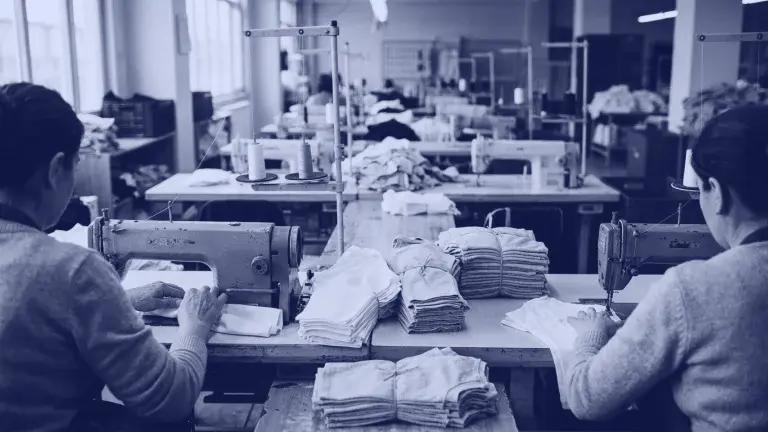
Contract Garment Manufacturing: CMT vs Full Package and How to Work With a Factory
How contract garment manufacturing works: CMT versus full package (FOB), the tech pack, factory screening and lead-time checks, default contract rules under Turkish law, and acceptance on delivery.

Garment Manufacturing Agreement: Clauses and Sample Wording for Turkey
Nine clauses a garment manufacturing agreement with a Turkish workshop should cover, fill-in sample wording, Turkish default contract rules and a checklist to run before signing.
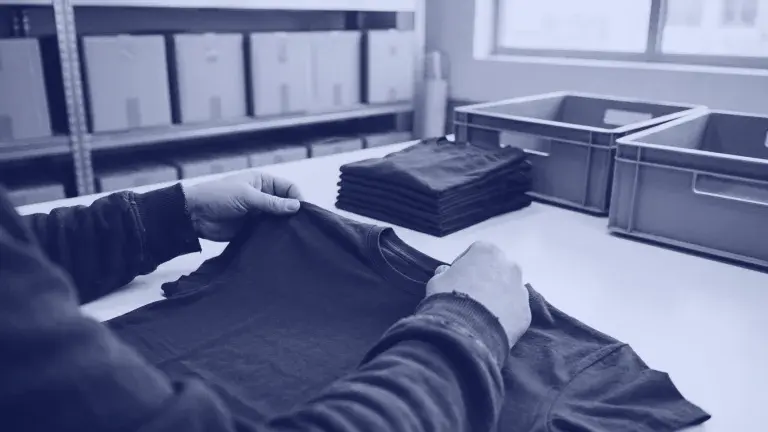
AQL Inspection for Garments: Sampling Table, Defect Classes and Contract Terms
How AQL inspection works in garments: sample size and accept/reject numbers by lot size, critical, major and minor defect classes, what the plan really guarantees, and what to write into the contract.