Clothing Manufacturers in Turkey: How to Find, Vet and Work with One
Where Turkish clothing factories are, what to plan for on MOQ, lead time and cost, how EU and UK duty rules work, and how to verify a manufacturer before you place an order.
- Published:
- Updated:
- Fact-checked by:
- Gizem Polat
Key facts
- Turkey exported US$16.77 billion of clothing and made-up textile articles in 2025, 6.3% less than in 2024 (İHKİB, January 2026).
- Turkey was the EU's third-largest clothing supplier after China and Bangladesh in the first half of 2026 (Eurostat data compiled by İHKİB).
- Istanbul recorded 69% of Turkey's clothing exports in January-November 2025, but that shows where exports are recorded, not where garments are sewn.
- No official MOQ statistic exists; one 2026 factory-directory guide reports 100-300 pieces per style at small studio factories and 1,500-3,000 at large export houses (OneAim).
- Under the EU-Turkey customs union, clothing moves duty-free with an A.TR movement certificate, which proves free circulation, not origin.
To find clothing manufacturers in Turkey, start from trade-body and official channels rather than a search-engine list: the exporter associations, a fair such as IFCO in Istanbul, referrals from brands already producing there, or a paid sourcing agent. Then shortlist three to five factories that already make your product type, check each one against Turkey's public registers, and pay for samples before you commit to production. Turkey competes on speed, proximity and quality rather than on the lowest price, and it is the European Union's third-largest clothing supplier after China and Bangladesh (Eurostat data compiled by İHKİB, first half of 2026).
This guide covers where Turkish clothing production is concentrated, what to plan for on MOQ (minimum order quantity), sampling and lead time, how pricing, payment and Incoterms work, how duties differ for EU, UK and US buyers, and a checklist for verifying a manufacturer. Every figure carries its source and date, and gaps in official statistics are flagged. Data is as of 8 October 2026.
Why brands choose clothing manufacturers in Turkey, and when they do not
Turkey exported US$16.77 billion of clothing and made-up textile articles in 2025, 6.3% less than in 2024 (İHKİB, from the exporter-association registry, January 2026). Knitted garments (HS chapter 61) were 54% of that, woven garments (chapter 62) 34% and other made-up articles (chapter 63) 12%. The EU took US$10.16 billion, about 61%. Germany (US$2.64 billion), the Netherlands (US$1.91 billion), Spain (US$1.68 billion) and the United Kingdom (US$1.40 billion) were the four largest single markets.
| Indicator | Figure | Source |
|---|---|---|
| Clothing exports, 2025 | US$16.77 billion, -6.3% on 2024 | İHKİB, Jan 2026 |
| Clothing exports, January-September 2026 | US$12.37 billion, -2.6% on the same months of 2025 | İHKİB, Oct 2026 |
| Share going to the EU, January-September 2026 | US$7.31 billion, about 59% | İHKİB, Oct 2026 |
| Jobs in the apparel sector, July 2026 | 507,787 | SGK data via İHKİB, Oct 2026 |
| EU clothing imports from Turkey, 2025 | €9.4 billion, €20.4 per kg | Eurostat via İHKİB |
| Rank among suppliers to the EU, first half of 2026 | 3rd: €4.11 billion, behind China (€16.20 billion) and Bangladesh (€8.83 billion) | Eurostat via İHKİB |
| Rank among suppliers of knitwear to Germany and the UK, 2025 | 3rd in both: 11.8% of German and 9.6% of UK knitwear imports | Trade Map via İHKİB, Apr 2026 |
| Position in US knitwear imports, 2025 | 21st, about 1% | Trade Map via İHKİB, Apr 2026 |
Check the scope before you compare numbers. İHKİB counts chapters 61, 62 and 63 from the exporter-association registry. The Trade Map series that İHKİB also uses puts Turkey's 2025 clothing exports at US$18.6 billion, about 3.0% of world exports; the two series come from different data sources and do not match. Pick one source and use it consistently from year to year.
The same Eurostat data shows how Turkey is positioned. Turkish clothing entering the EU in the first half of 2026 averaged €21.0 per kilogram, against €13.9 for China and €13.3 for Bangladesh. That compares product mixes, not like-for-like prices, but it fits what İHKİB president Mustafa Paşahan said in May 2026: "Turkey is no longer a cheap production country. We will win on value, not on price" (our translation from Dünya's report).
Our reading of the data is that Turkey tends to suit:
- fashion and replenishment programmes for EU and UK customers, where road delivery in about a week matters;
- knit basics, woven garments and denim in runs of a few hundred to a few thousand pieces per style (see the MOQ ranges below);
- brands that want a nearby supplier they can visit.
It suits less well:
- programmes won on the lowest possible unit price at very large volumes;
- US-bound programmes, where Turkey supplies about 1% of knitwear imports and the duty position differs (see the duties section).
For a side-by-side comparison with Asian origins, see manufacturing in Turkey vs. Asia. If you need fabric rather than finished garments, read sourcing fabric from Turkey.
Where to find clothing manufacturers in Turkey
Combine two or three of these routes. Each one gives a different kind of evidence.
- Exporter associations. İHKİB (Istanbul Apparel Exporters' Association), part of İTKİB (Istanbul Textile and Apparel Exporters' Associations), is the natural first stop for a list of active exporters by product group. Membership shows that a company exports but says nothing about its quality (Makers Row, July 2026), so treat it as a first filter.
- Trade fairs. IFCO (Istanbul Fashion Connection) takes place on 3-February 6, 2027 at the Istanbul Expo Center, organised by ITKIB Fairs, with sections for men's, women's and kids' wear, lingerie and special-occasion wear. A fair lets you compare several factories, fabrics and finishing in one trip.
- Sourcing agents. A sourcing agent is a paid intermediary who finds, vets and manages communication with factories, usually for a fee or a percentage of the order. Ask for two or three client references before you sign.
- Referrals. Other brands already producing in Turkey can tell you how a factory behaves when something goes wrong.
- Directories. Tekstil Rehberi's company directory lists Turkish suppliers by category, for example CMT sewing workshops, knitwear makers, woven apparel makers and denim makers. Use it to build a long list, then apply the checks below: any listing, ours included, shows what a company says about itself.
Turkey's clothing hubs by city
Export statistics show a strong concentration. The table comes from a report by the Mediterranean Exporters' Associations (AKİB, December 11, 2025) that tabulates the national exporter-association registry for January-November 2025.
| Province | Exports, Jan-Nov 2025 (FOB) | Share of Turkey |
|---|---|---|
| Istanbul | US$10.70 billion | 69% |
| İzmir | US$1.20 billion | 8% |
| Denizli | US$0.96 billion | 6% |
| Bursa | US$0.75 billion | 5% |
| Şırnak, Mersin, Tekirdağ, Gaziantep, Ankara, Adana | US$0.14-0.24 billion each | 1-2% each |
| Turkey, all provinces | US$15.50 billion | 100% |
The same report shows the concentration by exporter association: İTKİB in Istanbul handled 71% of Turkey's clothing exports in these eleven months, the Aegean exporters' associations (EİB) 8%, the Denizli associations (DENİB) 6% and the Mediterranean associations (AKİB) 3%.
Three cautions apply when you use the table.
- It does not tell you where garments are sewn. The province figures come from the exporter-association registry and show where exports are recorded. Ask each supplier for the address of the facility that will make your order and verify it (see the checklist below).
- It does not rank cities by product. No official source we found ranks provinces by garment type, so this guide does not claim that one city is "the" place for denim, knitwear or activewear. Ask for evidence: samples and references for your exact product type.
- Istanbul is the practical base for a first trip. It records about seven-tenths of exports and hosts İTKİB's fair, so you can meet many exporters in a short visit.
MOQ, sampling and lead time: what to plan for
There is no official statistic for MOQ or lead time in Turkish clothing manufacturing. The ranges below come from three supplier-published guides from May-July 2026, written by a US sourcing platform, a factory-directory vendor and a Portuguese factory group, each with a commercial interest. They disagree with each other, which is the main finding: confirm every number with the factory in writing.
| Item | Range reported | Where it comes from |
|---|---|---|
| MOQ per style, small studio factories | 100-300 pieces | OneAim, from its 2026 directory data |
| MOQ per style, mid-size factories | 500-1,000 pieces | OneAim, 2026 |
| MOQ per style, large export houses | 1,500-3,000 pieces | OneAim, 2026 |
| MOQ per style, "many factories" | 150-500 pieces | Portugal Clothing Factory, 2026 |
| Fabric MOQ for custom-dyed jersey | 500-800 metres per colour | OneAim, 2026 |
| Sampling | 7-12 days, or 2-4 weeks from an approved tech pack | Portugal Clothing Factory; Makers Row |
| Bulk production | 20-30 days for 500 pieces, or 4-6 weeks after fabric arrives | Portugal Clothing Factory; OneAim |
| Road transit to the EU | 5-15 days | Portugal Clothing Factory, 2026 |
| Road delivery, trade-body claim | Within about a week to continental Europe, 7-8 days to the UK | İHKİB statement, 2021 |
| Order to EU warehouse | 33-60 days (Portugal Clothing Factory), or 6-10 weeks (OneAim, which advises planning 10-12) | Portugal Clothing Factory; OneAim |
Our planning advice: use the longer figure for a first order, add the time for fabric if the factory must source it, and treat the İHKİB transit claim as a 2021 trade-body statement to confirm with your forwarder.
What moves the numbers:
- Fabric. Dyeing to a custom colour usually sets the real MOQ, not the sewing line. A factory that holds your fabric in stock can start sooner and accept smaller runs.
- Trims and decoration. Special labels, zips, prints, embroidery and washes each add their own lead time and sometimes their own minimum.
- Factory tier. Larger export houses set higher minimums but offer more capacity; studio-size factories are more flexible on quantity and often slower to scale.
- Season. Ask for the factory's capacity calendar before peak weeks, and for its holiday closures: Ramazan Bayramı and Kurban Bayramı move on the Gregorian calendar every year.
For the sample stages (proto, fit, size set, pre-production), see the sampling process explained.
Company directory
Looking for manufacturers in this field?
Browse companies in the related categories or get quotes from several companies with one form.
Do you manufacture or offer services in this field?
What it costs and how you pay
No official price list exists for contract clothing manufacturing, and a per-piece figure would mislead: cut-make-trim (CMT) cost depends on the garment, fabric, order size and factory. This guide therefore gives the cost drivers that can be sourced and a way to read a quote.
What can be sourced
- Labour floor. The gross minimum wage for 2026 is TL 33,030 per month. The employer's cost for one minimum-wage worker is TL 39,223.13 per month for a manufacturer that receives the five-point social-security reduction, or TL 40,874.63 without it (Ministry of Labour and Social Security table, 2026). At the central bank's indicative rates of 7 October 2026 (€1 = TL 55.09; US$1 = TL 49.20) that is roughly €710-740 or US$800-830. It is a statutory floor, not an average garment wage.
- Inflation and currency. Annual consumer inflation was 29.73% in September 2026 (TÜİK, as reported by İHKİB). Supplier guides say Turkish factories quote in euros or US dollars. Ask how long a quote is valid and whether it is fixed or reviewed against the lira.
How to read a quote. Ask for it itemised, so you can compare two factories line by line.
| Line | What it covers | Ask |
|---|---|---|
| Fabric | Price per metre or kg, width, GSM, finish | Who buys it: you or the factory? |
| Trims and packaging | Labels, zips, buttons, polybags, hangtags | Itemised per piece |
| CMT | Cutting, sewing, finishing | Per piece, for a stated quantity and tech pack |
| Decoration | Print, embroidery, wash | Separate price and separate MOQ |
| Testing and inspection | Lab tests, pre-shipment inspection | Who orders and pays? |
| Logistics and duty | Freight, insurance, customs, duty | Which Incoterm? |
Payment. Two of the supplier guides report the same pattern: a 30% deposit with the order and 70% before or on shipment; one adds that letters of credit at sight are common above about US$50,000 and that open-account terms are rare for new buyers. Treat this as a starting point, not a rule. For a first order, link the balance to a passed inspection.
Incoterms. State which Incoterms 2020 rule your price uses. The ICC defines FOB for sea and inland waterway transport only; for road shipments to Europe, FCA is the rule written for any mode of transport. Under DAP the seller delivers to your named place; under DDP the seller also pays import duties and taxes. Your freight forwarder or customs broker can price each option.
Duties and customs: EU, UK and US buyers
This section reflects the rules as of 8 October 2026. Duty and origin rules change, so confirm them with a licensed customs broker or adviser before you price an order.
EU. Turkey and the EU have been in a customs union for industrial goods since the start of 1996 (Decision 1/95 of the Association Council, in force from December 31, 1995). Goods in free circulation move between them without customs duties or quantitative restrictions, and the proof of that status is the A.TR movement certificate (European Commission). İHKİB's April 2026 tariff table shows 0.0% on Turkish knitwear entering Germany and France with an A.TR.
A.TR proves customs status (free circulation), not origin: the Commission's description covers goods either wholly produced in the customs union or put into free circulation after being imported from third countries. For the paperwork step by step, see the A.TR guide for exports to the EU.
UK. The UK-Turkey trade agreement gives preferential tariffs on goods that meet its rules of origin, claimed through a declaration on origin issued by the exporter (GOV.UK). İHKİB's April 2026 table shows 0.0% on Turkish knitwear in the UK on that basis. Goods that fail the origin rules are not eligible and may pay the standard (most-favoured-nation) tariff. The rules are product-specific, so ask your customs adviser to check the commodity code of each style before you rely on the 0%.
United States. Turkey has no free-trade agreement with the United States (USTR lists 20 partners; Turkey is not one), so goods enter at the rate for their tariff line. İHKİB's April 2026 table gives 0.9% to 32% for the knitwear headings it lists (HS 6103, 6105, 6109, 6110 and 6114). A temporary 10% surcharge on imports from all countries ran from February 24, 2026 and was set to end on July 24, 2026 (Proclamation 11012). From July 24, 2026, the USTR added a 12.5% Section 301 tariff on products of Türkiye, with listed exemptions (Federal Register, July 28, 2026). US measures keep changing, so check the current Harmonized Tariff Schedule and CBP notices on the day you price an order.
Quality and compliance: what stays with you
Where the factory is does not change who is responsible for what you place on the market.
- Product safety (EU). Under Article 11 of Regulation (EU) 2023/988, which applies from December 13, 2024, an importer must check that the product is safe and that the manufacturer has drawn up the technical documentation and marked the product with its identification and contact details. The importer must also add its own contact details and keep a copy of that documentation for 10 years.
- Chemicals (EU). Commission Regulation (EU) 2018/1513 added entry 72 to REACH Annex XVII and applies from November 1, 2020. It restricts carcinogenic, mutagenic and reprotoxic (CMR) substances in clothing, textiles that touch the skin, and footwear for consumers.
- Labelling (EU). Regulation (EU) No 1007/2011 sets the textile fibre names and the rules for labelling fibre composition.
- Test reports. OEKO-TEX STANDARD 100 certifies textiles for harmful substances; its standard text says the label is not a quality label, and it does not assess working conditions. Ask for test reports on your own fabric and trims from an accredited testing laboratory.
- Social audits. Sedex describes SMETA as an audit methodology covering labour standards, health and safety, environment and business ethics, rather than a pass-or-fail certificate. Ask for the report itself: its scope, its date and the address that was audited, which must be the facility that makes your order.
- Inspection. Specify the AQL (acceptable quality limit) and inspection stage in the contract. The method is explained in quality control and AQL sampling, and quality-control service providers are listed in our directory.
These are the EU rules as of 8 October 2026. UK and US requirements differ, so confirm them with your own compliance adviser.
How to vet a Turkish clothing manufacturer: a checklist
Run the checks in this order. The first four take little time and remove most doubtful suppliers.
| # | Check | Ask for | Where to verify |
|---|---|---|---|
| 1 | Legal entity | Full legal name, tax number, trade registry and MERSİS numbers | Turkish Trade Registry Gazette (company-title search; free account required); the MERSİS number identifies the company in the Ministry of Trade's central registry |
| 2 | Production site | Address of the facility for your order and its Industry Registry Certificate (Sanayi Sicil Belgesi) | The certificate, issued through the Ministry of Industry and Technology's Industry Registry Information System; Law No. 6948 requires each production site to be registered separately |
| 3 | Export record | Exporter-association membership and recent export shipments | The exporter association; membership shows export activity, not quality |
| 4 | Subcontracting | A written list of operations done off-site (cutting, sewing, print, wash, embroidery) and where | Contract clause requiring your approval before changes |
| 5 | Capability | Samples of similar garments, weekly capacity, the production line for your product | Sample plus a visit, or a live video walk-through |
| 6 | Social compliance | Latest audit report, scope, date and audited address | Report itself; match the address to check 2 |
| 7 | Product safety | Test reports for your fabric and trims | Accredited laboratory |
| 8 | References | Two current buyers in your market | Contact them yourself |
| 9 | Commercial terms | Itemised quote, currency, validity, payment terms, Incoterm | Written quote and contract |
A factory that hesitates over MOQ, sample lead time, payment terms, shipping method or who handles English-language communication stays on the shortlist rather than getting the order (Makers Row, July 2026). One sourcing guide also warns that some self-described export factories send part of the cutting and sewing elsewhere without telling the buyer (OneAim, May 2026), which is why checks 2 and 4 matter.
Working with a Turkish factory day to day
- Time zone. Turkey has been on UTC+3 all year since September 7, 2016 (IANA time zone database). That is one to three hours ahead of Western Europe and seven to eight hours ahead of New York, depending on the season.
- Language. Confirm in writing who runs your account and in which language you will get written updates. Put everything in a tech pack: measurement tables in centimetres, fabric by composition and GSM, labelling and packing instructions.
- Feedback and contract. Send sample comments as numbered points with photos and approve each stage in writing. Put specifications, AQL, delivery dates, remedies for late or faulty goods and the subcontracting rule into the contract; the approved pre-production sample is the reference for inspection.
Where to go next
Build the long list in Tekstil Rehberi's company directory, apply checks 1 to 4 to each name, and order paid samples from the shortlist.
Frequently asked questions
What is the typical MOQ at clothing manufacturers in Turkey?
There is no official statistic; MOQ depends on the factory and on the fabric. One sourcing directory's 2026 quote data puts small studio factories at 100-300 pieces per style, mid-size factories at 500-1,000 and large export houses at 1,500-3,000, while another supplier guide says many factories work at 150-500. Custom-dyed fabric can set a higher floor: the directory cites 500-800 metres per colour. Ask each factory for its MOQ per style and per colour, and whether it falls on repeat orders.
How long does it take to get clothing made in Turkey?
Published ranges differ, so plan on the longer end. Supplier guides report samples about 1-4 weeks after an approved tech pack and bulk production of roughly 3-6 weeks once fabric and trims are in; their order-to-EU-warehouse estimates run from 33-60 days to 6-12 weeks. İHKİB, the Istanbul apparel exporters' association, said in 2021 that road delivery takes about a week to continental Europe and seven to eight days to the UK. Fix dates in writing for each purchase order.
Is clothing from Turkey duty-free in the EU and the UK?
In the EU, industrial goods including clothing move duty-free under the EU-Turkey customs union when they travel with an A.TR movement certificate, which proves free circulation, not origin. For the UK, İHKİB's April 2026 tariff table shows 0% on Turkish knitwear when the goods qualify under the UK-Turkey trade agreement and the exporter issues an origin declaration; goods that miss the origin rules may pay the normal tariff. US duties follow a separate regime: Turkey has no free-trade agreement with the United States, and since July 24, 2026 an additional 12.5% Section 301 tariff applies to Turkish products, with listed exemptions. These are the rules as of 8 October 2026; confirm them with a customs broker before you price an order.
How can I check that a Turkish clothing manufacturer is genuine?
No single check is enough, so combine several: the company's trade registry and MERSİS numbers, checked against its notices in the Turkish Trade Registry Gazette, the Industry Registry Certificate (Sanayi Sicil Belgesi) for the exact production site, exporter-association membership and export history, a factory visit or live video walk-through, and a reference from a current buyer that you contact yourself. Also ask in writing which processes are subcontracted and to whom.
Which city is best for clothing manufacturing in Turkey?
Istanbul is the largest hub: 69% of Turkey's clothing exports in January-November 2025 were recorded there, followed by İzmir (8%), Denizli (6%) and Bursa (5%). That registry data shows where exports are recorded, not where each product is sewn, so choose by the factory's experience with your product type and by its verified production address rather than by city alone.
Do Turkish clothing manufacturers work with small brands?
Some do. Guides report that small studio factories accept around 100-300 pieces per style, while large export houses set much higher minimums. Small brands usually reach these factories through referrals, fairs or a sourcing agent, and should expect a higher unit price on small runs because set-up costs are spread over fewer pieces. Ask about first-order flexibility before you invest in samples.
Sources (32)
- İHKİB, Hazır Giyim ve Konfeksiyon Sektörü Güncel Durum Raporu, Ocak-Eylül 2026 (prepared October 5, 2026)
- İHKİB, Hazır Giyim ve Konfeksiyon Sektörü Güncel Durum (2025 year-end data, prepared January 5, 2026)
- İHKİB, Türkiye Örme Giyim İhracat Raporu, 2020-2025 dönemi (April 2026)
- AKİB, Hazır Giyim ve Konfeksiyon Sektörü Kasım 2025 İhracat Rakamları Değerlendirmesi (December 11, 2025)
- Dünya, İHKİB Başkanı Paşahan: Türkiye artık ucuz üretim ülkesi değil, May 11, 2026
- Just Style (İHKİB press release), Turkey clothing manufacturing sector positions itself to prosper from near-shoring boom, 2021
- European Commission, Taxation and Customs Union, Türkiye: customs union and preferential arrangements (accessed October 8, 2026)
- Decision No 1/95 of the EC-Turkey Association Council of 22 December 1995 on implementing the final phase of the Customs Union, Article 65 (entry into force December 31, 1995)
- T.C. Ticaret Bakanlığı, Gümrük Birliği (accessed October 8, 2026)
- GOV.UK, Summary of the UK-Turkey trade agreement (accessed October 8, 2026)
- USTR, Free Trade Agreements (accessed October 8, 2026)
- Federal Register, Proclamation 11012: Imposing a Temporary Import Surcharge To Address Fundamental International Payments Problems (10%, 24 February to July 24, 2026), February 25, 2026
- Federal Register, USTR, Notice of Actions in Section 301 Investigations ... Goods Produced With Forced Labor (12.5% on products of Türkiye from July 24, 2026), July 28, 2026
- ICC, Incoterms 2020 (accessed October 8, 2026)
- U.S. International Trade Administration, Know Your Incoterms (rules by mode of transport; accessed October 8, 2026)
- Regulation (EU) 2023/988 on general product safety, Article 11 (obligations of importers)
- Commission Regulation (EU) 2018/1513 restricting CMR substances in articles of clothing, related accessories and footwear (REACH Annex XVII, entry 72)
- Regulation (EU) No 1007/2011 on textile fibre names and related labelling (consolidated text)
- OEKO-TEX, STANDARD 100 by OEKO-TEX (accessed October 8, 2026)
- OEKO-TEX, OEKO-TEX STANDARD 100, Standard, Edition 01.2026 (March 3, 2026)
- Sedex, SMETA audit (accessed October 8, 2026)
- T.C. Sanayi ve Teknoloji Bakanlığı, Sanayi Sicil Bilgi Sistemi (Law No. 6948, Article 2; accessed October 8, 2026)
- TOBB, Türkiye Ticaret Sicili Gazetesi (Turkish Trade Registry Gazette; accessed October 8, 2026)
- T.C. Ticaret Bakanlığı, MERSİS (Central Registry System; accessed October 8, 2026)
- IFCO, Istanbul Fashion Connection, 3-February 6, 2027 (organised by ITKIB Fairs; accessed October 8, 2026)
- T.C. Çalışma ve Sosyal Güvenlik Bakanlığı, Asgari Ücretin Net Hesabı ve İşverene Maliyeti (1 January - December 31, 2026)
- TCMB (Central Bank of the Republic of Türkiye), indicative exchange rates, October 7, 2026
- TCMB, Tüketici Fiyatları (TÜİK CPI series; September 2026 annual change 29.73%)
- IANA, Time Zone Database (Europe/Istanbul: UTC+3 without daylight saving since September 7, 2016)
- Makers Row, Where to Find Turkish Clothing Manufacturers (2026 Guide), July 31, 2026 (US sourcing platform; commercial source)
- OneAim Apparel, Clothing Manufacturing in Turkey: 2026 Sourcing Guide, May 28, 2026 (factory-directory vendor; its own quote data, commercial source)
- Portugal Clothing Factory, Portugal vs China vs Turkey: 2026 Cost Comparison, May 11, 2026 (Portuguese factory group; commercial source)
Author and fact-checking
Written by
Export and Trade Editor
Can Öztürk is Tekstil Rehberi's export and trade editor. He writes about export procedures, customs and origin documents, Incoterms, target markets, export data and government support, as well as guides for international buyers sourcing from Turkey, taking figures from TİM, TÜİK and official regulations.
Content by Can ÖztürkFact-checked by: Gizem Polat
This content was prepared by the Tekstil Rehberi editorial team. Before publication, our verification editor checked its figures, dates and sources against primary sources.
Spotted an error? Email us at [email protected] How we work →
Related articles
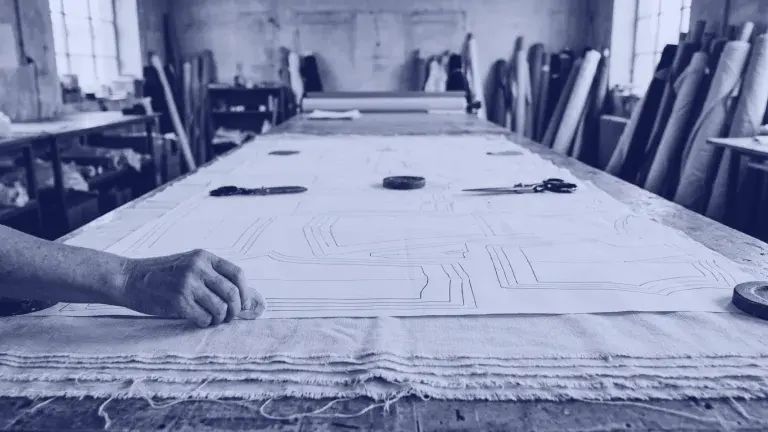
How to Calculate Fabric Consumption for Garments: Formula, Examples and Waste Allowances
How much fabric a garment needs depends on pattern area, fabric width and marker efficiency. The formula, T-shirt and shirt worked examples, shrinkage and waste allowances, and what to write into a CMT order.
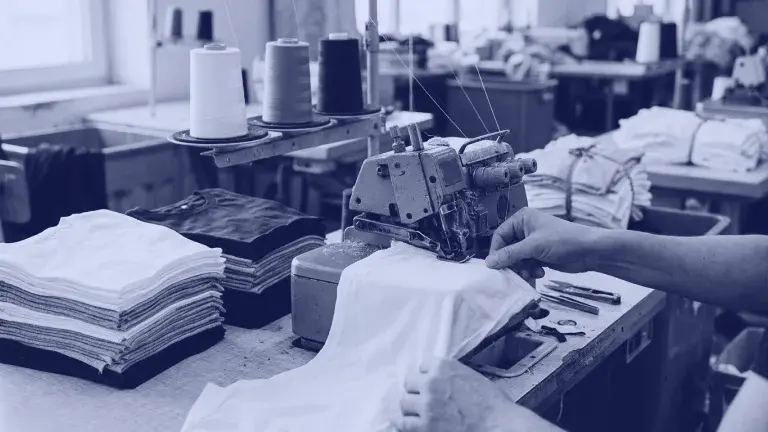
CMT Cost per T-Shirt in Turkey: How to Calculate and Compare Quotes
How a Turkish workshop prices CMT T-shirt sewing: the minute-cost formula, what a quote leaves out, a worked example in Turkish lira and a checklist for comparing quotes.
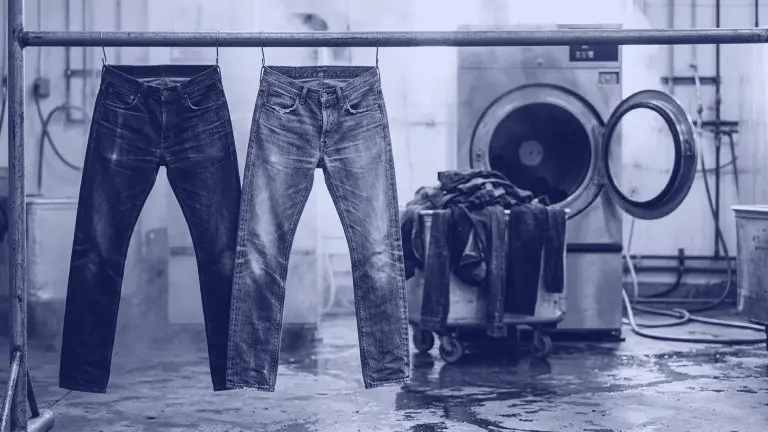
Denim Wash Types and Techniques: Stone, Enzyme, Ozone, Laser
Denim wash types explained: dry and wet processes, stone, enzyme, rinse, bleach, ozone and laser, their effects on strength and shrinkage, the sandblasting ban in Turkey and what to ask a washing plant.