What is Organic Cotton?
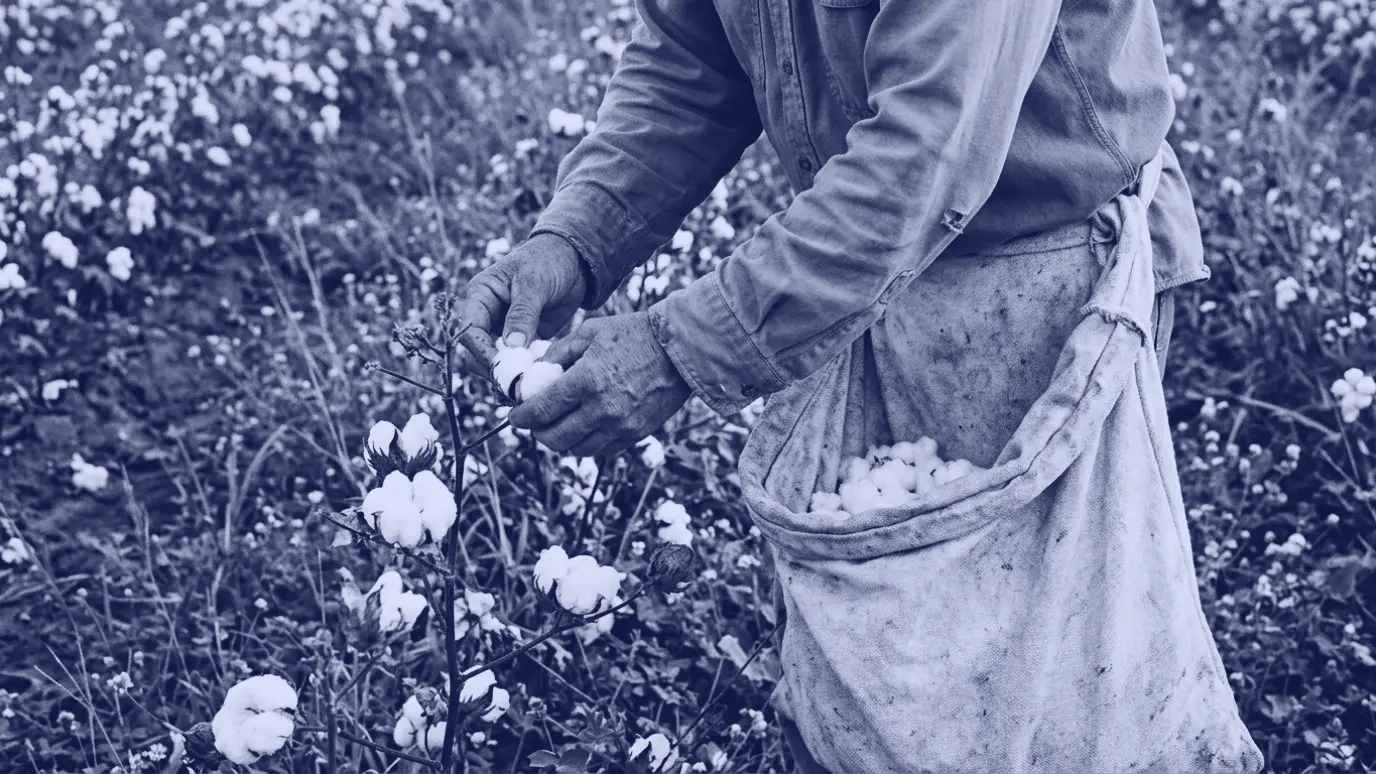
Organic cotton is cotton grown to organic agriculture standards, without synthetic toxic pesticides and fertilizers or genetically modified seed, and verified by third-party certification. It is not a fiber type: organic describes how the cotton is grown and its certification status.
- Published:
- Updated:
- Fact-checked by:
- Gizem Polat
Key facts
- Organic cotton is cotton grown to organic agriculture standards and verified by third-party certification; it is not a separate fiber type.
- The proof of an organic claim is certificates and label information, not how the fabric looks.
- According to Textile Exchange data, cotton certified to organic standards was about 2.9% of global production in 2023/24 (about 706 thousand metric tons).
- GOTS requires at least 95% certified organic fiber for an “Organic” label and 70–94% for “Made with organic materials”.
Properties
- Fiber content
- Cotton fiber (cellulose-based); the difference lies in the growing system and certification
- Origin
- Farms certified to organic standards; about 2.9% of global cotton production in 2023/24
- Uses
- Clothing, children’s products, home textiles such as towels, bathrobes, sheets and mattresses, and personal care products; products can be certified to GOTS or OCS
Organic cotton is cotton grown to organic agriculture standards and verified by third-party certification. Organic production systems prohibit synthetic, toxic and persistent pesticides and fertilizers and genetically modified seed (Organic Trade Association, OTA). “Organic” is the name of a growing method and a documented status, not of a fiber type, so the claim is proven by certificates, not by how the fabric looks. In Turkish it is called organik pamuk.
What does organic cotton mean?
OTA defines organic cotton as cotton grown with methods and materials that have a low impact on the environment: organic systems maintain soil fertility and increase biodiversity, and third-party certification bodies verify that producers meet the rules. GOTS, for its part, requires a fiber to be certified to a standard in the “IFOAM Family of Standards” before it can be used in an organic content claim; the EU Regulation 2018/848, the US NOP program, India’s NPOP program and China’s GB/T19630 standard are in this family (GOTS 8.0, 2.1.1). GOTS does not itself certify organic fiber production at farm level. Rules vary by standard, so state in the contract which standard you mean.
Certifications: GOTS and OCS
The two standards verify different things:
- GOTS (Global Organic Textile Standard): starts where organic farming ends and covers textiles containing at least 70% certified organic natural fiber (GOTS 8.0, 1.2.1). According to the standard, a GOTS certificate is required at every stage from the receipt of organic raw fiber through processing to trade (2.2.1). According to OTA, the standard bans toxic inputs in processing and sets working-condition provisions, including a ban on child labor.
- OCS (Organic Content Standard): a chain-of-custody standard introduced by Textile Exchange in 2013 that tracks certified organic raw material through the supply chain; it replaced the older OE 100 and OE Blended standards (Textile World, 2013). It verifies that the cotton (or other natural fiber) in the final product is certified organic (OTA).
GOTS label grades
| Label | Share of certified organic fiber |
|---|---|
| Organic | At least 95% |
| Made with x% organic materials | 70–94% |
For fibers in the in-conversion period there are separate labels at the same thresholds (“Organic in-conversion”, “Made with x% organic in-conversion materials”). The GOTS 8.0 changelog gives the same thresholds (≥95% and ≥70%, excluding accessories); version 8.0 enters full force on March 1, 2027 (GOTS). A GOTS label must carry a reference to the certification body and the certificate number of the certified operator (GOTS).
This section summarizes GOTS rules as published at the date of this entry (October 2026). Rules change as the standard changes; for labeling and certificate scope, consult your certification body or a certification specialist.
Market share
According to Textile Exchange data, about 706 thousand metric tons of cotton in the 2023/24 season were certified to at least one of 15 known farm-level organic standards or programs; this corresponds to about 2.9% of global cotton production. In 2022/23 the figures were 574 thousand metric tons and 2.3% (OTA, October 2025, citing the Textile Exchange Materials Market Report 2025). The figure covers cotton certified to one or more organic standards; when comparing reports for different years, use the same source and the same season.
How to verify organic cotton when buying
- Write the standard and the share into the specification. GOTS or OCS? Under GOTS, do you want “Organic” (at least 95%) or “Made with x% organic materials” (70–94%)?
- Ask for the current certificate and its scope. Under GOTS, certified operators must show the subcontractors involved in processing the GOTS product in their scope certificates (GOTS 8.0, 2.2.5); the standard also defines limited exemptions for some business structures (2.2.6). Confirm validity and scope with the certification body. For the scope certificate and the transaction certificate, see the textile certifications guide.
- Read the label. The name of the certification body and the certificate number should appear on the label (GOTS). A “100% organic” statement alone is not proof.
- Do not decide by looking at the fabric. Organic status is growing and traceability information; it cannot be told from appearance, and the proof is the certificate and label information.
For cotton fiber, see Textile Fibers; for cotton yarn, see the Cotton Yarn category.
Frequently asked questions
Is organic cotton the same as GOTS?
No. Organic cotton is a growing system at field level. GOTS is a textile standard covering the processing and trade of products made from organic fiber; it starts where organic farming ends (GOTS).
Is a “100% organic cotton” label enough?
Not on its own. GOTS labels must carry the certification body and the certificate number, which allow the product to be traced back to certified operators (GOTS). If there is no label, ask the supplier for the certificate and its scope.
What is the difference between OCS and GOTS?
OCS verifies that the organic fiber in the final product is certified; GOTS covers all processing, including spinning, knitting, weaving, dyeing and manufacture, and sets chemical-input and working-condition criteria (OTA).
Sources (7)
- Organic Trade Association, Organic Cotton Fact Sheet (October 2025; global production data based on the Textile Exchange Materials Market Report 2025)
- Global Standard gGmbH, Global Organic Textile Standard (GOTS) Version 8.0, 2026 (sections 1.2.1, 2.1.1, 2.2.1, 2.2.5, 2.2.6)
- Global Standard gGmbH, Changelog GOTS Version 8.0 (GOTS 7.0 to 8.0), January 2026 (sections 2.7.4.1 and 2.7.4.2)
- Global Organic Textile Standard (GOTS): Our Standards, GOTS (accessed October 9, 2026)
- Global Organic Textile Standard (GOTS): Labelling (accessed October 9, 2026)
- Global Organic Textile Standard (GOTS): GOTS Version 8.0 released (accessed October 9, 2026)
- Textile World, Textile Exchange Introduces New Organic Content Standard (February 19, 2013)
Author and fact-checking
Written by
Fabrics and Fibers Editor
Elif Karaca is Tekstil Rehberi's fabrics and fibers editor. She writes guides and glossary entries on knitted, woven and nonwoven fabrics, fiber properties and choosing the right fabric for each product, and bases values such as GSM, width, shrinkage and color fastness on standards and mill technical data sheets.
Content by Elif KaracaFact-checked by: Gizem Polat
This content was prepared by the Tekstil Rehberi editorial team. Before publication, our verification editor checked its figures, dates and sources against primary sources.
Spotted an error? Email us at [email protected] How we work →
Articles on this topic
Combed vs Carded vs Open-End Yarn: Differences and Uses by Product
Combed and carded yarn differ in fiber preparation; ring and open-end yarn differ in how they are spun. Property tables, product examples with sources and how to write yarn into a quote.

How to Judge Terry Towel Quality: GSM, Pile Yarn and Absorbency
Terry towel quality cannot be read from GSM alone. The criteria for pile yarn, pile height, absorbency and post-wash performance, with a checklist for buyers writing a spec.

Yarn Count Conversion: Ne, Nm, Tex and Denier Formulas and Tables
Conversion formulas and a table for Ne, Nm, tex and denier, how to calculate yarn count from a measurement, how to read plied counts such as 30/2, and the count mistakes that most often cause trouble in supplier orders.