
Wool Yarn Manufacturers and Suppliers in Turkey
Companies in Turkey that make and sell wool and wool-blend yarn. Find suppliers of worsted and woolen yarn, machine-washable (superwash) and dyed wool yarn, and ask for samples.
For buyers
Looking for a supplier in this category?
No companies are listed on this page yet. You do not have to wait for the list: describe what you need and request quotes.
Request a quote and let suitable suppliers reach you
Tell us the product, quantity and delivery location. You confirm your request with the link we e-mail you; requests are screened for spam, and our team reviews your first request. It is then sent to up to 20 companies working in this field and stays open for quotes in their company panel for 30 days. You compare the quotes you receive on one page.
- Free, no account needed.
- You decide whether companies see your contact details.
- We e-mail you when a new quote arrives.
Read before you choose a supplier


Terms to know in this field
Get your company listed on this page. If you manufacture or provide services in this field, create your free profile; companies are listed after our team has reviewed them.
List your company for freeKey facts
- Worsted yarn is spun from long fibers combed into parallel alignment; woolen yarn is not combed (The Woolmark Company; IWTO).
- Worsted yarn is fine, even and smooth and is sought for suiting; woolen yarn is thicker and bulkier and is sought for sweaters and scarves (IWTO).
- In the English system a hank is 840 yards for cotton and 560 yards for worsted wool, so a worsted 30 is as thick as a cotton Ne 20 (Turkish Ministry of National Education, 2014).
- Superwash is the industry term for wool given a shrink-resist (anti-felting) treatment; for a 'machine washable' claim, ask for the wash test result (The Woolmark Company).
Guide to Wool Yarn
Murat Yıldız
Yarn and Spinning Editor
- Last updated:
- Fact-checked by:
- Gizem Polat
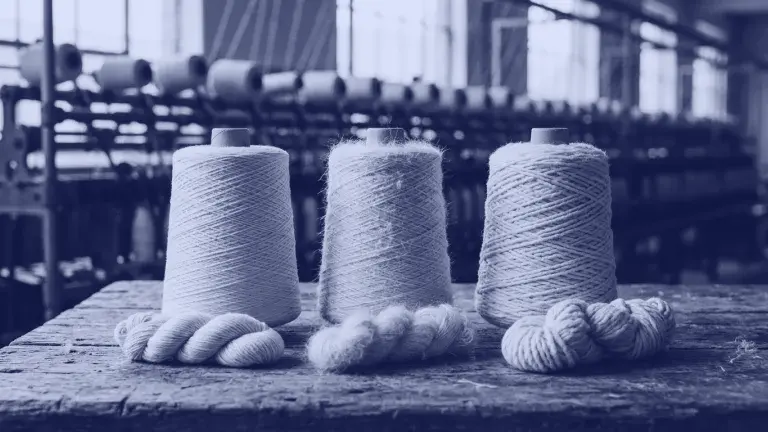
The first distinction when buying wool yarn is whether the yarn is worsted or woolen. Worsted yarn is spun by combing long fibers into parallel alignment; it is fine, even and smooth, and is sought for suiting fabric and fine knitted products. Woolen yarn is not combed; it is thicker and bulkier and is sought for full-bodied products such as sweaters and scarves (The Woolmark Company; IWTO). Describe the look you want with a sample fabric; saying “wool yarn” alone does not tell the supplier which of the two you want.
Wool content and certificates
Wool content decides both the label and the price of the product. Ask for the wool percentage in writing and have a sample from the first lot verified in a laboratory. For wool blends, see blended yarn; for wool and acrylic combinations, see acrylic yarn. If an animal-welfare and land-management claim is made (for example under Textile Exchange's Responsible Wool Standard), check the scope and validity date of the certificate.
Samples, quality and color: what to ask a wool yarn supplier
- Samples: have it confirmed in writing whether the yarn is worsted or woolen and which fiber type it is; make a small knitting trial from a hank or cone sample.
- Quality: ask for measurements, or the result on a sample fabric, for hairiness, evenness and pilling tendency.
- Color: for dyed yarn, get a color card and approval of the dye lot; ask about the minimum quantity for dyed yarn.
Felting and washing
Wool fiber tends to felt in washing. For a “machine washable” claim, ask that an anti-felting treatment (the industry term is superwash) has been applied to the yarn, and ask for the wash test result. The care instruction on the product must be written according to this result; a verbal statement from the yarn company is not enough.
Lead time
Get the preparation time and the stock position of dyed wool yarn from the supplier in writing. Plan your collection calendar backwards from the yarn order and finish sample approval before you place the order. If you work with a knitwear manufacturer, choose the yarn together with the companies on the knitwear and sweaters page.
Where are wool yarn manufacturers in Turkey?
The 48 firms with a valid capacity report for yarn of wool or fine animal hair (product code 13.10.50) in the Industry Database of TOBB (the Union of Chambers and Commodity Exchanges of Turkey) are spread across 12 provinces, most of them in Uşak, Manisa, Tekirdağ and Gaziantep (October 2026). Under the tariff rule for mixtures (Harmonized System, Section XI, Note 2), a yarn is classified by the fiber that predominates by weight: wool-dominant blends are counted in this code, while wool-synthetic blends in which the synthetic fiber predominates fall under the blended yarn code (13.10.83). The data cover only manufacturers holding a capacity report; smaller firms may be missing.
Fiber fineness, system and blend set the price of wool yarn
Fiber fineness and type, whether the yarn is worsted or woolen, the count, the share of acrylic or other fibers in the blend, and whether it is raw or dyed set the price. To compare counts from different systems, first convert them to the same system; the yarn count conversion guide will help.
Regenerated wool yarn is listed here; fiber recyclers are in a separate category
Wool yarn spun from fiber recovered from waste (regenerated wool yarn) is sought on this page; companies that open waste and scraps to recover fiber are listed under textile recycling.
Sources (7)
- The Woolmark Company, Top-making (accessed October 11, 2026)
- IWTO, Woollen & Worsted Processing (accessed October 11, 2026)
- The Woolmark Company, Machine Washable Wool (accessed October 11, 2026)
- Textile Exchange, Quick Guide to the Responsible Wool Standard (RAF-403a V2.1, 2020)
- Turkish Ministry of National Education (MEB), Textile Technology: Yarn Numbering (vocational training module; in Turkish), Ankara 2014
- TOBB Industry Database, capacity reports by province, product code 13.10.50 (accessed October 11, 2026)
- World Customs Organization (WCO), HS Nomenclature 2022 Edition, Section XI Notes, Note 2: mixtures of textile materials (accessed October 11, 2026)
Frequently asked questions
How is wool yarn count written?
Nm is common for wool yarns. In the English system the hank length varies by fiber: 840 yards for cotton and 560 yards for worsted wool (Turkish Ministry of National Education, 2014). So the same yarn takes 1.5 times the cotton count value on the worsted system; a worsted 30 is as thick as a cotton Ne 20. Always have the name of the system written.
Are cashmere, mohair and alpaca yarns found on this page?
The directory has no separate categories for these; look for them by fiber name on the wool yarn page and in the product descriptions of company profiles. The type and share of the animal fiber should be written in the quote and on the yarn label.
What decides the minimum order quantity for wool yarn?
Whether the yarn is worsted or woolen, the fiber type, and whether it is raw or dyed. For dyed wool yarn, the minimum and the preparation time depend on the stock position; for a shade chosen from a color card, the minimum quantity can differ from supplier to supplier. Get the quantity, its unit (kilograms, hanks or cones) and the lead time in writing before you order.
In which provinces are wool yarn manufacturers in Turkey?
The 48 firms with a valid capacity report in the TOBB (Union of Chambers and Commodity Exchanges of Turkey) Industry Database for yarn of wool or fine animal hair (product code 13.10.50) are spread across 12 provinces, most of them in Uşak, Manisa, Tekirdağ and Gaziantep (October 2026). Wool-dominant blends are counted in this code; wool-synthetic blends in which the synthetic fiber predominates are counted under the blended yarn code (13.10.83). The data cover only manufacturers holding a capacity report; smaller firms may be missing.