What is Georgette?
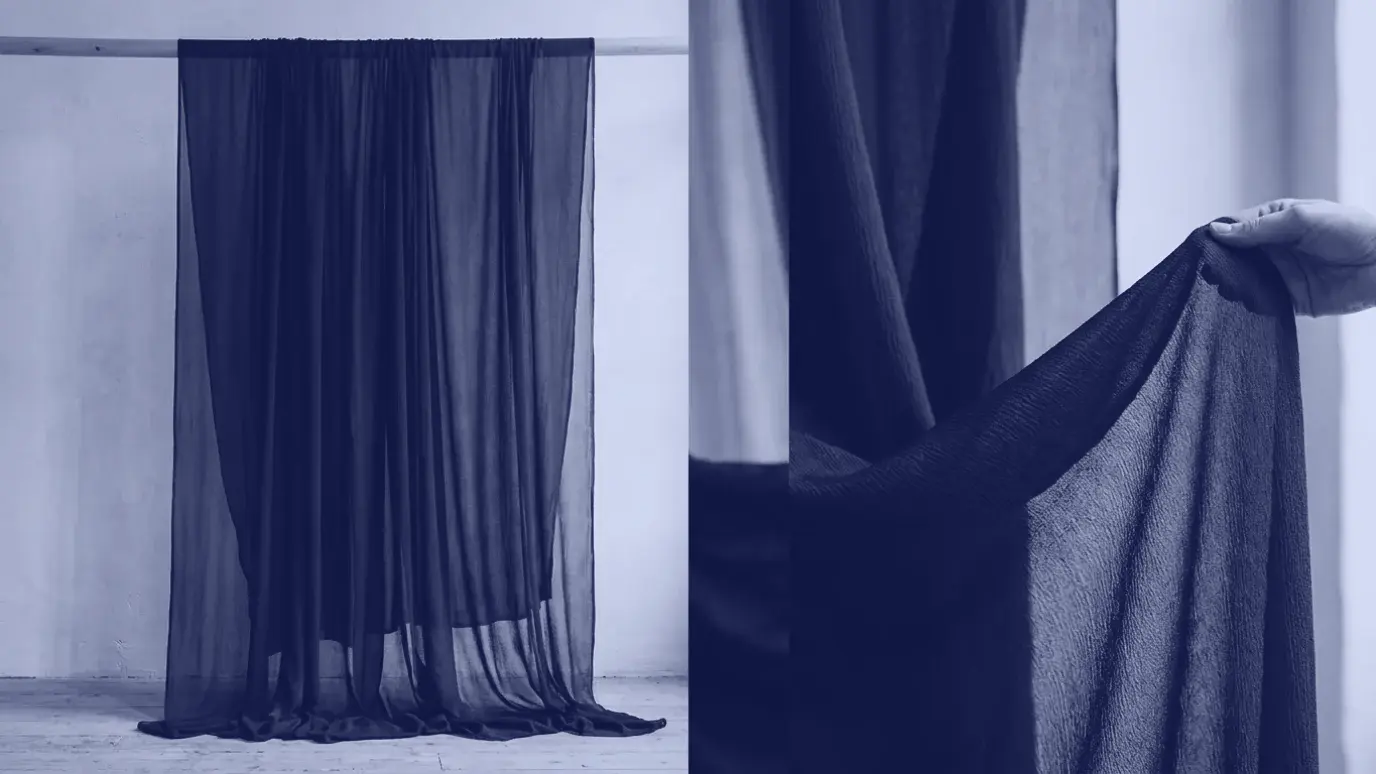
Georgette is a thin, lightweight fabric with a matte, slightly crinkled surface, woven from highly twisted yarn. Dictionaries class it as a crepe. The name does not specify a fiber: the Turkish dictionary (TDK) says generally cotton yarn, while English dictionaries name silk, rayon or cotton. In Turkish it is called jorjet.
- Published:
- Fact-checked by:
- Gizem Polat
Key facts
- Georgette is a thin, lightweight fabric woven from highly twisted yarn, with a matte, slightly crinkled surface; dictionaries class it as a crepe.
- TDK defines georgette as generally cotton yarn; of the English dictionaries, Random House names rayon and Collins cotton alongside silk.
- According to one reference site and one lecture note, georgette is woven in plain weave; the crinkled surface comes from the highly twisted yarn.
- Georgette is not a fiber name; when ordering, ask for the fiber, its percentage and the weight separately.
- Chiffon, crêpe de Chine and organza are neighboring but different fabrics; the boundaries shift from source to source.
Properties
- Fiber content
- The name does not specify a fiber. TDK's definition says the yarn is generally cotton; both English dictionaries name silk, with Random House adding rayon and Collins adding cotton. The Vintage Fashion Guild gives silk as the original fiber, followed by man-made fibers (and wool)
- Structure
- Woven. One reference site (Vintage Fashion Guild) describes a balanced plain weave with very highly twisted warp and weft yarns, alternating between S and Z twist; an Ankara University lecture note lists georgette among fabrics woven in plain weave. The surface is matte and slightly crinkled
- Weight range
- No standard range exists; georgette is a thin, light fabric. Order by weight in g/m², naming the method used to measure it (EN 12127, for example)
- Uses
- Blouses, skirts, evening wear, underwear, scarves, curtains (examples from TDK, Collins and the Vintage Fashion Guild)
- Care
- Care follows the fiber content and finish, so read the label. To check shrinkage, wash a specimen to an ISO 6330 procedure and measure it to ISO 5077; for dyed or printed goods, ask for ISO 105-C06 wash fastness
Georgette (jorjet in Turkish) is a thin, lightweight fabric with a matte, slightly crinkled surface, woven from highly twisted yarn. Dictionaries class it as a crepe. It is not a fiber name: the Turkish dictionary (TDK) describes it as generally cotton yarn, while English dictionaries also name silk and rayon.
What is georgette?
TDK gives two senses. The first is a fabric that looks like bürümcük (a fine fabric woven of raw silk), is woven of highly twisted yarns and is generally cotton. The second, as an adjective, is made of this fabric (jorjet etek, a georgette skirt). English dictionaries put georgette in the crepe family. Random House calls it dull and sheer, with silk or rayon as the fiber; Collins calls it thin and matte, with silk or cotton (Dictionary.com). The word comes from French, and Dictionary.com dates its first record to 1910–15 and notes that it was once a trademark. Sources agree on the surface and the structure but differ on the fiber.
Georgette structure and properties
Sources describe georgette at two levels. On the surface it is a matte, thin, transparent crepe look (Dictionary.com; Brentano). For structure, one reference site (the Vintage Fashion Guild) describes a balanced plain weave with highly twisted yarns in warp and weft, the twist turning from S to Z every one or two yarns. An Ankara University open courseware note also lists georgette among the light, thin fabrics woven in plain weave. According to the same reference site, the crinkled surface comes from the highly twisted yarn, not from the weave.
| Property | Information | Source |
|---|---|---|
| Fiber | The name does not specify a fiber: cotton, silk, rayon, other man-made fibers | TDK; Dictionary.com; Vintage Fashion Guild |
| Weave | Balanced plain weave | Vintage Fashion Guild; Ankara University |
| Yarn | Highly twisted; S and Z twist alternating | TDK; Vintage Fashion Guild |
| Surface | Matte, slightly crinkled | Dictionary.com; Brentano |
| Hand | Thin, light, drapes easily; a little heavier and more crepe-textured than chiffon | Vintage Fashion Guild |
| Weight | No standard range; state g/m² and the measuring method | Our note |
What fiber is georgette made from?
Georgette is not a fiber name. In TDK the fiber is generally cotton. Random House pairs silk with rayon and Collins pairs it with cotton, while the Vintage Fashion Guild writes that the original fiber was silk and that man-made fibers (and wool) came later. The name describes surface and structure, not fiber, which is why the sources differ. As of the date of this entry (October 22, 2026), the label states the fiber by its name in Annex 1 of Turkey's regulation on textile fiber names (article 6/1; in Turkish); consult an expert about the label of your own product. In a quotation, ask separately for the fiber and its percentage.
Where is georgette used?
TDK gives “jorjet etek” (georgette skirt) as its example and Collins “georgette blouse”. The Vintage Fashion Guild lists blouses, evening wear, underwear, hats, curtains and scarves. To find suppliers, see the chiffon and georgette fabric category; georgette is one of that category's alternative names.
Fabrics confused with georgette
| Fabric | How it differs from georgette | Source |
|---|---|---|
| Chiffon | Getty AAT describes chiffon as a thin, light, transparent plain weave of fine yarn with a tight twist; the Vintage Fashion Guild finds georgette a little heavier and more crepe-textured | Getty AAT; Vintage Fashion Guild |
| Crêpe de Chine | A light, soft silk or synthetic fabric with tiny surface irregularities | Dictionary.com (Random House) |
| Organza | Sheer but crisp: a plain-weave fabric with a stiff finish (Random House) or a thin stiff fabric (Collins) | Dictionary.com |
Dictionaries define these names close to each other, so when ordering, write the fiber and the weight next to the fabric name.
Choosing and ordering georgette
- Ask for the fiber and its percentage: TDK and the English dictionaries name different fibers.
- Try the sheerness on a sample: Random House calls georgette a sheer crepe, and whether a lining is needed is a design question from the start.
- Ask for the weight in g/m², measured to EN 12127.
- Test the washing behavior: have a sample washed to ISO 6330 and measure the dimensional change to ISO 5077; for dyed and printed georgette, put ISO 105-C06 wash fastness in the specification.
Frequently asked questions
What is georgette fabric made of?
The name does not fix the fiber. TDK says generally cotton; the English dictionaries name silk, with rayon (Random House) or cotton (Collins); one reference site says silk first and man-made fibers later. State the fiber and percentage in the order.
Is georgette a crepe?
In dictionaries, yes: they place georgette in the crepe family. “Crepe” describes the surface, not the fiber. In georgette the crinkled surface comes from highly twisted yarn, and the weave is plain, according to one reference site and one lecture note.
What is the difference between georgette and chiffon?
They are neighbors, not twins. Getty defines chiffon as a thin, transparent plain weave, while the Vintage Fashion Guild finds georgette slightly heavier with a more crepe-like texture, and dictionaries file georgette under crepe. Both are described as plain weave in some sources, so the line between them shifts with the source. State the fiber and weight alongside the fabric name and approve a sample first.
Can georgette fabric be washed?
The label decides. Georgette is not a fiber, so there is no single care rule; the fiber content and the finish determine it. Before buying, have a sample washed under the label's conditions and check the dimensional change and, for dyed fabric, the wash fastness.
Sources (15)
- Turkish Language Association (TDK), Güncel Türkçe Sözlük (current Turkish dictionary; in Turkish), entry “jorjet” (accessed October 22, 2026)
- Turkish Language Association (TDK), Güncel Türkçe Sözlük (in Turkish), entry “bürümcük” (accessed October 22, 2026)
- Dictionary.com, “georgette” entry (Random House Unabridged Dictionary; Collins English Dictionary; accessed October 22, 2026)
- Dictionary.com, “crepe de chine” entry (Random House; Collins; accessed October 22, 2026)
- Dictionary.com, “organza” entry (Random House; Collins; accessed October 22, 2026)
- Vintage Fashion Guild, Fabric: Georgette (reference site of a non-profit organization; author and sources not stated; accessed October 22, 2026)
- Brentano Fabrics, Textile Glossary: Georgette (trade textile glossary; accessed October 22, 2026)
- Ankara University Open Courseware, Dokuma Kumaşların Yapısı ve Özellikleri (Structure and Properties of Woven Fabrics; lecture note; in Turkish; author not stated; plain weave section; accessed October 22, 2026)
- Getty Research Institute, Art & Architecture Thesaurus: chiffon (AAT 300249449; accessed October 22, 2026)
- Tekstil Elyaf İsimleri ve Tekstil Ürünlerinin Elyaf Kompozisyonlarıyla İlgili Etiketleme ve İşaretleme Hakkında Yönetmelik (Regulation on Textile Fiber Names and the Labeling and Marking of the Fiber Composition of Textile Products; Turkey; in Turkish, English title translated by us), Official Gazette, April 25, 2015, No. 29337 (article 6; accessed October 22, 2026)
- The same Turkish regulation, current text in the Mevzuat Bilgi Sistemi legislation database (legislation no. 20707; in Turkish; accessed October 22, 2026)
- EN 12127:1997 Textiles. Fabrics. Determination of mass per unit area using small samples (EVS-EN 12127:2000 record; applies to woven and knitted fabrics)
- ISO 5077:2007 Textiles: Determination of dimensional change in washing and drying (confirmed in 2022)
- ISO 6330:2021 Textiles: Domestic washing and drying procedures for textile testing
- ISO 105-C06:2010 Textiles: Tests for colour fastness, Part C06: Colour fastness to domestic and commercial laundering (EVS-EN ISO 105-C06:2010 record)
Author and fact-checking
Written by
Fabrics and Fibers Editor
Elif Karaca is Tekstil Rehberi's fabrics and fibers editor. She writes guides and glossary entries on knitted, woven and nonwoven fabrics, fiber properties and choosing the right fabric for each product, and bases values such as GSM, width, shrinkage and color fastness on standards and mill technical data sheets.
Content by Elif KaracaFact-checked by: Gizem Polat
This content was prepared by the Tekstil Rehberi editorial team. Before publication, our verification editor checked its figures, dates and sources against primary sources.
Spotted an error? Email us at [email protected] How we work →