What is Martindale Abrasion Test?
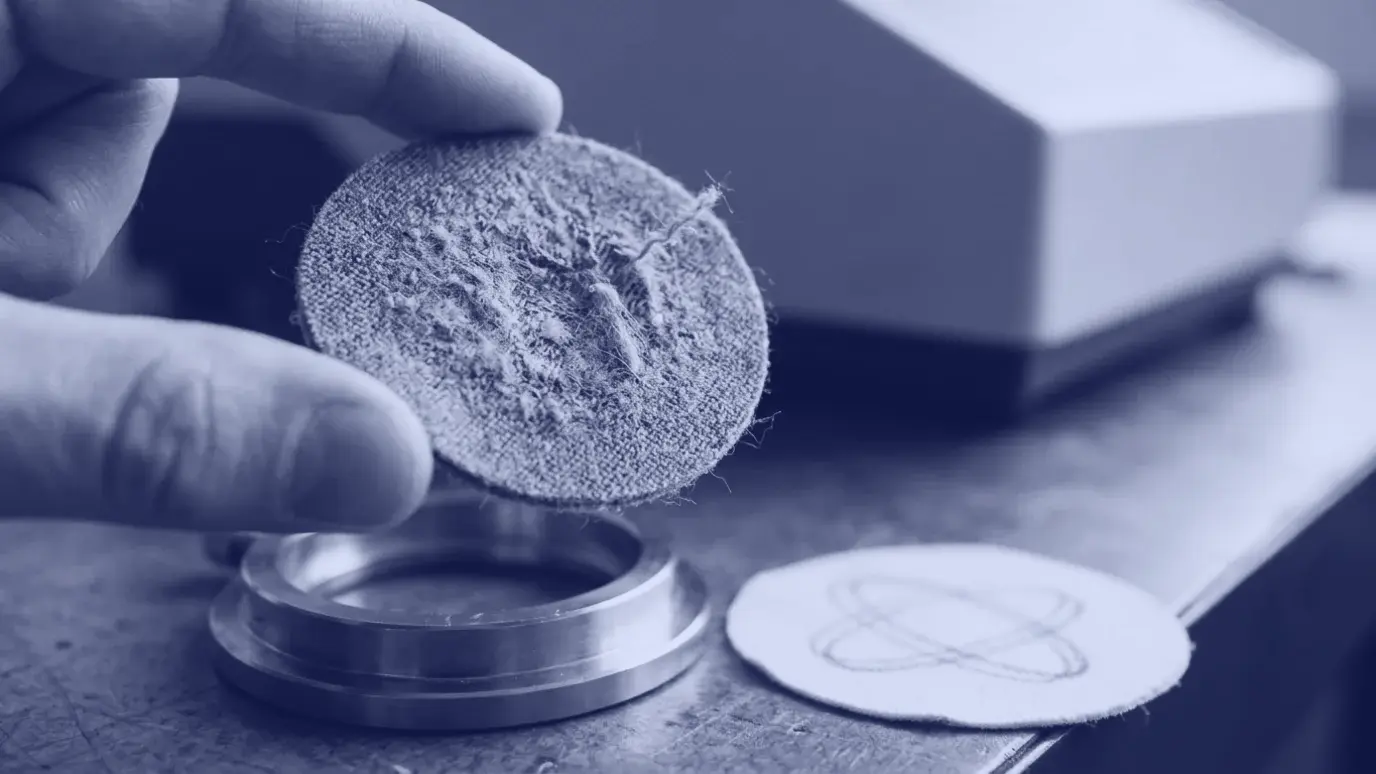
The Martindale abrasion test, run on the Martindale tester under ISO 12947, measures how well a fabric resists wear by rubbing. A disc of fabric is rubbed against an abrasive surface under load; the result is usually the number of rubs at which the specimen breaks down.
- Published:
- Fact-checked by:
- Gizem Polat
Key facts
- Martindale is the name of an abrasion tester and of the ISO 12947 method run on it; the first machine was built at WIRA in 1942 to Dr. J. G. Martindale's design.
- ISO 12947 has four parts: apparatus (1), specimen breakdown (2), mass loss (3) and change in appearance (4).
- The Martindale value is usually the number of rubs at which the specimen breaks down; the pass limit comes from the buyer's or product specification, not from ISO 12947.
- Three trade guides put general domestic use at 15,000–25,000 rubs; the limits for heavy domestic and commercial bands differ from guide to guide.
- ISO 12947-2 does not apply to coated and laminated fabrics; for abrasion of coated surfaces, see the ISO 5470 series.
- The same tester also measures pilling by the modified Martindale method (ISO 12945-2); abrasion and pilling are separate tests.
Martindale is the name of a fabric abrasion tester and of the ISO 12947 method run on it. A disc of fabric (the specimen) is rubbed against an abrasive surface under load along a path called a Lissajous figure, and the result is usually the number of rubs at which the specimen breaks down. This rub count is what people call the “Martindale value” or rating, mostly for upholstery fabric.
What is the Martindale abrasion test?
The apparatus and the method share one name. ISO 12947-1 sets the requirements for the Martindale tester and its auxiliary materials; according to ISO's record, the tester is for woven and knitted fabrics, textiles with a pile height of no more than 2 mm, and nonwoven surfaces. The name comes from its designer. Dr. James Graham Martindale, working at the Wool Industries Research Association (WIRA), designed the machine to test the abrasion behavior of carbon-impregnated cloth meant as protection against gas attacks, and the first tester was built in the WIRA workshop in 1942 (Innovation in Textiles; Science Museum Group).
The parts of ISO 12947 and the test load
ISO 12947 has four parts, and each gives a different result (ISO and EVS records):
| Part | Subject | Result |
|---|---|---|
| ISO 12947-1:1998 | Apparatus and auxiliary materials | Shared equipment for the other parts |
| ISO 12947-2:2016 | Specimen breakdown (test end point), checked at set intervals | Number of rubs until breakdown |
| ISO 12947-3:1998 | Mass loss | Mass lost through abrasion |
| ISO 12947-4:1998 | Change in appearance | Assessment of the change in appearance |
In the shared equipment, the specimen holder turns freely on its own axis while carrying the specimen along a Lissajous figure against the abradant (ISO 12947-1, EVS record). In Part 2 the specimen is checked at set intervals, and according to an accredited laboratory's method page the test ends when a hole, a broken yarn in the weave or a clear structural breakdown appears (FILK Freiberg). How the steps run and how to write them into a specification is covered in the fabric testing standards guide.
The test load varies with the intended use. The scope text of ISO 12947-3 sets the total effective abrasion load at 795 g for workwear, upholstery, bedding and technical fabrics, and at 595 g for clothing and for home textiles other than upholstery and bedding. Part 4 works only with the weight of the holder and spindle (198 g) (EVS). ISO 12947-2 does not apply to coated and laminated fabrics; for abrasion of a coated surface, look to the ISO 5470 series.
How is a Martindale value read?
The number in a report is a rub count, not a grade on a scale. If the part, load and end point are not stated, two reports cannot be compared. Our recommendation is to write the method (ISO 12947-2), the load, the end point and the number of specimens into the order together. A rub count is not a lifetime guarantee either: one trade guide treats it as guidance on suitable use, not a guarantee of any service life (Kothea, 2026).
What Martindale value is needed?
There is no single universal threshold. ISO 12947-2 is a test method; its record summary gives no pass limit, and the party writing the specification sets the expected performance. Trade guides give rub bands by use class. They are commercial guidance, not a standard, and they diverge at the upper bands (accessed October 22, 2026):
| Class | Kothea (2026) | Engert (2021) | Fabrics Galore (2023) |
|---|---|---|---|
| Decorative | Under 10,000 | Under 10,000 | Under 10,000 |
| Light domestic | 10,000–15,000 | 10,000–15,000 | 10,000–15,000 |
| General domestic | 15,000–25,000 | 15,000–25,000 | 15,000–25,000 |
| Heavy domestic | 25,000–40,000 (together with light commercial) | 25,000–35,000 (together with light commercial) | 25,000–30,000 |
| Commercial | 40,000 and over | 30,000 and over | 30,000–40,000; commercial grade 40,000 and over |
| Extra heavy commercial | 100,000 and over | – | – |
The first three classes are the same in all three sources; the limits for heavy domestic and commercial classes move between 25,000 and 40,000. Write the rub count and the place of use (home, hotel, office) into the specification, not the class name. The Wyzenbeek method, common in North America (Engert, 2021), gives results that cannot be compared with Martindale rubs: Kothea (2026) notes there is no reliable conversion between the two tests. For suppliers of upholstery fabric, see the upholstery fabrics category.
Which fabrics is it used for?
All three trade guides give their bands for upholstery fabric. ISO 12947-3 also places workwear, bedding and technical fabrics in the heavier load class (795 g). According to the scope text of Part 2, the method applies to all fabrics including nonwovens, except fabrics for which the party writing the specification expects a low abrasion life.
Martindale and pilling
The same tester runs a different method for pilling. ISO 12945-2:2020, the “modified Martindale method”, determines a fabric's resistance to pilling, fuzzing and matting; a test called the “Martindale pilling test” is this one. The abrasion test gives a rub count and the pilling test gives a visual grade, and neither stands in for the other. To ask for a pilling grade, write the method (ISO 12945-2) and the grade you expect into the specification, not a “Martindale value”.
Frequently asked questions
What does Martindale mean in fabric?
Martindale is the name of the tester that measures a fabric's abrasion resistance. An expression such as “Martindale 30,000” says the fabric withstood 30,000 rubs on that tester (an illustration, not a recommended value).
What is a Martindale test?
It is the ISO 12947 test of resistance to wear by rubbing: the specimen is rubbed against an abrasive under load on the Martindale tester, and the result is usually the number of rubs until breakdown.
What is a good Martindale rating for upholstery?
There is no standard answer. The three trade guides above put general domestic use at 15,000–25,000 rubs and commercial use at 30,000–40,000 rubs and over, depending on the guide. Choose the figure by where the fabric will be used and write it into the specification.
Is Martindale the same as Wyzenbeek?
No. They are different abrasion tests, and their results cannot be reliably converted (Kothea, 2026). Wyzenbeek is common in North America (Engert, 2021); the Martindale rub count follows ISO 12947.
Sources (13)
- ISO 12947-1:1998 Textiles: Determination of the abrasion resistance of fabrics by the Martindale method, Part 1: Martindale abrasion testing apparatus (ISO record page; reviewed and confirmed in 2023; accessed October 22, 2026)
- ISO 12947-2:2016 Textiles: Determination of the abrasion resistance of fabrics by the Martindale method, Part 2: Determination of specimen breakdown (ISO record page; confirmed in 2023; accessed October 22, 2026)
- EVS, ISO 12947-2:2016 standards record (scope: all fabrics and nonwovens; coated and laminated fabrics excluded, referred to ISO 5470; accessed October 22, 2026)
- EVS-EN ISO 12947-1:2001 standards record (Lissajous motion, defined load, freely rotating specimen holder; accessed October 22, 2026)
- EVS-EN ISO 12947-3:2001 standards record (mass loss; total effective loads of 795 g and 595 g; accessed October 22, 2026)
- EVS-EN ISO 12947-4:2001 standards record (change in appearance; holder and spindle only, 198 g; accessed October 22, 2026)
- ISO 12945-2:2020 Textiles: Determination of fabric propensity to surface pilling, fuzzing or matting, Part 2: Modified Martindale method (ISO record page; accessed October 22, 2026)
- FILK Freiberg, DIN EN ISO 12947-2 Abrasion (accredited laboratory method page; end point criteria; accessed October 22, 2026)
- Innovation in Textiles, The Martindale abrasion tester at 80 (design of the tester at WIRA in 1942; accessed October 22, 2026)
- Science Museum Group Collection, Martindale abrasion tester (object record co8647762; accessed October 22, 2026)
- Kothea (Lisa Parsons), The Martindale Rub Test: Complete Guide for Upholstery Specification, April 5, 2026, last modified October 7, 2026 (fabric seller's guide, not a standard; accessed October 22, 2026)
- Nicholas Engert, How to choose the correct fabrics, August 23, 2021 (blog of an interiors firm; accessed October 22, 2026)
- Fabrics Galore, Understanding Martindale Ratings and Fire Retardancy Properties, July 28, 2023 (fabric seller's guide; accessed October 22, 2026)
Author and fact-checking
Written by
Fabrics and Fibers Editor
Elif Karaca is Tekstil Rehberi's fabrics and fibers editor. She writes guides and glossary entries on knitted, woven and nonwoven fabrics, fiber properties and choosing the right fabric for each product, and bases values such as GSM, width, shrinkage and color fastness on standards and mill technical data sheets.
Content by Elif KaracaFact-checked by: Gizem Polat
This content was prepared by the Tekstil Rehberi editorial team. Before publication, our verification editor checked its figures, dates and sources against primary sources.
Spotted an error? Email us at [email protected] How we work →
Articles on this topic
Fabric Testing Standards: Color Fastness, Martindale, Pilling, Shrinkage and Strength Tests
The standards behind color fastness, Martindale abrasion, pilling, shrinkage and strength tests, how to read a fabric test report, and how to write a test line into a supplier spec.
Bed Linen Fabric Types: Percale, Sateen and Thread Count
Percale, sateen, ranforce and flannel compared: what thread count means per inch and as the Turkish per-centimeter “tel”, why “600 thread count” can mislead, and a checklist for writing a spec.
How to Judge Terry Towel Quality: GSM, Pile Yarn and Absorbency
Terry towel quality cannot be read from GSM alone. The criteria for pile yarn, pile height, absorbency and post-wash performance, with a checklist for buyers writing a spec.