What is Open-End Yarn?
Open-end (rotor-spun) yarn is made by separating a sliver into individual fibers, collecting them in the groove of a fast-spinning rotor and twisting them there. Compared with ring yarn it is more even and cheaper, but harder in handle, weaker and suited to coarser counts.
- Published:
- Updated:
- Fact-checked by:
- Gizem Polat
Key facts
- Open-end yarn is made by rotor spinning: the sliver is separated into individual fibers, which are collected in the groove of a rotor and twisted there; no roving is made.
- According to Cotton Incorporated, open-end yarn is more even and cheaper than ring yarn, but harder in handle and weaker.
- According to the same source (2003), the output of an open-end spinning position is about 8–10 times that of a typical ring position.
- In open-end yarn some fibers wrap around the yarn instead of being twisted in; these wrapper fibers add no strength and are unique to open-end yarn.
- Open-end is a spinning system, whereas carded and combed describe fiber preparation; the usual open-end yarn is carded, but rotor spinning with combed sliver has also been studied.
Properties
- Fiber content
- Cotton and other staple fibers (including man-made fibers); Rieter’s examples are 100% cotton and a cotton/polyester (70/30) blend
- Structure
- Rotor spinning: the sliver is opened into individual fibers and no roving is made; contains wrapper fibers; Z twist only, according to Cotton Incorporated (2003)
- Count range
- Limited, and coarser than ring yarn (Cotton Incorporated); Ne 16–Ne 40 in Rieter’s application examples
- Uses
- T-shirt and sweatshirt yarn, denim weft, towel ground warp, shirting (Rieter application examples)
- Origin
- Came into production use in the mid-1960s (Cotton Incorporated)
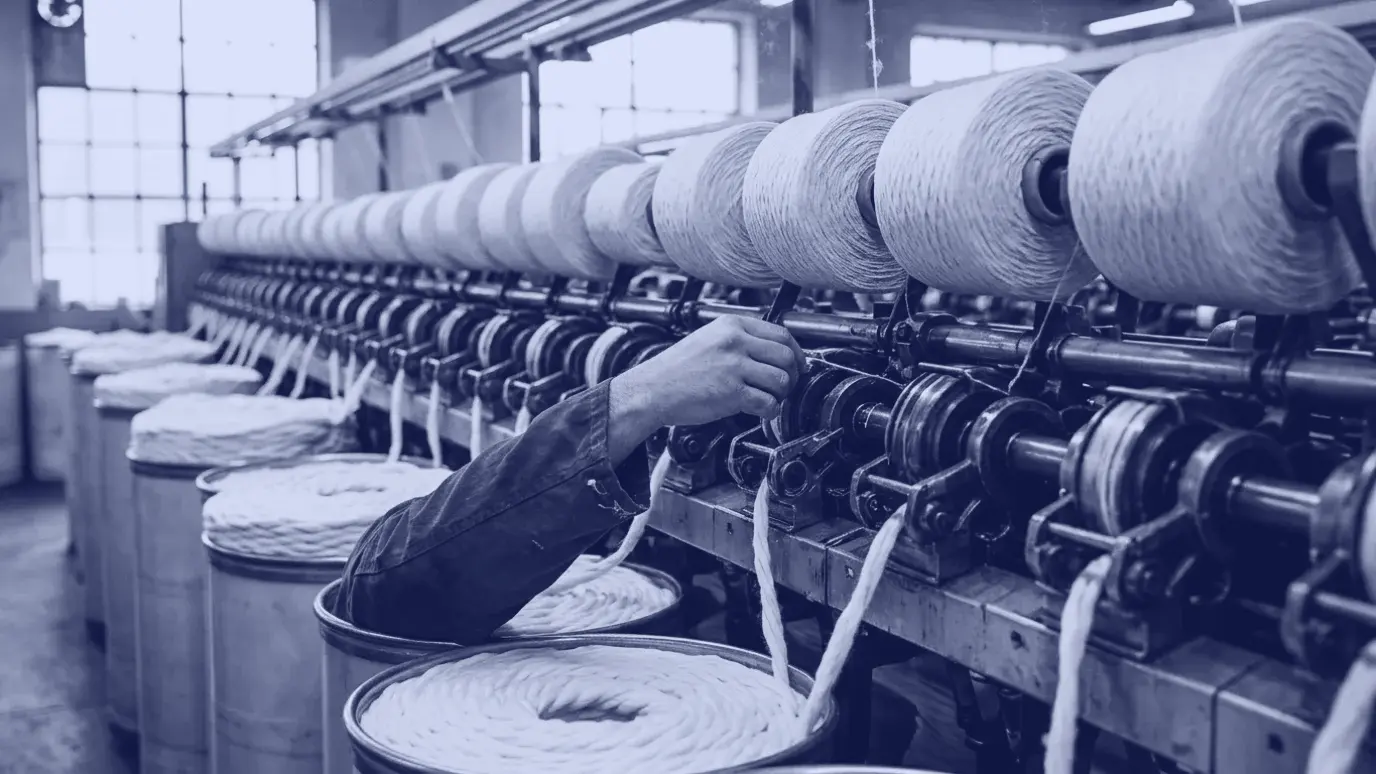
Open-end yarn is yarn made by the rotor spinning system. The sliver is separated into individual fibers; the fibers are collected in the groove of a fast-spinning rotor and twisted there into yarn (Cotton Incorporated, ISP 1006). Compared with ring yarn it is more even and cheaper; on the other hand it is harder in handle, weaker and suited to coarser counts. Open-end spinning is also called rotor spinning.
How open-end yarn is made
- Feeding: Sliver, not roving, is used. A feed roller delivers the sliver to a fast-spinning opening roller, which separates the fibers one by one from the end of the sliver and removes trash.
- Transport to the rotor: The separated fibers pass through a conical channel into the rotor groove. According to ISP 1006 (2003), the rotor spins at up to 150,000 rpm. The fibers lay on top of one another in the groove, and the mass needed for the desired yarn count accumulates.
- Twisting: As the rotor turns, the fibers are twisted together, and the resulting yarn is drawn out of the spinning box. The ratio of the delivery roller speed to the feed roller speed sets the yarn count; the ratio of rotor speed to delivery roller speed sets the amount of twist.
- Cleaning and winding: The yarn passes through a clearer that removes faulty places and is wound onto a large package for knitting or weaving.
According to Cotton Incorporated (ISP 1006, 2003), the output of an open-end spinning position is about 8–10 times that of a typical ring position. The roving step that ring spinning requires does not exist in the open-end flow.
Yarn structure: wrapper fibers
In the rotor, some fibers are wrapped around the “belt” of the yarn instead of being twisted together. These wrapper fibers do not contribute to strength and are unique to open-end yarn (ISP 1006). NPTEL’s course questions, on the other hand, attribute the lower strength of open-end yarn to less fiber migration inside the yarn.
Comparison with ring yarn
Cotton Incorporated compares the two systems as general tendencies (ISP 1006, p. 7). The hairiness information in the open-end column is supported by NPTEL’s course questions and the torque information by ISP 1009. The sources give no numerical values; the difference varies with fiber, count and machine settings.
| Criterion | Ring yarn | Open-end (rotor) yarn |
|---|---|---|
| Strength | Strongest yarn | Weaker |
| Evenness and faults | Less even | More even; higher strength evenness, fewer yarn faults |
| Handle | Softest | Harder |
| Hairiness and torque | Generally more hairy, more torque | Less hairy, less torque |
| Count range | Widest range, finest yarns | Limited; coarser counts |
| Productivity and cost | Lowest productivity, most expensive | Higher productivity, fewer process steps, lower cost |
| Twist direction | Z and S | Z only |
Uses
In application examples prepared for its rotor machines, Rieter gives these yarn counts: Ne 20–Ne 30 in 100% cotton for T-shirts, Ne 18–Ne 20 for sweatshirts, Ne 16 for denim weft, Ne 17 for towel ground warp, and Ne 40 in a cotton/polyester 70/30 blend for shirting. These are brochure examples from a machine manufacturer, not a market standard.
In fabric, open-end yarn gives lengthwise shrinkage similar to ring yarn; fabric and garment torque is lower, and the fabric tends to come out wider (ISP 1009). Open-end yarn from recycled cotton fibers has also been studied in the literature; for example, Kertmen et al. produced Ne 20/1 open-end yarn from blends containing 5% and 10% recycled cotton (cited in Doba Kadem and Sevgi, 2022).
How it differs from similar terms
- Ring yarn: Another spinning system, at the same level as open-end; the two systems are compared in the table above.
- Carded and combed: These describe fiber preparation, not the spinning system. In Cotton Incorporated’s flow table there is no combing step for open-end, so the usual open-end yarn is carded. Even so, the use of combed cotton sliver in rotor spinning has been studied (Rowe, 1993). So there is no rule that “open-end = carded”.
- Vortex and air-jet yarn: These are separate systems from open-end; ISP 1006 describes them under separate headings.
In a quote, ask for the yarn type and count together, for example “Ne 20/1 open-end, 100% cotton”. You can find yarn suppliers in the yarn companies category. To convert yarn counts, see the yarn count conversion guide.
Frequently asked questions
Is open-end yarn worse than ring yarn?
No; it offers different properties. According to Cotton Incorporated, ring yarn is stronger and softer and can be spun to the finest counts, but it costs more; open-end yarn is more even, cheaper and produced with higher productivity, but it is weaker and harder in handle. The end use decides which suits better (denim weft and towel ground warp are among Rieter’s rotor application examples).
Can open-end yarn be combed?
It can, but it is not the usual route. In Cotton Incorporated’s flow table there is no combing step for open-end; rotor spinning with combed cotton sliver is a practice described by Rowe (1993). In a quote, ask about “open-end” and “combed” separately.
What counts is open-end yarn made in?
Cotton Incorporated states that open-end yarn suits a limited range of counts that are coarser than ring yarn. NPTEL’s course questions also state that fine counts are not possible in the rotor system. In Rieter’s application examples the counts range from Ne 16 to Ne 40. These sources give no general upper limit; the examples only show one machine manufacturer’s applications.
Sources (6)
- Cotton Incorporated, ISP 1006: Cotton Spun Yarns for Knit and Woven Fabrics, 2003 (pp. 1, 5, 7: process table, open-end spinning, ring and open-end comparison)
- Cotton Incorporated, ISP 1009: A Guide to Improved Shrinkage Performance of Cotton Fabrics, 2004 (pp. 7-8: ring and rotor yarn fabrics)
- Rieter: Rotor Spinning Technology Kits and Components, R 40 – R 70 (manufacturer brochure, 2023; pp. 5, 7, 9, 11, 13: application examples)
- Rowe, T. (1993). Improvements in Rotor Yarn Quality When Using Combed Cotton Slivers. Proceedings of the 1993 Beltwide Cotton Conferences, National Cotton Council (abstract)
- NPTEL, Yarn Manufacture-II: New Spinning Systems FAQ (questions 1 and 3; accessed October 9, 2026)
- Doba Kadem, F. and Sevgi, R. (2022). Süprem örme kumaşlarda geri dönüşüm pamuk elyaf oranının performans özelliklerine etkisinin belirlenmesi (Determining the effect of recycled cotton fibre ratio on the performance properties of single jersey knitted fabrics; in Turkish). Çukurova University Journal of the Faculty of Engineering, 37(3), 609-616 (p. 611: literature summary)
Author and fact-checking
Written by
Yarn and Spinning Editor
Murat Yıldız is Tekstil Rehberi's yarn and spinning editor. He covers yarn types, yarn count systems (Ne, Nm, Tex, denier), spinning technologies and the yarn market, and checks count conversions and yarn quality values against standards and manufacturer data.
Content by Murat YıldızFact-checked by: Gizem Polat
This content was prepared by the Tekstil Rehberi editorial team. Before publication, our verification editor checked its figures, dates and sources against primary sources.
Spotted an error? Email us at [email protected] How we work →
Related calculator
Articles on this topic
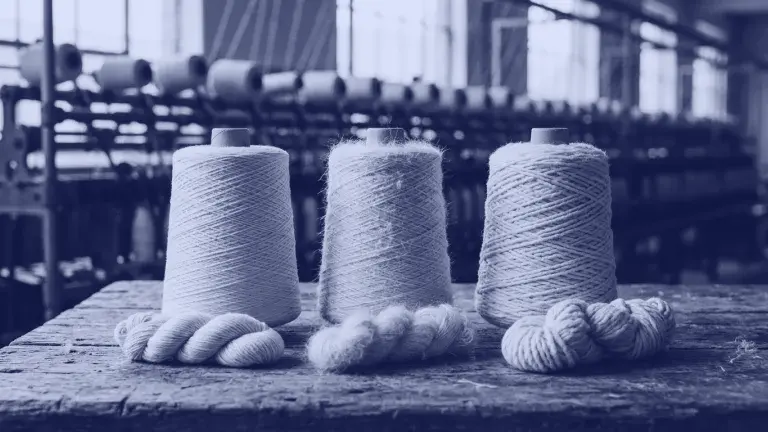
Combed vs Carded vs Open-End Yarn: Differences and Uses by Product
Combed and carded yarn differ in fiber preparation; ring and open-end yarn differ in how they are spun. Property tables, product examples with sources and how to write yarn into a quote.

Textile Trade Fairs 2026-2027: Istanbul and Europe Calendar
Dates, venues and focus of the main textile fairs in Istanbul and Europe from November 2026 to September 2027, which fair suits which buyer, and what to check before you travel.

Turkey Textile and Apparel Exports 2025: Markets, Products
Turkey exported US$16.77 billion of apparel and US$9.41 billion of yarn, fabric and fiber in 2025. See the top markets and products, and why official sources report different totals.